

WORLDWIDE FREIGHT SERVICES
Email: jack@transworldcn.com

TL;DR – Case Study Snapshot
The client: 200+ small and medium-sized exporters in Yiwu, China, shipping consumer goods, furniture, and fitness equipment to the U.S. and Europe.
The problem: Fragmented shipments meant sky-high warehousing costs, “rolling” (shipment bumping) by carriers, and premium spot rates—SMEs were treated as “fourth-tier” customers with no bargaining power.
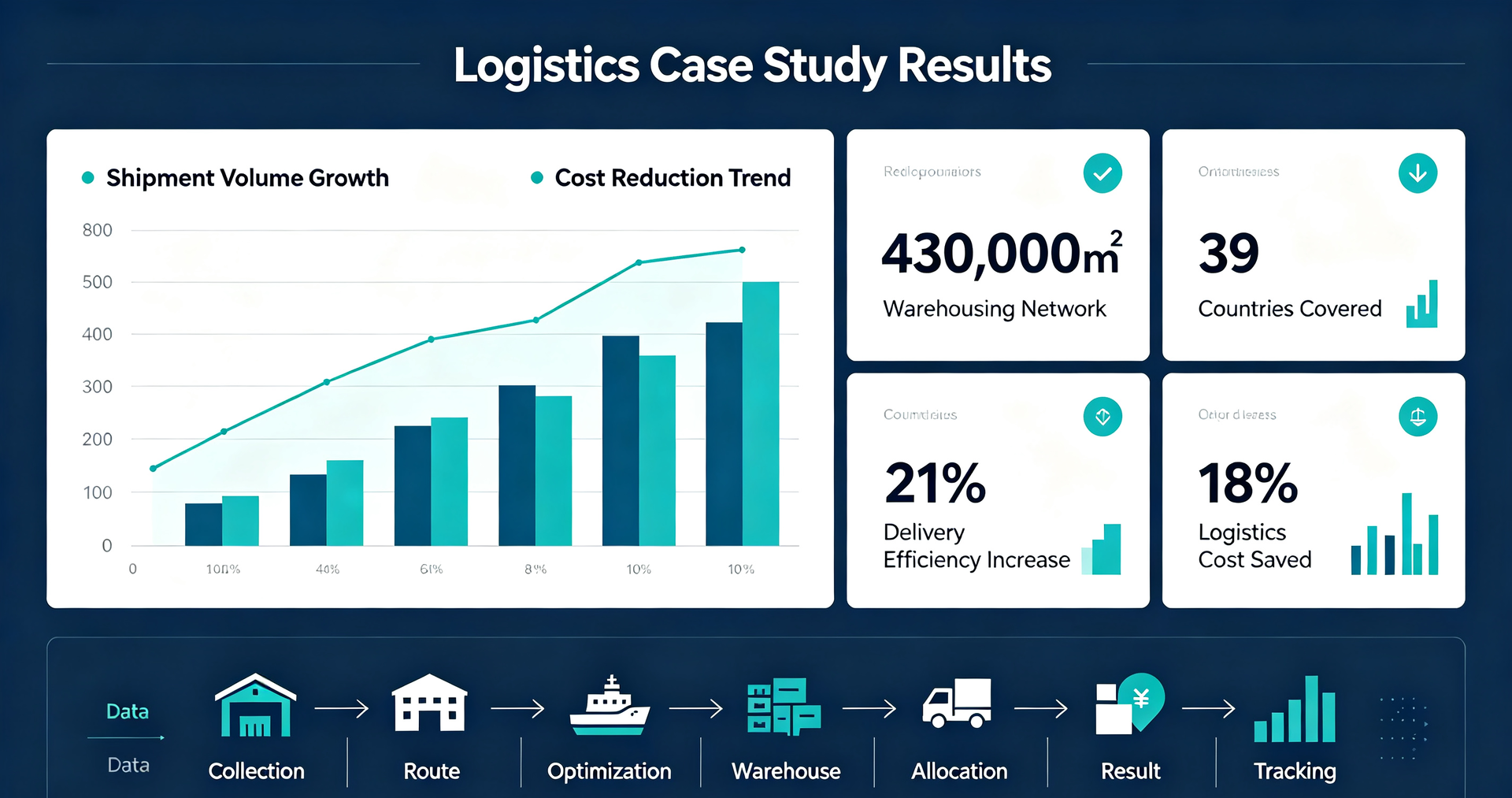
The solution: A consolidated logistics platform aggregated volumes across SMEs, securing “first-tier” carrier rates, reducing warehousing costs by over ¥100,000 annually per business, and cutting last-mile delivery costs by 15%+ via U.S. West Coast warehouses.
The result: Platform volume grew from zero to 174,000 TEU in three years, capturing 8% of Yiwu’s total container exports. Merchants gained real-time tracking and stable capacity—even during peak season.
In Yiwu, China’s global trading hub, over 4,000 freight forwarders serve more than 1.2 million small businesses. But for an exporter shipping just one or two containers at a time, the logistics market is brutal.
Li Chengfei, a logistics company owner serving 200–300 Yiwu merchants, summed it up this way: “We’re a ‘fourth-tier’ or ‘fifth-tier’ forwarder. We get the rates the big players leave behind.”
The problems were systematic:
High Warehousing Costs: Small lots meant merchants paid premium rates for scattered storage space. One business reported saving “hundreds of thousands of yuan per year” after switching to the platform.
Carrier “Rolling”: When spot rates spiked, carriers would bump small shippers’ containers to later vessels—a practice that hit SMEs disproportionately harder than large BCOs. Recent data shows that SME containers are rolled at nearly double the rate of large-volume shippers during peak months.
No Negotiating Power: Without volume, SMEs couldn’t access the long-term contract rates larger shippers enjoyed.
The stakes: Yiwu’s total exports reached ¥836.5 billion in 2025—a massive figure built on countless small shipments. Without a solution, these merchants were bleeding margin on every container they sent to the U.S., Europe, and Canada.
Enter Zhijie Yuangang, a logistics platform launched in 2022 with backing from Yiwu’s state-owned commodity market operator, COSCO Shipping Group, GLP, and a dedicated cross-border logistics fund. The vision was simple but revolutionary for the SME sector:
“We take small, scattered shipments, consolidate them to scale, and give merchants a seat at the table.” — Yuan Meng, General Manager of
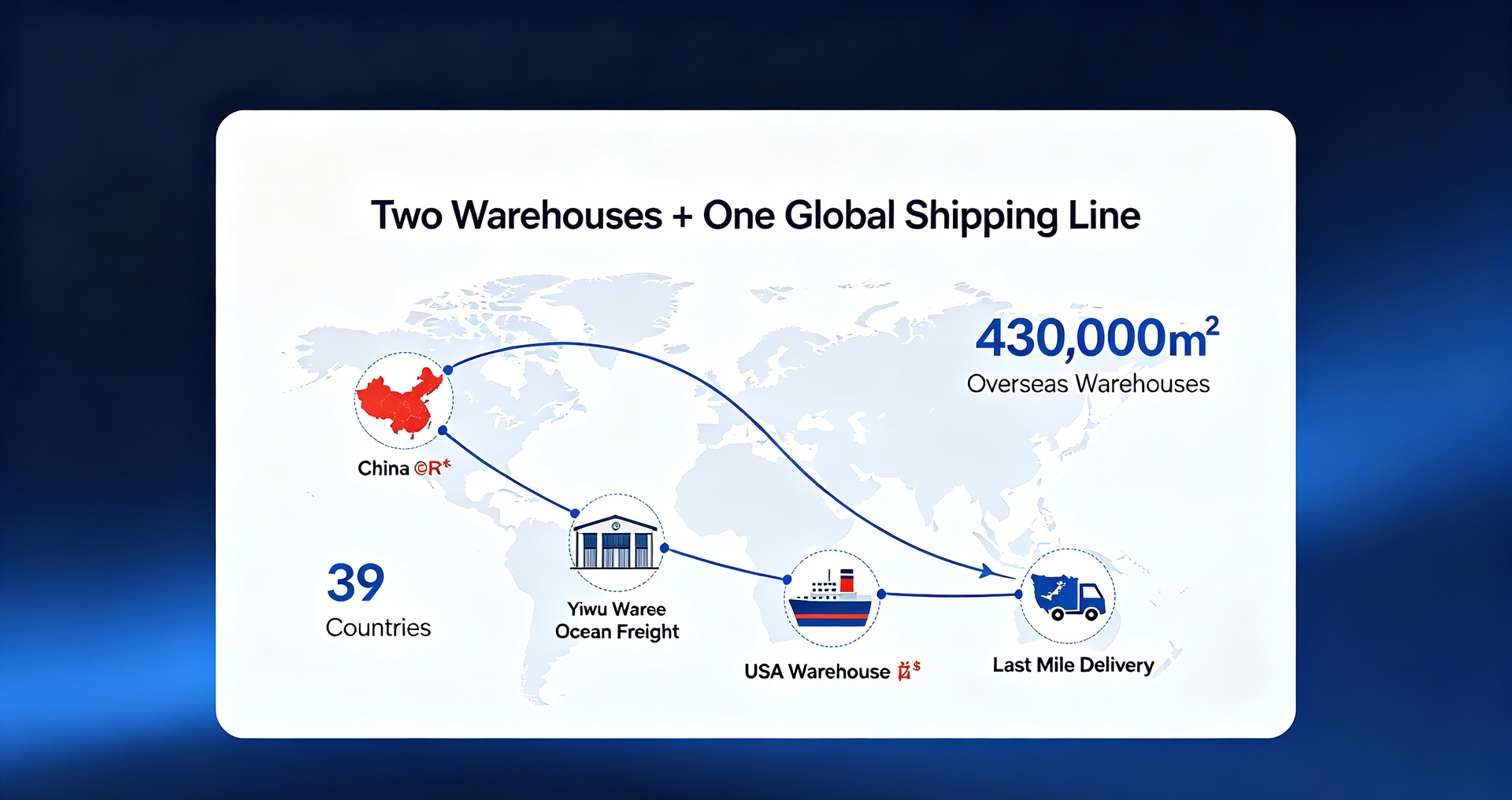
The platform built a front warehouse in Yiwu where merchants could consolidate goods, and a network of overseas warehouses—over 430,000 square meters across 39 countries, including major U.S. West Coast locations. Between them, dedicated international shipping lines provided stable capacity.
Instead of 200 SMEs each begging for container space, the platform consolidated their volumes and negotiated directly with ocean carriers as a single large shipper. Suddenly, those “fourth-tier” exporters got first-tier rates and confirmed space.
Merchants could track shipments from their phones—from order placement and customs clearance to overseas delivery. No more “blind-box logistics” where containers disappeared for weeks. The platform’s digital dashboard processed over 1.2 million tracking events in 2025 alone.
For a B2C fitness equipment seller, the platform’s U.S. West Coast warehouse delivered goods to customers in 2 days, compared to FBA warehouse timelines, cutting per-unit delivery costs by at least 15%.
The impact was dramatic and measurable:
| Metric | Before | After |
| Warehouse costs per merchant | Premium rates | ¥100,000+ annual savings |
| Carrier status | 4th–5th tier (frequent rolling) | Tier 1 (confirmed space) |
| Last-mile delivery cost (U.S.) | Standard FBA rates | 15%+ savings |
| Platform annual volume (2025) | Zero (2022 launch) | 174,000 TEU (8% of Yiwu’s total exports) |
The platform’s market share climbed from 3% in 2023 to 8% in 2025. For small merchants, the message was clear: volume doesn’t have to mean a single company’s size—it can mean strength in numbers.
Real merchant testimonial: “Before joining, I paid around ¥18,000 for a 40-foot container to the U.S. West Coast. After consolidation, the same route cost me ¥13,000–¥14,000. And the best part? No more rolling. My containers get on the ship every time.” — Zhang Wei, fitness equipment exporter, Yiwu
If your clients are small and fragmented, don’t sell them individually. Offer a consolidation service that pools volume—then use that leverage to secure better carrier rates and space guarantees. The Yiwu platform demonstrated that even 200 small shippers can become a major client when aggregated.
The platform’s U.S. West Coast warehouses were a game-changer. For forwarders targeting North America, building or partnering for overseas warehousing isn’t optional—it’s the difference between being a booking agent and a logistics partner. Industry analysis shows that forwarders with warehousing capabilities in the U.S. and Europe retain clients at a 40% higher rate than pure booking agents.
SMEs don’t have dedicated logistics teams. A simple, mobile-friendly tracking dashboard can be a decisive competitive advantage—especially when something goes wrong. The platform’s real-time tracking API processed over 50,000 daily shipment queries in 2025.
The Yiwu consolidation case proves that size isn’t destiny in freight forwarding. With the right aggregation model, SMEs can access the same rates, space guarantees, and visibility that once belonged only to the Fortune 500.
For freight forwarders, the lesson is clear: stop competing on price per SME client and start competing on the value of the pool you can build. The platform that consolidates best wins the market.
A: Start small. Identify 3–5 mid-sized clients shipping to the same region (e.g., U.S. West Coast), propose a consolidation pilot where you combine their containers weekly, and negotiate with a single carrier as a block. Document the cost savings—then use that case study to recruit more clients into the pool. The platform model can start with just a handful of customers. Industry experts recommend a minimum of 3 clients and 10 TEU per week to make a pilot viable.
A: While every carrier differs, most ocean lines start offering meaningful discounts at 50–100 TEU per month per trade lane. By consolidating 10 SMEs that each ship 5–10 TEUs, you can hit this threshold quickly. The Yiwu platform proved that even 200 small shippers can become a major client when aggregated. Freightos data indicates that consolidated shippers can achieve rates 8–15% below SME spot market averages.
A: Focus on three pain points: (1) Rolling risk—show them how often their containers get bumped (industry average: 12–18% for SMEs vs. 3–5% for top-tier shippers during peak months); (2) Rate transparency—share what tier-1 customers pay vs. what they pay; (3) Guaranteed space—offer a service-level agreement that commits to confirmed capacity. Then let the math speak: “Join this pool, and your rates drop X%, your rolling risk drops to near zero, and you get priority during peak season.”
A: Yes, though the economics differ. Air freight consolidation works best for high-value, low-weight goods (electronics, luxury goods, medical supplies). Volume discounts on air cargo start at lower thresholds (500–1,000 kg per week). For SME e-commerce sellers shipping via air to Europe or the U.S., consolidation can cut freight costs by 20–30%. However, timing is tighter—air consolidation requires daily coordination, whereas ocean consolidation works on a weekly cycle.
A: Three key risks to manage: (1) Coordination delays—if one merchant’s cargo is late to the front warehouse, the entire consolidated container is delayed; mitigate with strict cut-off times and penalty clauses. (2) Customs compliance—consolidated containers face higher scrutiny; ensure all merchants provide accurate documentation (customs brokers recommend a 48-hour document review window). (3) Carrier commitment—if you promise tier-1 rates but fail to fill the container, you absorb the loss; start with conservative volume commitments and scale up gradually.






 Email: