

WORLDWIDE FREIGHT SERVICES
Email: jack@transworldcn.com
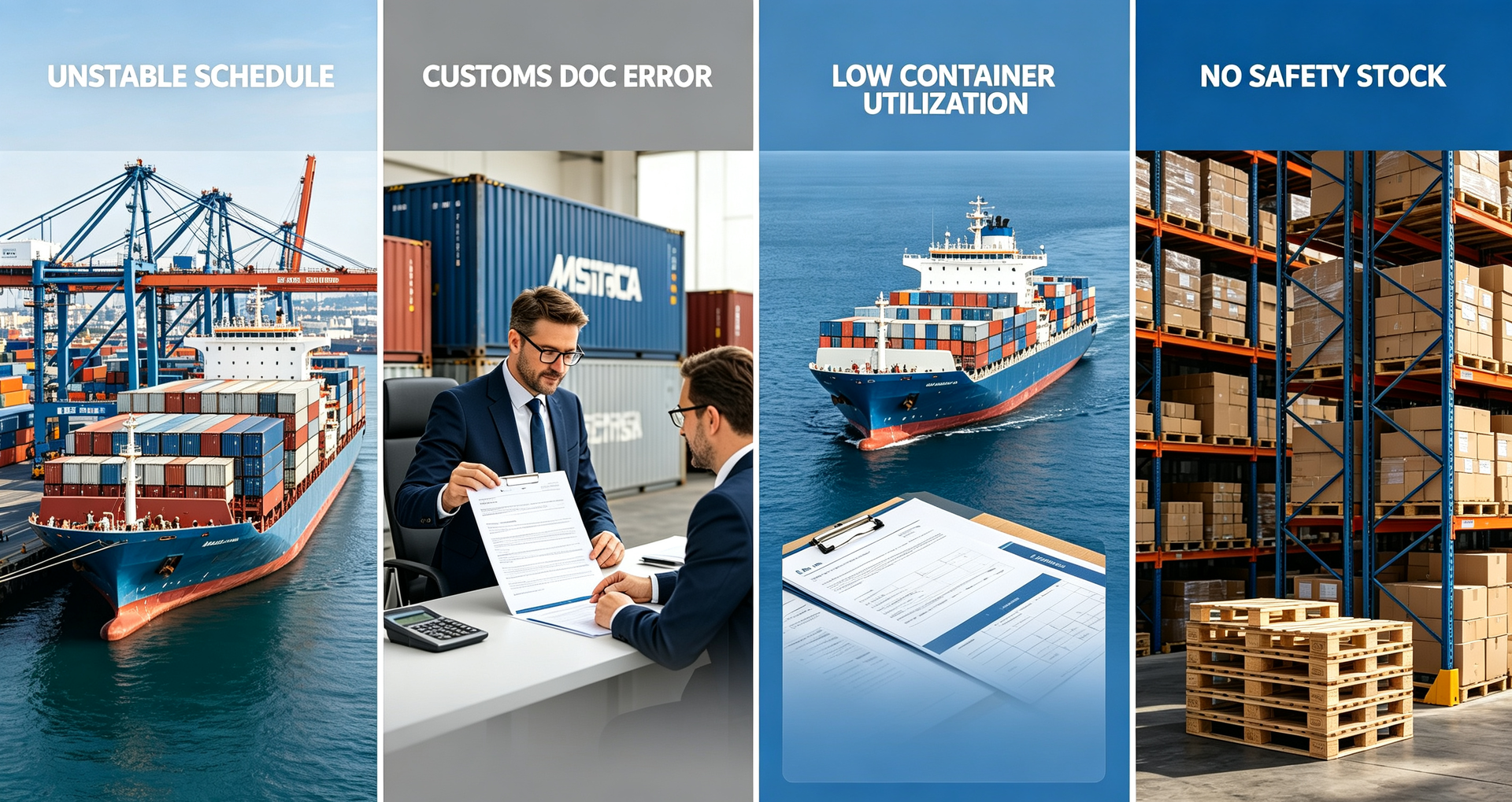
A US-based ecommerce seller importing products from China faced increasing logistics challenges before the 2026 peak season, including rising freight costs, unpredictable transit times, and inventory pressure at Amazon fulfillment centers.
By restructuring its China-to-USA ocean freight strategy, the company improved shipment planning through:
Optimized FCL container utilization
Better departure scheduling
Improved customs preparation
Regional inventory planning
More reliable delivery coordination
This case demonstrates how professional ocean freight management can help international sellers build a more stable supply chain.
The customer was a growing ecommerce business selling consumer products in the United States market.
The company sourced products from manufacturers in Shenzhen, China, and mainly sold through:
Amazon FBA
Independent ecommerce channels
Online retail platforms
As sales increased, the company needed a more predictable China USA shipping solution to support larger inventory volumes.
However, its existing logistics model created several operational problems.
The company previously arranged shipments based mainly on immediate inventory needs.
This created challenges:
Limited visibility of vessel schedules
Difficulty predicting warehouse arrival dates
Frequent last-minute booking pressures
Higher freight costs due to late reservations
Because the internal team lacked specialized customs knowledge, shipments frequently encountered issues at US ports.
Common problems included:
Incorrect HS code classification
Missing commercial invoice details
Mismatched packing list information
Delayed customs clearance processes
These errors caused container holds at the Port of Los Angeles, leading to missed Amazon FBA receiving appointments.
The seller relied heavily on LCL (Less Than Container Load) shipping for most of its inventory.
This approach resulted in:
Higher per-unit shipping costs
Longer transit times due to consolidation delays
Increased handling risks at transshipment ports
Less predictable delivery schedules
The company operated with a just-in-time inventory system.
There was no backup inventory stored in the United States.
When shipments were delayed, the seller experienced:
Stockouts on top-selling ASINs
Reduced Amazon search rankings
Lost sales during key shopping periods
Emergency air freight expenses
To address these challenges, the company partnered with Transworld to restructure its entire ocean freight process.
For core inventory items, the company switched to FCL (Full Container Load) shipments.
This change immediately provided:
Lower per-unit shipping costs for large orders
Faster direct port-to-port transit
Reduced risk of cargo damage
Priority vessel space during peak seasons
A dedicated compliance checklist was introduced for every shipment before factory departure.
The new workflow included:
Cross-verifying commercial invoice and packing list data
Pre-validating HS codes with US Customs guidelines
Ensuring correct product descriptions for all items
Confirming Amazon FBA labeling and carton requirements
This system eliminated preventable customs holds.
Instead of waiting for urgent needs, the company started booking vessel space 6 to 8 weeks in advance.
This proactive approach offered:
Guaranteed shipping space during high-demand periods
Stable and predictable freight rates
Accurate ETA planning for warehouse staffing
Better alignment with Amazon's inbound appointment system
The company established a small buffer inventory at a third-party warehouse in Los Angeles.
This allowed:
Quick replenishment to Amazon FBA during unexpected demand spikes
Reduced pressure on FBA storage limits
Minimal stockout risk during ocean transit delays
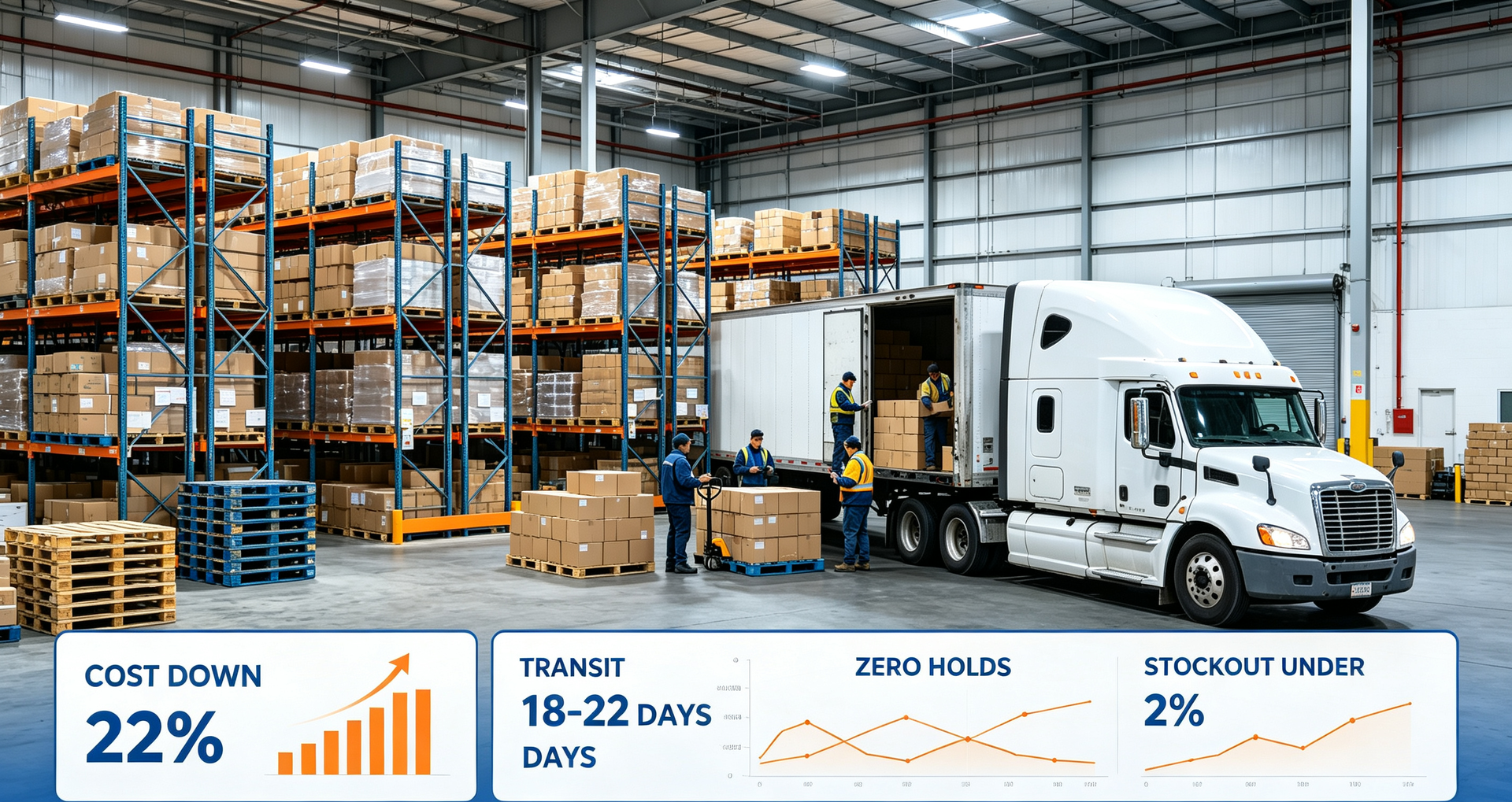
After implementing the optimized strategy for six months, the seller achieved significant improvements.
| Metric | Before Optimization | After Optimization |
| Average Transit Time (China to LA) | 30 - 38 Days | 18 - 22 Days |
| Per-Unit Shipping Cost | High (LCL + Emergency Air) | Reduced by 22% |
| Customs Clearance Holds | 4 Holds in 6 Months | Zero Holds |
| Stockout Rate During Peak Season | Over 15% | Under 2% |
| Supply Chain Visibility | Very Limited | Full Real-Time Tracking |
The seller successfully maintained 98% inventory availability throughout the Q4 peak season.
This reliability helped the brand maintain top search rankings on Amazon and achieve its highest quarterly sales revenue.
Waiting until inventory is low puts sellers in a weak negotiating position.
Booking space 6 to 8 weeks in advance reduces costs and guarantees vessel space.
US Customs holds are expensive and time-consuming.
A standardized pre-shipment document audit is the most effective solution.
For shipments over 15 cubic meters, FCL is often cheaper per unit and faster than LCL.
The slight upfront difference in price is usually outweighed by faster delivery and reduced risk.
A small inventory buffer in a US warehouse protects sellers from port congestion, carrier delays, and Amazon receiving bottlenecks.
Ocean freight is ideal for large-volume, stable inventory that does not require urgent replenishment. For time-sensitive products or low-stock emergencies, air freight remains a faster alternative despite higher costs.
FCL (Full Container Load) means you book an entire container exclusively for your cargo. LCL (Less Than Container Load) means you share container space with other shippers. FCL is faster and often cheaper per unit for shipments over 15 cubic meters, while LCL works better for smaller volumes.
Industry best practice recommends booking 6 to 8 weeks before your desired departure date. This ensures vessel space availability, locks in competitive freight rates, and allows sufficient time for customs documentation preparation.
Typical required documents include:
Commercial Invoice
Packing List
Bill of Lading
Importer Security Filing (ISF)
Customs Bond
HS Code classification for each product
Errors in any of these documents can result in holds, fines, or delays at the port of entry.
Implement a pre-shipment document audit checklist that verifies:
Correct HS codes against US Customs guidelines
Accurate product descriptions and values
Consistent data across commercial invoice, packing list, and bill of lading
Amazon FBA labeling and carton specifications
Working with an experienced freight forwarder can further reduce compliance risks.
Transit times vary by route and carrier. From Shenzhen to the Port of Los Angeles, direct services typically take 18 to 22 days. Shipments to East Coast ports (e.g., New York) generally take longer, averaging 30 to 38 days due to Panama Canal transit or intermodal rail connections.
Maintaining a small buffer inventory at a 3PL warehouse near a major port provides several benefits:
Quick replenishment to FBA during demand spikes
Protection against FBA storage capacity limits
Reduced stockout risk during ocean transit delays
Flexibility to fulfill orders from multiple channels
This strategy is particularly valuable for sellers with seasonal demand or unpredictable sales patterns.
Amazon's FBA capacity limits apply to inventory stored in Amazon fulfillment centers. Ocean freight shipments that arrive at a 3PL warehouse are not counted against FBA storage limits until they are shipped into Amazon. This gives sellers more control over when and how much inventory is sent to FBA.






 Email: