

WORLDWIDE FREIGHT SERVICES
Email: jack@transworldcn.com

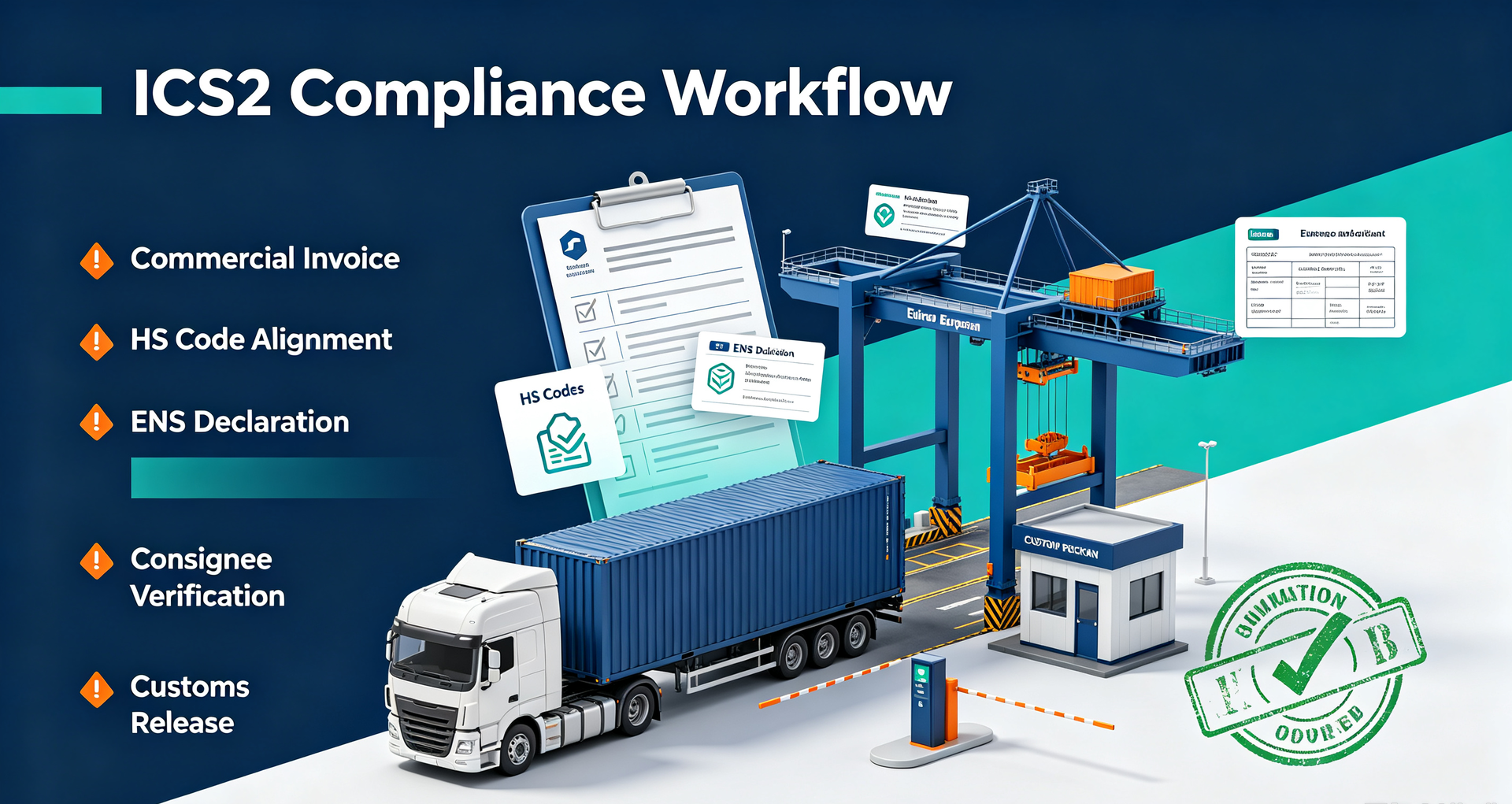
A China-based home goods seller operating across Amazon Germany, France, Italy, Spain and the United Kingdom faced multiple overlapping logistics risks ahead of the 2026 Q4 peak season. These included stricter EU ICS2 Phase 3 enforcement, rising ocean freight rates, unpredictable transit delays caused by Cape of Good Hope rerouting, and limited FBA warehouse storage capacity.
By rebuilding its pre-shipment documentation workflow, adopting a multi-modal mixed transport strategy, and piloting Amazon AWD Europe for bulk inventory storage, the seller achieved measurable improvements before Black Friday and Christmas sales peaks.
Key results include:
This case study shows how European Amazon sellers can improve peak-season performance through compliance standardization, diversified shipping and data-driven inventory planning.
The client is a medium-sized cross-border brand selling household storage products and kitchen accessories on Amazon Europe. Its primary sales channels include Germany, France, Italy, Spain and the United Kingdom, with manufacturing operations based in Guangdong, China.
As the seller prepared for Q4 2026, it faced growing pressure to maintain stable inventory availability across multiple European marketplaces.
The seller’s main logistics objectives were:
In early Q2 2026, two ocean freight shipments were detained at Rotterdam Port. The root cause was inconsistent and incomplete documentation under EU ICS2 rules.
The issues included:
As a result, the cargo was held for 11 days. The detention generated approximately €2,700 in port storage and demurrage fees. More importantly, delayed inventory arrival caused temporary stockouts for three core ASINs, which affected listing ranking and early promotional traffic before peak season.
Before optimization, the seller used ocean freight as its primary shipping method. While sea freight offered cost advantages for bulk inventory, it also created serious exposure to 2026 market volatility.
The company faced:
Because there was no alternative shipping buffer, any delay in ocean freight directly affected Amazon inventory availability.
The seller’s traditional China-to-FBA delivery model also created inventory problems. FBA storage limits made it difficult to pre-position enough stock for Q4, while demand varied significantly across European marketplaces.
For example:
This made peak-season planning especially difficult because inventory could not be easily reallocated across countries.
The seller’s small operations team previously handled documentation manually. There was no consistent process to verify invoices, packing lists, HS codes, ENS filings and Amazon inbound requirements before cargo left the factory.
This increased the risk of:
The first priority was to eliminate preventable customs detention. The logistics team introduced a mandatory pre-shipment document audit process for all DDP shipments.
Before cargo loading, the following checks were completed:
This workflow helped the seller avoid ICS2-related holds on all subsequent shipments.
For reference: ICS2 Phase 3 Compliance Checklist for EU Amazon FBA DDP Shipments
To reduce reliance on a single ocean freight channel, the seller adopted a tiered replenishment plan based on SKU velocity, margin and demand forecast.
The strategy included:
| SKU Type | Shipping Strategy | Objective |
| Slow-moving, low-margin bulk SKUs | Ocean FCL/LCL DDP | Reduce logistics cost per unit |
| Medium-velocity core SKUs | 70% sea freight + 30% EU rail freight | Balance cost and delivery reliability |
| High-turnover top ASINs | Reserved small air freight allocation | Create emergency restock buffer |
This model allowed the seller to stabilize lead times without fully shifting to expensive air freight.
For reference: EU Rail DDP Shipping for Amazon European FBA Warehouses
The seller also tested Amazon Warehousing and Distribution (AWD) Europe as a solution to FBA storage limits. Instead of sending all inventory directly to individual FBA centres, bulk stock was first stored in AWD and then distributed across European fulfilment centres based on real-time demand.
Optimized supply chain model:
China Factory → Ocean Freight → Customs Clearance → Amazon AWD Europe → Regional FBA Fulfilment Centres
Key benefits included:
The logistics team analysed 12 months of Amazon sales data, seasonal trends and marketplace-level demand patterns to create a more targeted inventory allocation plan.
| Marketplace | Inventory Strategy |
| Germany | Highest allocation for top SKUs as the primary demand hub |
| France | Steady bi-weekly replenishment cycle for core products |
| UK | Separate stock planning due to customs border requirements |
| Italy | Flexible restock batches based on seasonal demand |
| Spain | Smaller replenishment quantities to avoid overstock |
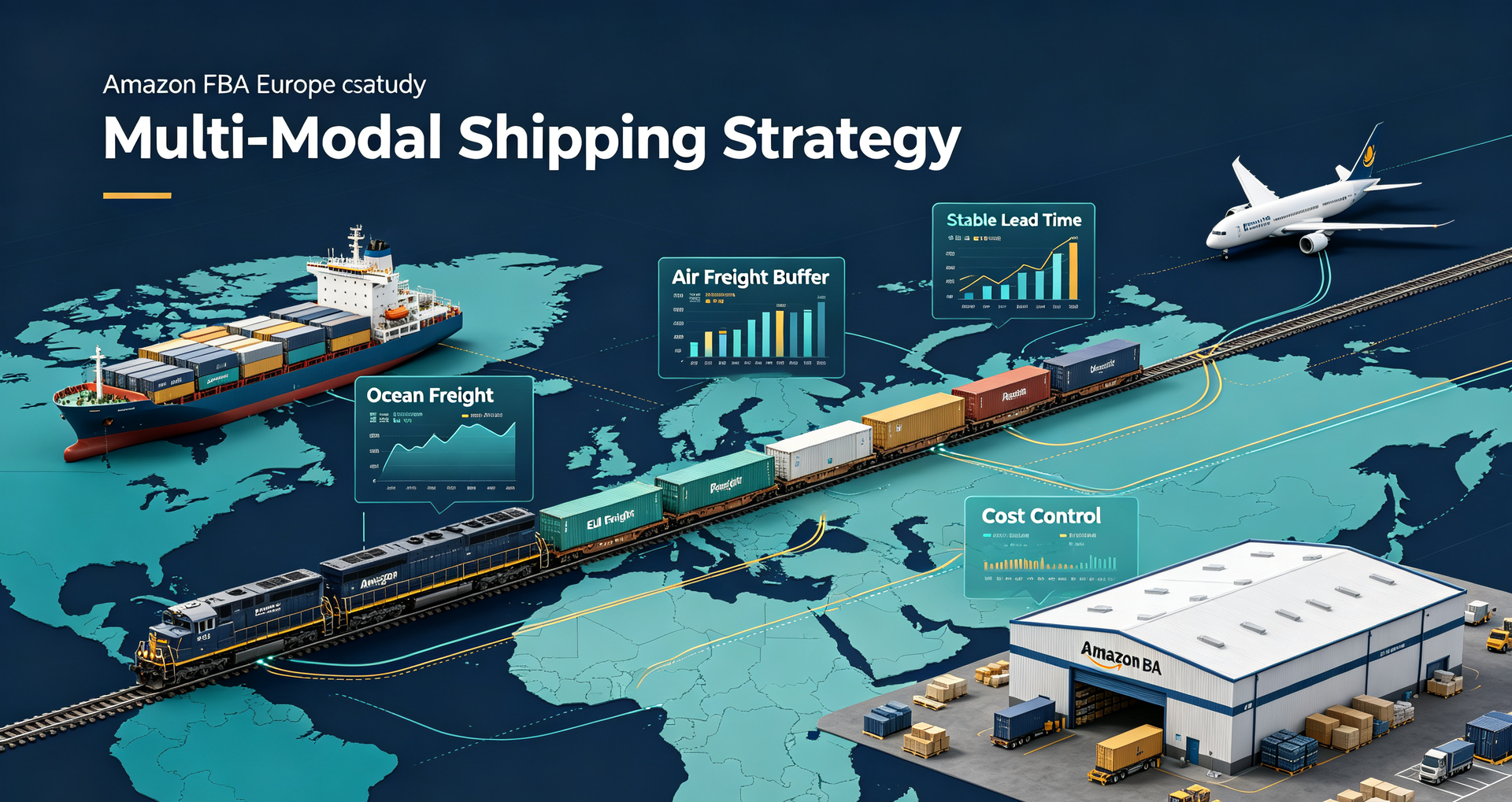
After the new logistics strategy was fully rolled out in July 2026, the seller saw clear improvements in compliance, inventory stability and cost control.
ICS2 Phase 3 enforcement is now stricter than in previous years. Documentation errors do not only cause delays; they can also lead to port detention, extra fees and lost sales. Pre-shipment verification should be treated as a non-negotiable step.
Rising freight rates, longer transit times and carrier rollovers make single-channel shipping risky for Q4. Sellers should combine sea, rail and air freight based on SKU velocity, margin and peak-season demand.
For sellers facing FBA storage limits, AWD Europe provides a flexible way to store bulk inventory before peak season. It also supports automated distribution across European fulfilment centres.
Germany, France, Italy, Spain and the UK have different demand patterns, customs rules and logistics constraints. One-size-fits-all inventory planning often leads to stock shortages in high-demand markets and overstock in slower markets.
A: AWD Europe generally delivers stronger value for brands with multiple active European marketplaces and medium-to-large replenishment volumes. Smaller sellers with limited inventory may begin with traditional FBA first and evaluate AWD as sales scale.
A: Sellers should plan for 40 to 48 days of total door-to-door DDP transit time, including customs clearance and Amazon receiving. This buffer helps account for Cape of Good Hope rerouting, port congestion and ICS2 processing time.
A: No customs broker can guarantee zero inspections. However, reliable logistics partners can reduce preventable holds by implementing strict pre-shipment checks, consistent documentation and timely ENS filing.
A: Not necessarily. Rail freight offers more stable transit times but may have higher per-unit costs and weight limitations. It is often more effective as a supplementary buffer rather than a complete replacement for ocean freight.
A: The most common mistake is using simplified or vague product descriptions. EU customs systems require detailed and consistent commodity information. Incomplete descriptions may trigger ENS errors, port holds or even “Do Not Load” instructions before cargo departs China.
Amazon FBA Europe logistics in 2026 requires sellers to manage multiple risks at the same time: stricter ICS2 compliance, volatile ocean freight pricing, extended transit schedules and tighter platform storage limits. For Q4 peak season, these risks can directly affect inventory availability, ranking performance and profitability.
This case study demonstrates that sellers can improve peak-season logistics performance through three core actions: standardized compliance workflows, diversified shipping strategies, and forward-thinking inventory planning with Amazon AWD Europe.
Instead of reacting to delays after they happen, the seller built a more resilient logistics system before peak season began. This approach reduced stockout risk, lowered unexpected costs and created more stable inventory distribution across European marketplaces.
If you are preparing your Q4 replenishment plan for Amazon Europe, review your current documentation process, evaluate multi-modal shipping options, and assess whether Amazon AWD Europe fits your inventory strategy before peak-season capacity becomes limited.






 Email: