

WORLDWIDE FREIGHT SERVICES
Email: jack@transworldcn.com

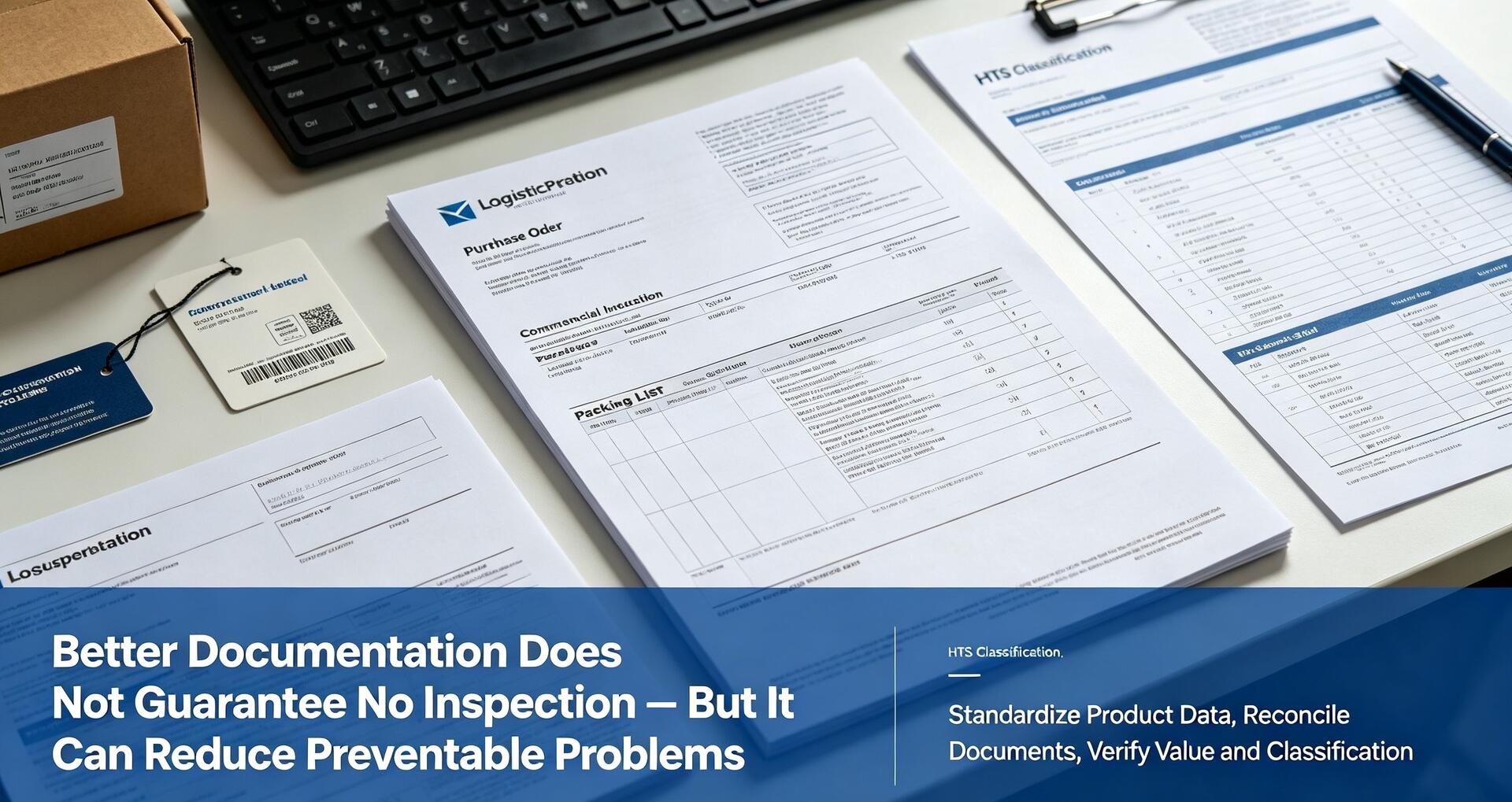
For importers shipping goods from China to the United States, customs clearance is an important part of the supply chain. A shipment may be selected for examination for reasons that are outside an importer's control. CBP has the legal authority to examine imported shipments, and importers may be responsible for expenses associated with preparing cargo for examination.
This means that US customs inspection avoidance should not be approached as a promise to prevent inspections. A more practical approach is to reduce preventable documentation, classification, valuation, and compliance problems before the shipment arrives.
The following case is an illustrative scenario, not a claim about a specific customer or a guaranteed commercial result. The numbers are included to demonstrate how an importer could structure its internal review process.
A U.S.-based importer purchases consumer products from a supplier in China and ships them to its U.S. warehouse.
For this illustrative scenario, assume the importer prepares a shipment containing:
The importer had previously experienced customs-related delays because information supplied by the purchasing team, supplier, and logistics provider was not always identical.
For example, a product might be described differently in the purchase order, commercial invoice, and packing list.
The problem was not necessarily that the merchandise was prohibited or incorrectly declared. Instead, the documentation process lacked a standardized verification step.
That distinction matters.
CBP states that importers are responsible for using reasonable care when making entry, including providing information necessary for CBP to assess duties and determine whether applicable legal requirements have been met.
The importer first created a standardized product information sheet for every SKU.
The internal document included:
| Information | Purpose |
| Product name | Identify the merchandise accurately |
| Material | Support classification and regulatory review |
| Intended use | Provide additional product context |
| Quantity | Match shipment documents |
| Country of origin | Support customs documentation |
| Product specifications | Reduce ambiguity |
| Supplier information | Maintain transaction records |
| Supporting documents | Provide evidence when required |
The purpose was not to create a complicated document.
The objective was to ensure that everyone involved in the shipment was working from the same verified product information.
CBP's commercial invoice guidance states that an invoice should contain an adequate description of the merchandise, quantities, values or approximate values, and the appropriate tariff classification information required for entry documentation.
Consider two descriptions:
"Accessories"
and
"Reusable plastic storage organizer for household use"
The second description provides substantially more information about the nature and intended use of the merchandise.
The actual description used in customs documentation must, of course, accurately reflect the merchandise. Importers should not add information merely to make a shipment appear more compliant.
The importer then introduced a document reconciliation process.
Before cargo was released to the carrier, the logistics team compared:
For the illustrative shipment of 800 cartons and 12 SKUs, the team checked whether the quantities and descriptions matched across the documents.
Two hypothetical discrepancies were identified before shipment:
The supplier corrected the documents before the cargo departed.
This is a relatively simple control, but it can prevent a much more complicated correction process after the shipment reaches the United States.
The importer also reviewed declared values.
CBP's current guidance states that, in general, the commercial invoice should show the price paid by the U.S. buyer for the imported goods. CBP also explains that certain additions may need to be included in customs value, depending on the transaction and applicable valuation rules.
This is particularly important because an importer should not simply copy a supplier's invoice value without considering whether it accurately represents the customs transaction.
For example, the importer reviewed whether:
The goal was not to minimize the declared value.
The goal was to make sure the declared value was accurate and supportable.
The importer next reviewed tariff classification.
Classification is important because the applicable tariff classification can affect duty treatment and other import requirements.
For straightforward products, the importer may already have an established classification process. For products that are technically complicated or have characteristics that make classification uncertain, the importer may need qualified customs advice.
CBP provides a Binding Ruling Program that allows importers and other interested parties to seek advance decisions on matters including tariff classification and customs valuation.
The importer therefore adopted the following rule:
Do not guess when classification is genuinely uncertain.
Instead, gather complete product information and seek appropriate professional or CBP guidance when necessary.
Another important part of the review was understanding the role of the customs broker.
The importer initially assumed that using a customs broker transferred most customs responsibilities to the broker.
That assumption was corrected.
CBP explains that there is no legal requirement for every importer to hire a customs broker, although many importers use brokers for convenience and assistance with customs procedures. CBP also states that the importer remains ultimately responsible for knowing applicable requirements and ensuring compliance.
The importer therefore established a clearer division of responsibilities:
Importer
Customs Broker
Freight Forwarder
This structure reduced confusion when a customs question arose.
The importer converted the lessons into a repeatable checklist.
CBP notes that imported merchandise may also be subject to requirements administered by agencies such as the FDA, EPA, DOT, CPSC, FTC, and USDA, depending on the product.
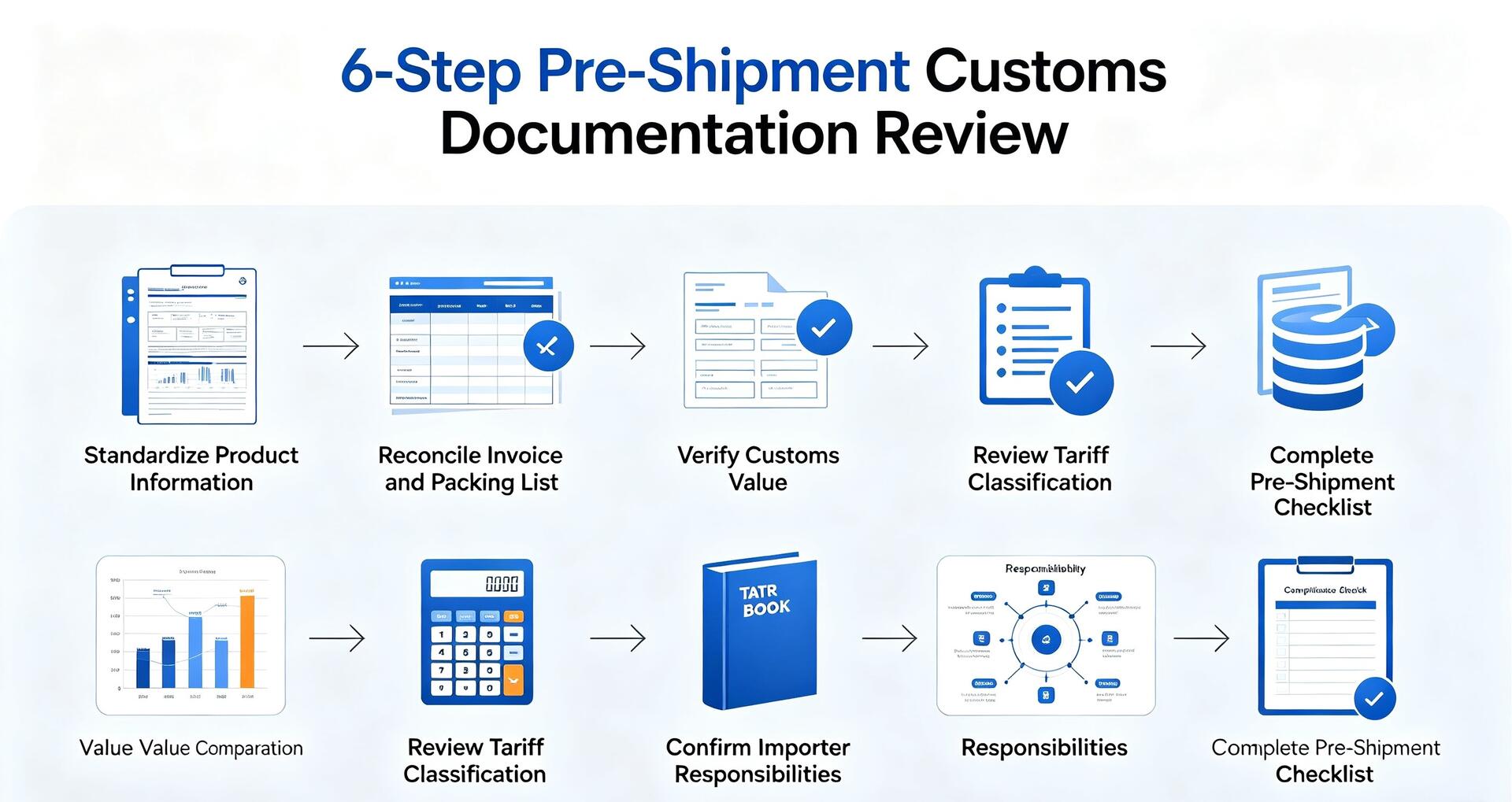
In this illustrative scenario, the most important improvement was not a promise of fewer inspections.
Instead, the importer changed its process from:
Shipment → Customs Issue → Document Investigation → Correction
to:
Product Review → Document Reconciliation → Pre-Shipment Check → Shipment → Customs Clearance
The difference is operational.
The importer now identifies discrepancies while the supplier and logistics team can still correct them easily.
For demonstration purposes, assume the importer reviews 800 cartons across 12 SKUs before departure.
The checklist identifies:
These figures are illustrative workflow data, not historical customer results.
They demonstrate how concrete checks can be incorporated into a repeatable import process without claiming that a particular number of inspections or delays will be eliminated.
Waiting until cargo arrives in the United States can make document corrections more difficult.
A pre-shipment review allows the importer to identify inconsistencies while the supplier and logistics provider still have access to the underlying transaction information.
Importers should describe merchandise accurately and sufficiently for the applicable customs requirements.
Avoid descriptions that are so broad that they fail to communicate what the merchandise actually is.
The purchase order, commercial invoice, packing list, product information, and physical shipment should be consistent.
If the documents contain conflicting information, the importer should investigate the discrepancy rather than simply choosing whichever version is most convenient.
A broker can provide valuable expertise and help with entry procedures, but the importer should still understand its responsibilities.
This is one of the most important lessons for logistics companies.
No freight forwarder should promise an importer that its shipment will never be inspected.
CBP has authority to examine imported shipments, and examination-related costs may arise for the importer.
A professional logistics provider should instead focus on accurate documentation, compliance preparation, communication, and contingency planning.
For companies regularly shipping from China to the United States, the following workflow can be used:
Step 1: Confirm product specifications.
Step 2: Identify potential regulatory requirements.
Step 3: Review tariff classification when necessary.
Step 4: Confirm product quantity and value.
Step 5: Prepare the commercial invoice.
Step 6: Prepare the packing list.
Step 7: Compare all shipment information.
Step 8: Provide complete information to the customs broker.
Step 9: Resolve discrepancies before filing whenever possible.
Step 10: Keep supporting transaction records.
This approach does not guarantee inspection-free clearance. It creates a stronger compliance process.
No. An importer, freight forwarder, or customs broker cannot guarantee that a shipment will not be examined. CBP has authority to examine imported merchandise.
No. Accurate documentation can help reduce avoidable documentation problems, but customs processing can involve factors outside the importer's control.
The importer of record has important legal responsibilities for the entry, classification, valuation, and other required information. Using a customs broker does not eliminate the importer's responsibility.
CBP guidance identifies information including an adequate merchandise description, quantities, values or approximate values, applicable tariff classification information, and seller information. Specific requirements can vary depending on the transaction.
The importer should gather complete information about the merchandise and seek qualified customs advice. CBP's Binding Ruling Program can provide advance decisions on matters such as classification and valuation.
Yes. A freight forwarder can help coordinate shipping information, suppliers, transportation, and communication with other parties. However, it should not claim that it can control CBP inspection decisions.
The most effective approach to US customs inspection avoidance is not attempting to bypass customs controls. It is building a reliable import-compliance process that reduces preventable errors.
Importers shipping from China to the United States should focus on four fundamentals:
Accurate product information + consistent documentation + appropriate customs classification + pre-shipment verification.
A customs inspection may still occur even when every document is correct. The objective is to ensure that, if customs authorities review the shipment, the importer has accurate information and appropriate records to support the transaction.
For companies with recurring China-to-USA shipments, turning these checks into a standardized pre-shipment procedure can make customs preparation more systematic and easier to manage.






 Email: