

WORLDWIDE FREIGHT SERVICES
Email: jack@transworldcn.com

US New Tariffs on Aluminum, Steel, Copper Effective June 8, 2026 – Plus Global Shipping Crisis & End of De Minimis: Full Impact & Strategy Guide
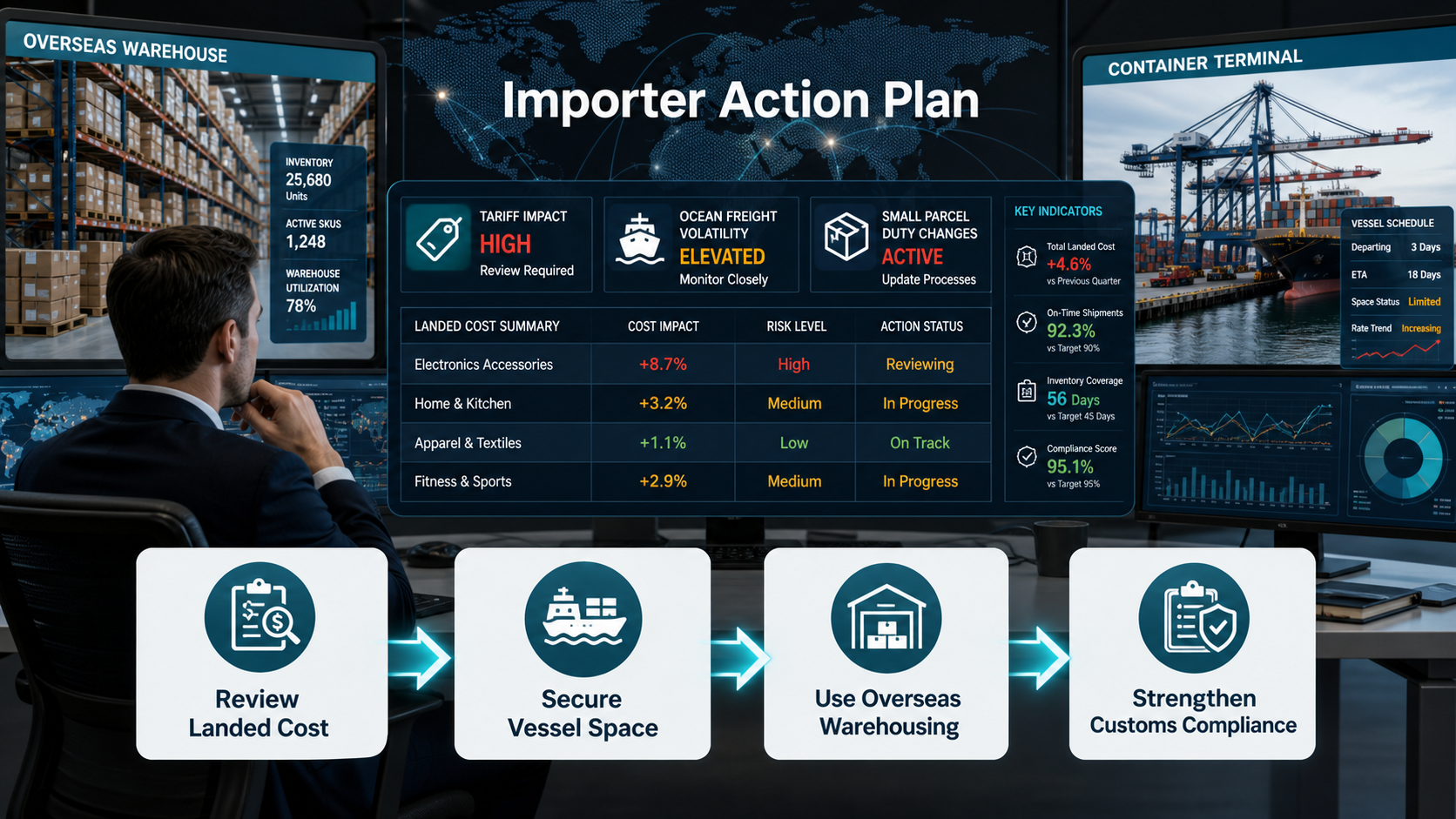
Introduction: A Perfect Storm for Global Trade in June 2026
June 8, 2026, marks a pivotal turning point for international trade, as three seismic events converge to reshape cost structures, compliance rules, and supply chain dynamics for importers, exporters, and logistics providers worldwide. First, the U.S. Customs and Border Protection (CBP) officially enforces a revised tariff regime targeting aluminum, steel, and copper—the backbone of industrial manufacturing—with adjustments spilling over into agricultural equipment and HVAC systemsThe White House. Second, global ocean freight rates continue their relentless surge, driven by container shortages, port congestion, and early peak-season demand, leaving shippers trapped in a “wait and pay more” cycle. Third, the final phase of the U.S. de minimis exemption termination goes into full effect, eliminating duty-free entry for all low-value small parcels—a policy that has sustained cross-border e-commerce giants like Temu and Shein for years.
Together, these changes create an unprecedented “perfect storm” for businesses engaged in U.S.-bound trade. Industrial importers face higher metal tariffs and stricter local-content rules; ocean carriers command premium pricing amid capacity crunches; e-commerce sellers must rebuild their entire 清关 (customs clearance) and fulfillment strategies overnight. This comprehensive guide breaks down each policy and market shift, analyzes their interconnected impacts, and outlines actionable strategies to mitigate risks, control costs, and maintain competitiveness in the new trade landscape.
Part 1: US New Aluminum, Steel, Copper Tariffs – Effective June 8, 2026
1.1 Official Launch & Legal Basis
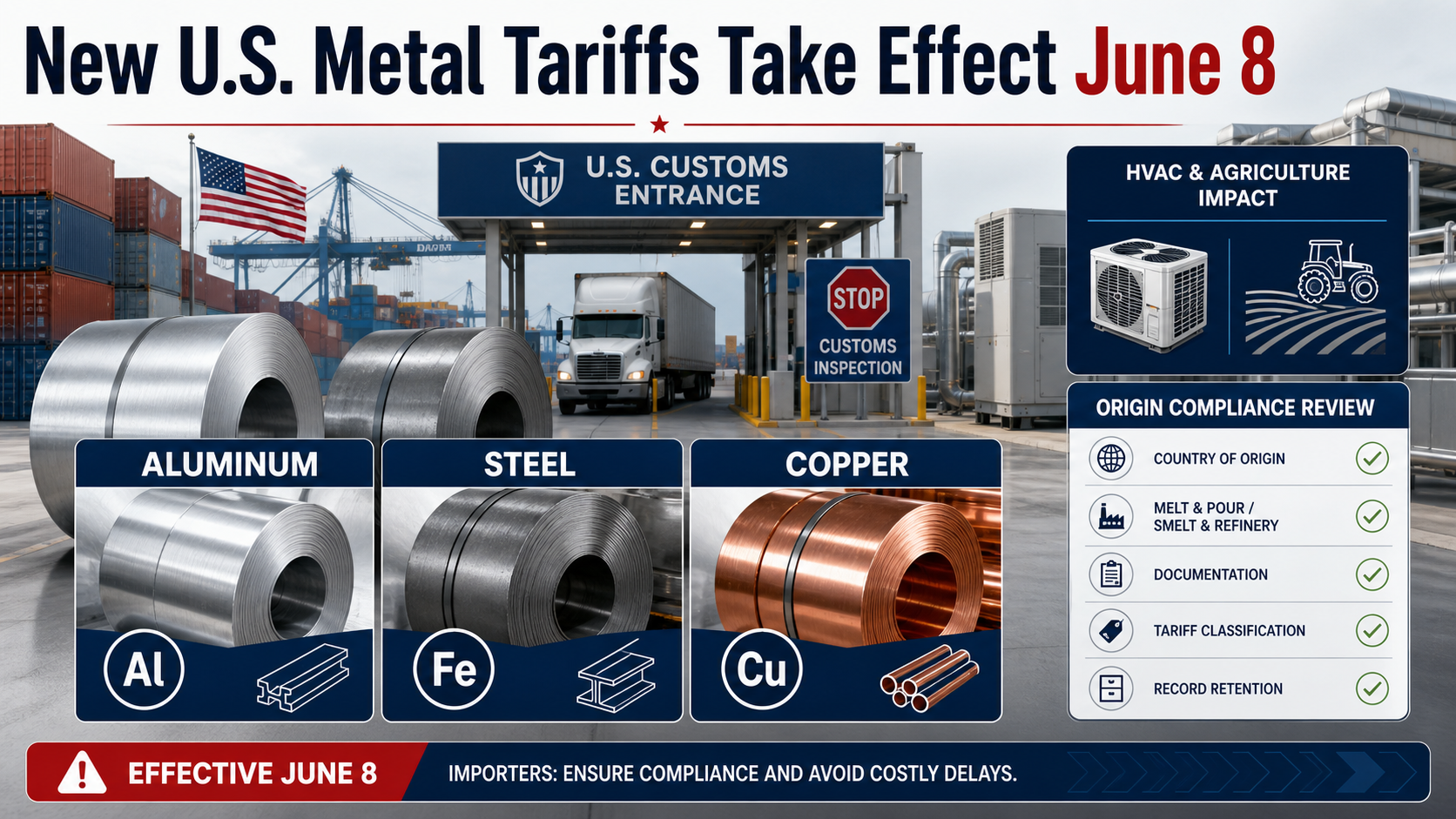
On June 1, 2026, U.S. President Donald Trump signed a presidential proclamation titled Further Adjusting the Tariff Regimes for Imports of Aluminum, Steel, and Copper into the United States, which officially takes effect at 12:01 a.m. Eastern Time on June 8, 2026The White House. The policy is authorized under Section 232 of the 1962 Trade Expansion Act, which allows the U.S. government to impose tariffs on imports deemed a threat to national security—an authority first used in 2018 for steel and aluminum, and expanded to copper in 2025.
The revised tariff framework replaces the April 2, 2026, interim rules and remains in place through December 31, 2027, with all changes applying to goods entered for consumption or withdrawn from bonded warehouses on or after the effective dateThe White House.
1.2 Key Tariff Changes for Aluminum, Steel, & Copper
The core of the new policy adjusts duty rates for primary metals and their derivatives, with targeted reductions for specific industrial sectors and revised rules for U.S.-origin content eligibility:
a) Base Tariff Rates for Primary Metals
Steel: Retains a 25% Section 232 tariff on most imports (no change from 2025 rules).
Aluminum: Maintains a 10% baseline tariff, with modified rules for derivative products.
Copper: New permanent 15% tariff on unwrought copper and semi-finished copper products (introduced in 2025, now formalized).
b) Targeted Reductions for Agricultural & HVAC Equipment
In a critical concession to U.S. domestic manufacturing and farming sectors, the proclamation cuts tariffs on metal-intensive equipment:
Agricultural machinery: Combines, harvesters, tractors, and planters see tariffs reduced from 25% to 15%.
HVAC systems & components: Residential heating, ventilation, and air conditioning equipment (largely steel/aluminum-based) also drops to a 15% tariff rate.
Mobile industrial equipment: Bulldozers, forklifts, and construction machinery added to the 15% reduced tariff category.
c) Lowered U.S.-Content Threshold for Preferential Rates
A major compliance shift revises the rules for products qualifying as “American-made” to access reduced tariffs:
Old rule (April 2026): 95% U.S.-sourced aluminum/steel/copper by weight required for 10% incentive rate.
New rule (June 8, 2026): Threshold cut to 85%—easing compliance for foreign manufacturers using U.S. metals.
Incentive: Products meeting the 85% U.S.-content requirement qualify for a 10% duty rate (down from standard 15–25%) through 2027.
1.3 Impact on Importers: Costs, Compliance, & Supply Chain Shifts
For businesses importing metal products, machinery, or HVAC equipment into the U.S., the June 8 tariff changes deliver three immediate impacts:
Higher input costs: Non-exempt steel/aluminum/copper products face unchanged or elevated tariffs, squeezing profit margins for manufacturers relying on foreign metals.
Compliance complexity: Importers must verify U.S.-content ratios for all metal-based goods, requiring detailed supply chain documentation and third-party audits to qualify for reduced rates.
Sector-specific winners/losers: Agricultural and HVAC importers benefit from 10% tariff cuts, while general metal fabricators and copper importers face sustained higher duties.
Part 2: Global Ocean Freight Crisis – Container Shortages, Rate Surges, & “Wait-and-Pay” Trap
2.1 Unprecedented Rate Hikes Across All Routes
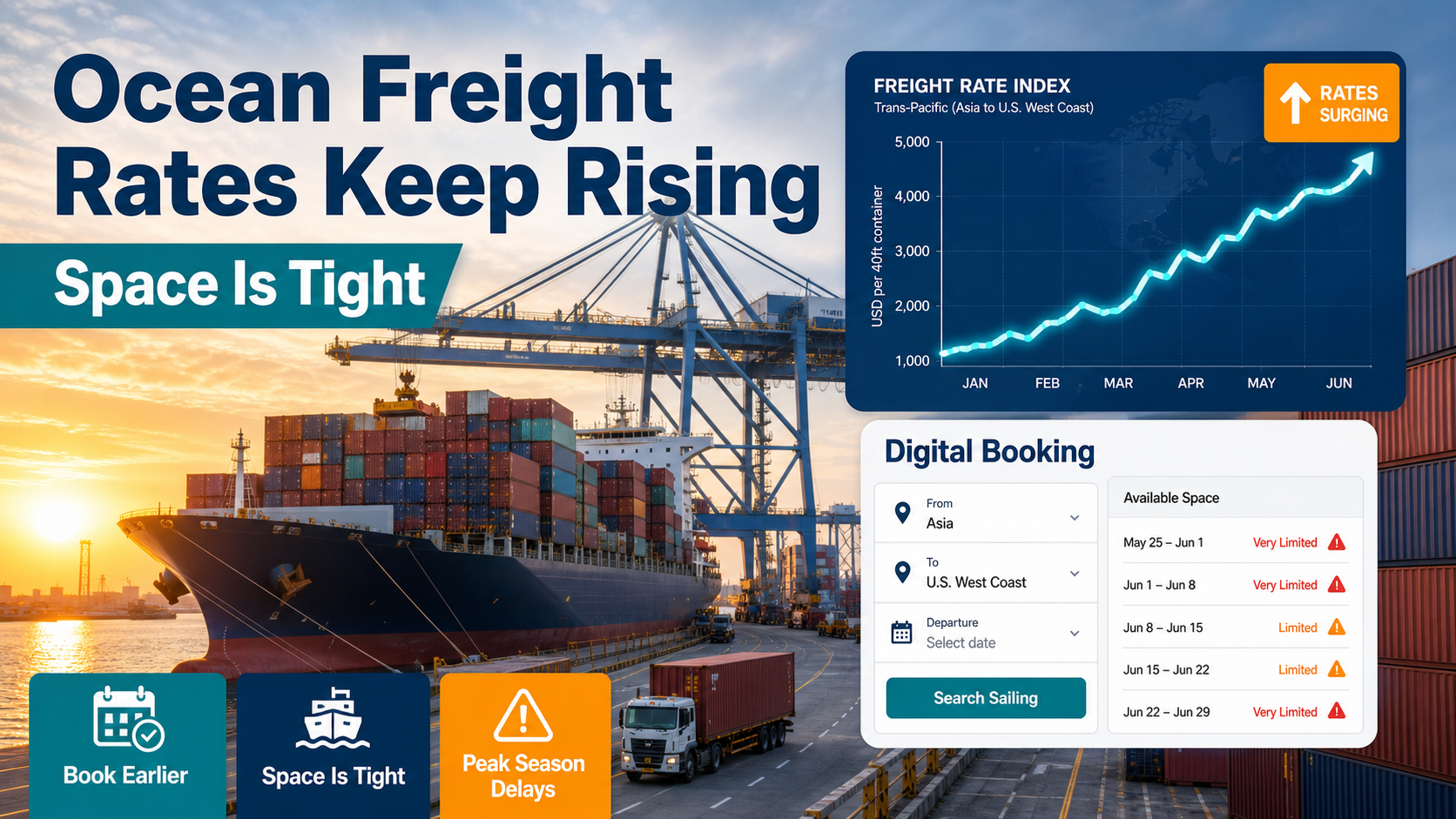
Parallel to the tariff changes, global shipping markets are experiencing their most severe surge since the post-pandemic peak, with double-digit weekly increases on all major transoceanic routes:
a) Transpacific (China → US)
US West Coast (LA/Long Beach): 40ft container (FEU) rates hit $4,149 (up 31.5% week-over-week; 87% YTD increase).
US East Coast (NY/NJ): FEU rates reach $5,333 (up 23.6% week-over-week; 70% YTD increase).
Peak Surcharges (PSS): Carriers add $1,500–$2,000 per container with 48-hour notice, with no cap on additional fees.
b) Asia → Europe
North Europe (Rotterdam/Hamburg): FEU rates stabilize above $4,100 (up 44% from May 2026).
Mediterranean: Rates jump 12% weekly to $3,263/FEU, with space fully booked through July.
c) Red Sea & Middle East Routes
Red Sea detours: Ongoing geopolitical tensions force vessels to reroute around Africa’s Cape of Good Hope, adding 7–10 days to transit times and 40–50% to freight costs.
Middle East: 30% capacity shortage post-Ramadan, with spot rates exceeding $7,000/FEU.
2.2 Root Causes of the 2026 Shipping Crisis
The current freight surge is not a temporary spike but a perfect storm of structural and seasonal factors:
Early peak-season demand: Traditional July–August peak pulled forward to May–June, as shippers rush to avoid tariff hikes and secure inventory before summer delays.
Container shortage: Global container inventories remain 20% below pre-pandemic levels, with new container prices at $3,500–$8,000 (up 30% since 2025).
Port congestion: Major hubs (Shanghai, LA, Singapore) face 2–3 day berthing delays due to labor shortages and vessel backlogs.
Carrier capacity control: Ocean lines reduce sailings (blank sailings) by 15–20% to maintain high rates, creating artificial scarcity.
2.3 The “Wait-and-Pay-More” Dilemma for Shippers
A defining feature of the 2026 shipping crisis is the escalating cost of delay:
Weekly rate increases: Carriers raise prices 5–10% weekly, meaning a 40ft container booked in June costs $1,000–$2,000 more than in May.
Space scarcity: “Cabin explosion” (container overload) is widespread, with 60% of shippers reporting they cannot secure desired sailings—even at premium rates.
Inventory risk: Delayed shipments lead to stockouts, lost sales, and rushed airfreight (costing 3–5x ocean freight) as a last resort.
Part 3: End of US De Minimis Exemption – Death of the $800 Duty-Free Parcel
3.1 Full Termination of Small-Parcel Tariff Exemptions
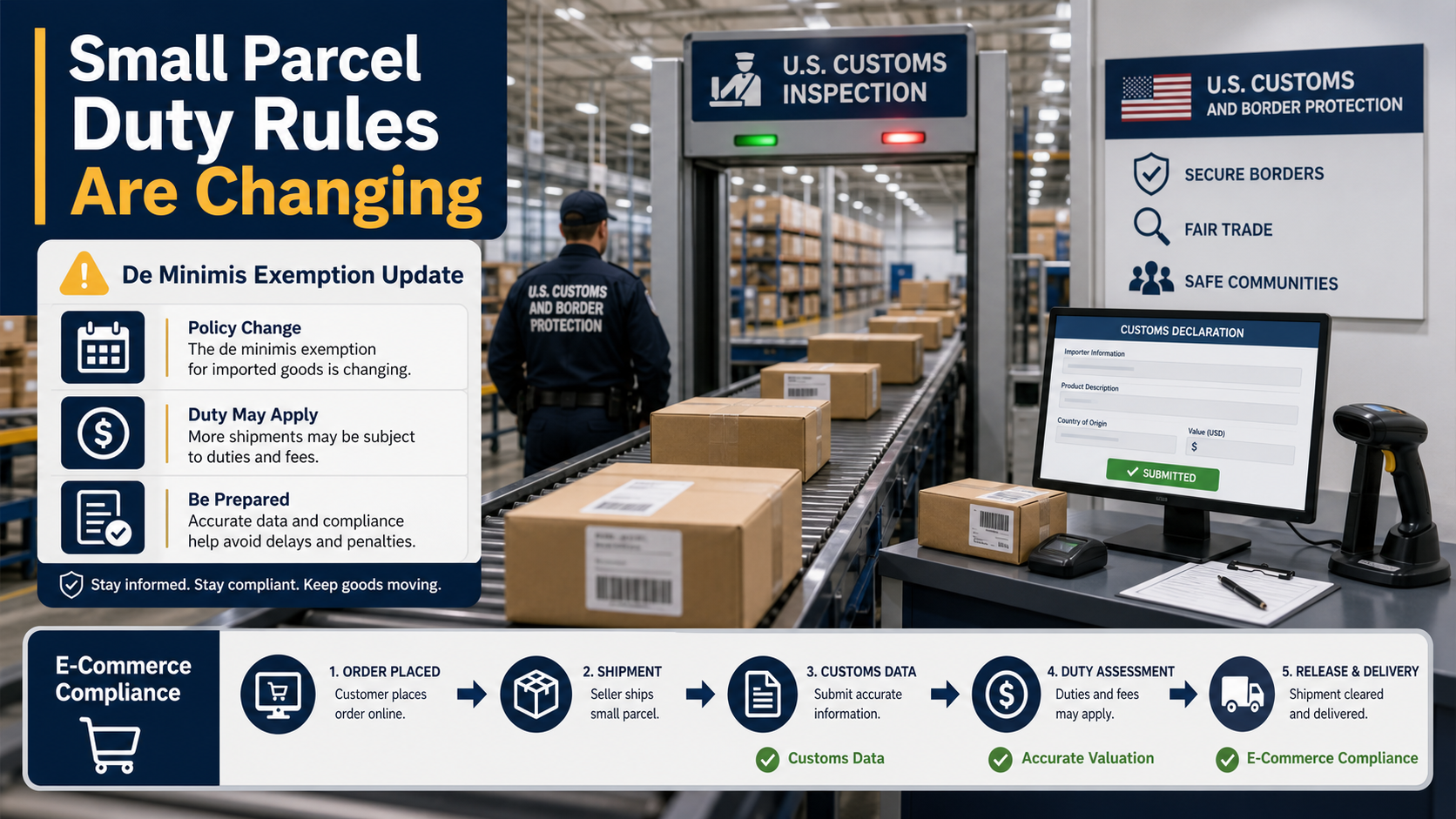
Effective August 29, 2025, the U.S. government permanently eliminated the de minimis exemption for all imports—regardless of origin or value—completing a phase-out that began with China/Hong Kong in May 2025. The rule, which previously allowed shipments under $800 to enter the U.S. duty-free with minimal paperwork, was the backbone of cross-border e-commerce for low-cost sellers.
Key details of the new policy:
No exceptions: Every parcel entering the U.S.—from a $10 t-shirt to a $799 electronics item—requires formal customs entry, HTS classification, and full duty payment.
Postal carrier changes: USPS and international postal services now impose flat fees of $80–$200 per parcel plus ad valorem tariffs, effectively doubling costs for small shipments.
Enforcement: CBP has increased inspections of small parcels by 300%, with non-compliant shipments facing seizure or fines of up to 100% of declared value.
3.2 Devastating Impact on Cross-Border E-Commerce
The end of de minimis has triggered a seismic shift in the e-commerce landscape, with data showing immediate and lasting damage:
Volume collapse: Sub-$800 parcel shipments to the U.S. have plummeted 54% since the exemption ended, with Chinese e-commerce platforms (Temu, Shein) hit hardest.
Cost surge: E-commerce sellers report 20–30% higher logistics costs due to tariffs, customs fees, and compliance paperwork.
Market exit: Low-margin sellers (30–50% of small cross-border e-commerce firms) have exited the U.S. market, unable to absorb cost increases or pass them to price-sensitive consumers.
Consumer impact: Prices for low-cost goods have risen 15–25%, with delivery times extended from 7–10 days to 2–3 weeks due to customs delays.
Part 4: Interconnected Impacts – How Tariffs, Shipping, & De Minimis End Amplify Risks
While each of the three events is disruptive on its own, their simultaneous occurrence creates compounded risks for businesses:
4.1 Cost Compression: Tariffs + Shipping + Compliance = Margin Erasure
Industrial importers: 25% steel tariff + 70% higher ocean freight + 85% U.S.-content audit costs = 50–70% increase in landed costs.
E-commerce sellers: 20% tariffs + 30% higher shipping + $80–$200 customs fees = 100–150% increase in per-parcel costs.
4.2 Supply Chain Complexity: Dual Compliance Burden
Businesses now face two layers of strict compliance:
Metal tariff rules: Verifying U.S.-content ratios, documenting material origins, and filing Section 232 tariff claims.
De minimis termination rules: HTS coding for every SKU, filing formal customs entries, and maintaining EIN/broker relationships.
4.3 Inventory & Cash Flow Strain
Longer lead times: Shipping delays (7–10 days) + customs processing (3–5 days) = 2–3 week extension in inventory cycles.
Higher working capital: Prepaying tariffs, freight, and customs fees ties up 30–50% more cash for importers.
Part 5: Strategic Solutions for Importers – Mitigate Risks & Optimize Costs
5.1 For Industrial Importers (Metal, Machinery, HVAC)
Leverage the 85% U.S.-content incentive: Audit supply chains to increase U.S.-sourced metal usage to 85%, qualifying for the 10% reduced tariff rate.
Shift to tariff-exempt categories: Prioritize agricultural/HVAC equipment (15% tariff) over general metal products (25% tariff) where possible.
Negotiate long-term freight contracts: Lock in 3–6 month shipping rates with carriers to avoid weekly price hikes.
5.2 For Cross-Border E-Commerce Sellers
Adopt bulk + overseas warehouse models: Ship full containers to U.S. warehouses, then fulfill domestically—reducing per-unit shipping costs by 40–50% and avoiding small-parcel tariffs.
Optimize product mix: Focus on high-margin items (50%+ gross profit) that can absorb tariff/shipping cost increases without losing competitiveness.
Partner with licensed customs brokers: Outsource HTS coding, entry filing, and compliance to experts to avoid delays and fines.
5.3 Universal Strategies for All Importers
Digitize supply chain management: Use AI-powered booking platforms to compare carrier rates, secure space, and track shipments in real time—reducing manual errors and delays.
Diversify shipping routes: Avoid Red Sea/transpacific bottlenecks by exploring alternative routes (e.g., Asia → Canada → U.S.) or multimodal transport (rail + ocean).
Review pricing strategies: Adjust retail prices to pass through 50–70% of cost increases, while preserving customer loyalty through value-added services (free returns, faster delivery).
Conclusion: Navigating the New Trade Normal
June 8, 2026, will be remembered as a defining moment in global trade, marking the convergence of protectionist tariffs, shipping market chaos, and the end of duty-free small parcels. For importers, the era of low-cost, low-complexity U.S.-bound trade is over—replaced by a landscape where compliance, cost control, and supply chain agility determine survival.
While the challenges are severe, they also create opportunities for businesses that adapt quickly. By leveraging tariff incentives, optimizing shipping strategies, and embracing digital compliance tools, importers can mitigate risks, protect margins, and even gain a competitive edge in the evolving market.
As the trade landscape continues to shift in 2026 and beyond, one truth remains clear: the only constant is change. Businesses that stay informed, agile, and customer-focused will not only survive but thrive in the new normal of global trade.






 Email: