

WORLDWIDE FREIGHT SERVICES
Email: jack@transworldcn.com

Overseas Warehouse & Compliance Transformation Cases for US Cross-border E-commerce Logistics Post T86 Policy Termination
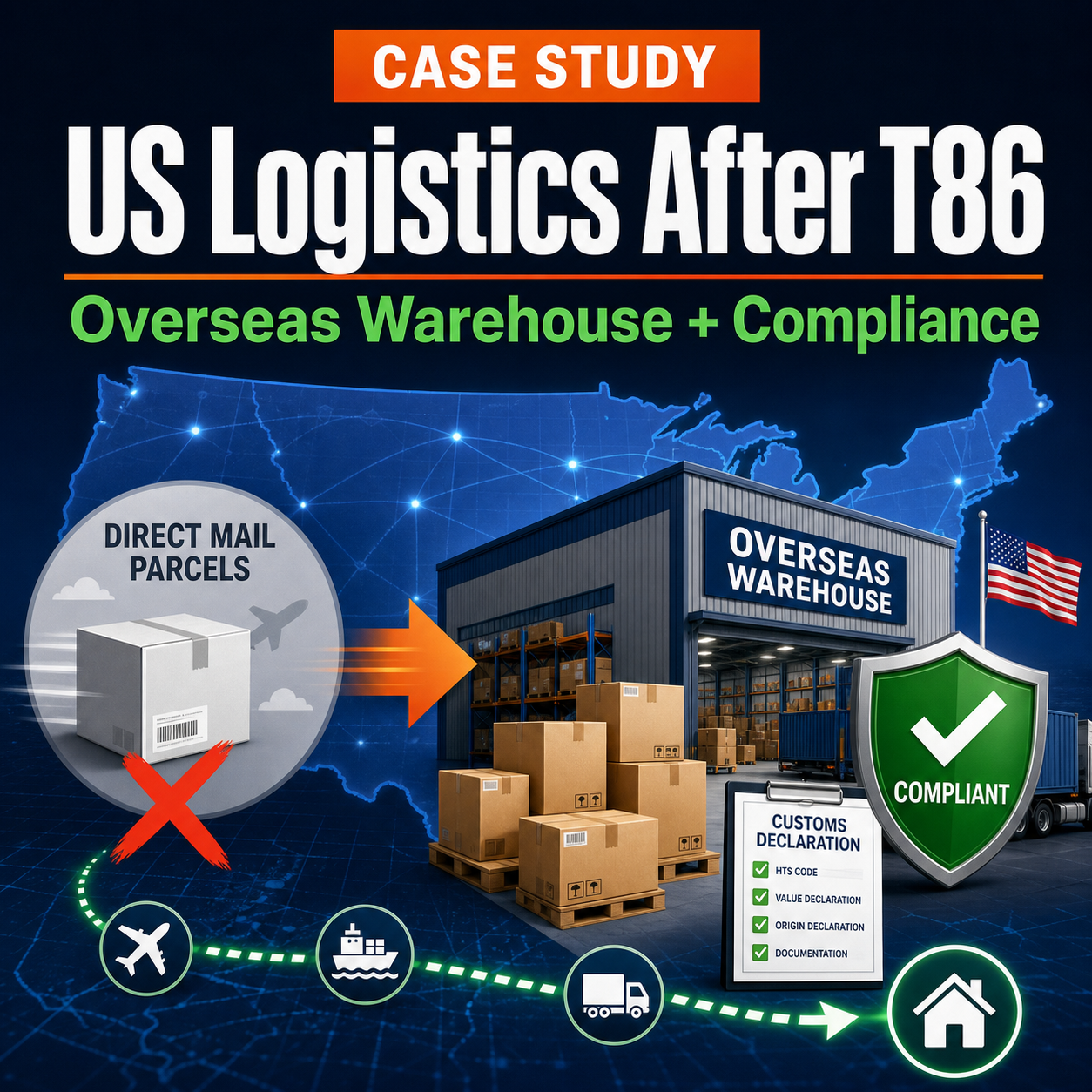
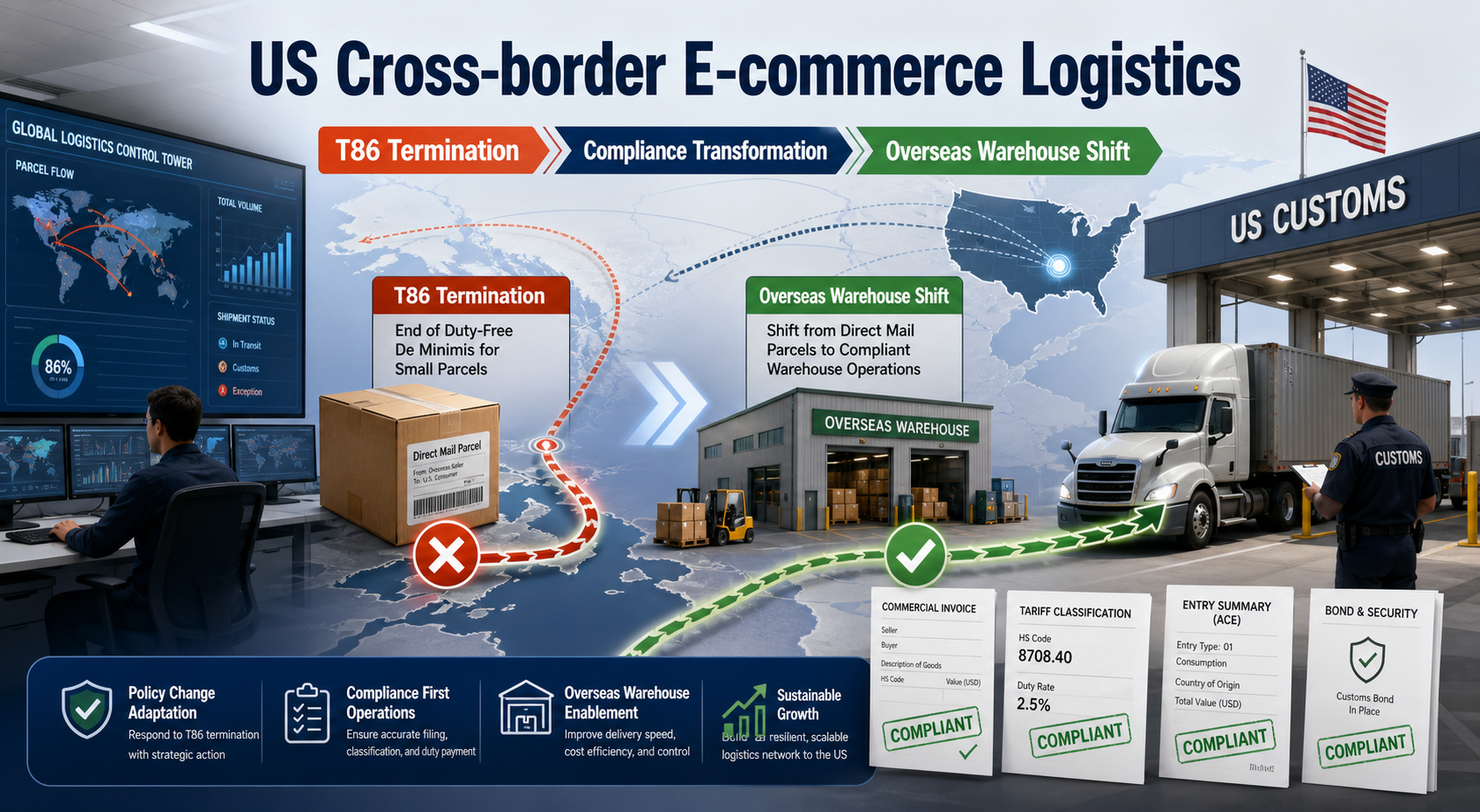
Since the second half of 2025, the official termination of the US T86 small parcel duty-free policy has completely reshaped the landscape of cross-border e-commerce logistics targeting the American market. Traditional direct mail small parcels have seen a sharp rise in comprehensive costs, forcing cross-border sellers and logistics service providers to accelerate the strategic shift to the overseas warehouse operation model. Compliance capability, end-to-end delivery efficiency and overall supply chain stability have become the core competitive indicators of US-focused cross-border logistics. This article analyzes practical transformation cases and industry selection trends, summarizing replicable experience for players in the cross-border logistics sector.
1. Core Industry Challenges Brought by the Termination of T86 Policy
The phase-out of the T86 exemption rule has delivered a profound blow to the long-popular direct mail parcel mode for cross-border shipments to the US. Previously, low-value small parcels enjoyed tax exemptions under the T86 policy, which helped sellers control logistics costs and maintain flexible inventory turnover. After the policy was scrapped, tariff and clearance costs surged for direct mail parcels, making this model no longer cost-effective for most categories.
Beyond general cost increases, cross-border shipments to the US are facing prominent compliance risks, especially for electric products, energy storage power supplies and other sensitive goods. These classified dangerous goods often encounter customs detention, inspection and even destruction due to unqualified warehousing and document procedures, causing huge economic losses and delivery delays for sellers. Meanwhile, peak seasons like Black Friday pose extra challenges: tight delivery schedules, surging order volumes and high return rates further test the comprehensive service capacity of logistics providers. Under such circumstances, simply pursuing low freight rates can no longer support sustainable business operation, and the industry has entered a new era driven by overseas warehouse + full-process compliance.
2. Haoyang International: Full-link Fulfillment Optimization & Compliance Upgrade
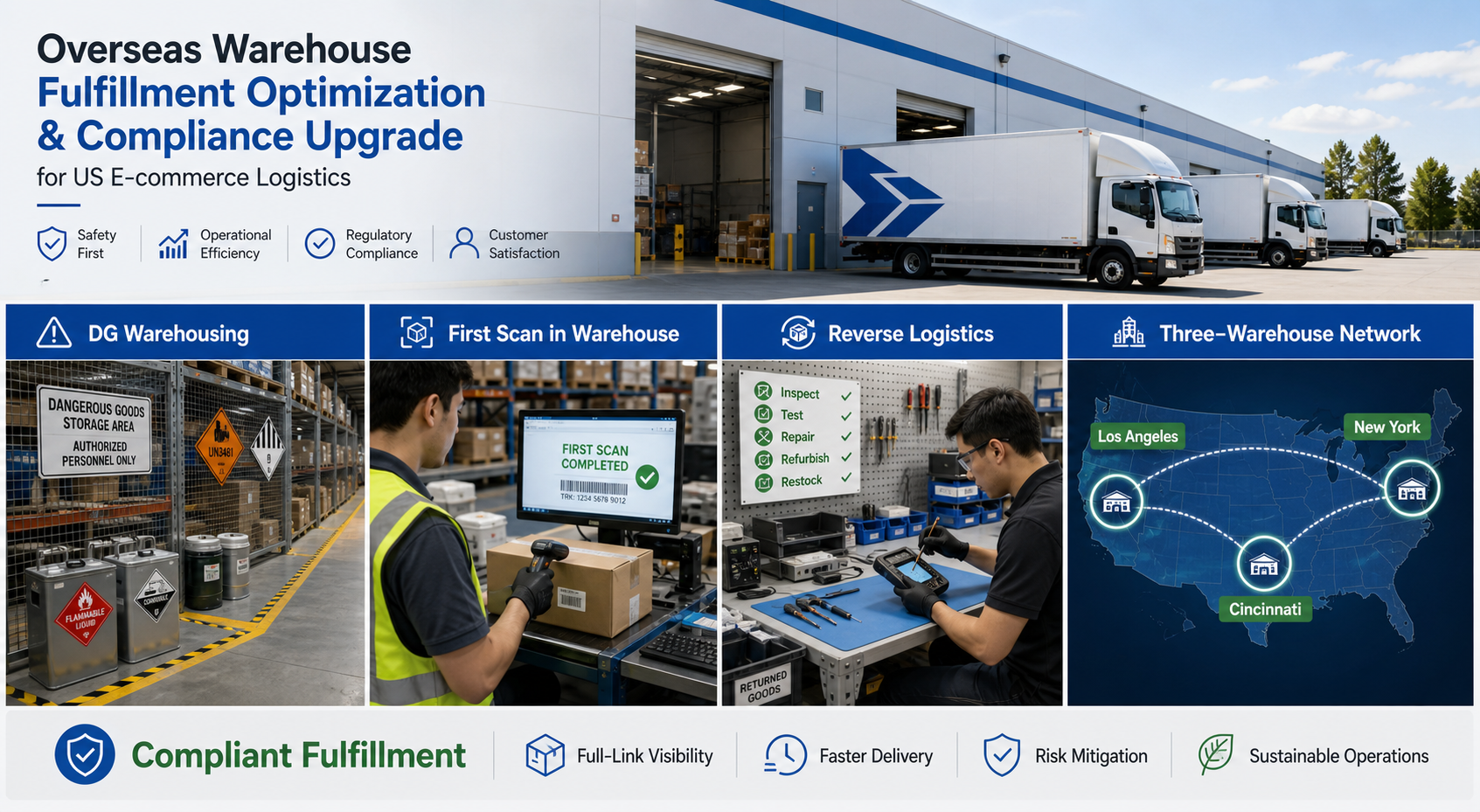
As a leading overseas warehouse service provider for the US market, Haoyang International has completed a comprehensive transformation focusing on compliance, delivery efficiency, reverse logistics and warehouse network layout, setting a benchmark for peers in the industry.
2.1 Professional DG Warehousing to Solve Compliance Pain Points
Electric vehicles, portable energy storage power supplies and other electric products are hot-selling categories in the US cross-border market, yet they belong to dangerous goods with strict storage and transportation regulations. To eliminate the risk of cargo detention and confiscation, Haoyang International’s Los Angeles warehouse has obtained official DG dangerous goods warehousing qualifications, covering Class 8 corrosive goods and Class 9 miscellaneous dangerous goods. With standardized storage areas, professional management teams and complete compliance documents, the warehouse realizes compliant storage and handling of sensitive categories, fundamentally cutting down losses caused by non-compliant clearance and storage.
2.2 FedEx Direct Certification to Improve Last-mile Delivery Efficiency
The provider has acquired the official certification of FedEx Direct Program. Packages complete the first scanning operation directly inside the warehouse, and all logistics statuses are synchronized to the FedEx system in real time. This optimization shortens the last-mile delivery time by half a day to one day. During major shopping festivals such as Black Friday and Cyber Monday, stable and fast delivery effectively reduces customer complaints and negative reviews, helping sellers maintain good store ratings and brand reputation.
2.3 Specialized Reverse Logistics for Cost Control
Facing the high return rate of electrical appliances, Haoyang International has set up an independent after-sales maintenance department for returned goods. The team conducts on-site inspection, repair and refurbishment of returned products, and arranges reshipment locally. This local processing mode avoids the high cost of cross-border return and re-shipment, greatly lowering the overall reverse logistics expenditure for sellers who operate electrical categories.
2.4 Three-warehouse Network for Continuous Supply Chain Operation
To cover the whole US market and cope with fluctuating order volumes, Haoyang International has built a linked warehouse network covering West US (Los Angeles), Central US (Cincinnati) and East US (New York). All warehouses adopt non-stop operation during holidays and peak seasons, ensuring uninterrupted inventory turnover and order fulfillment. The nationwide warehouse layout also realizes reasonable inventory distribution, cutting long-distance transit costs and supporting timely replenishment across regions.
3. New Selection Criteria for US Cross-border Logistics in 2026
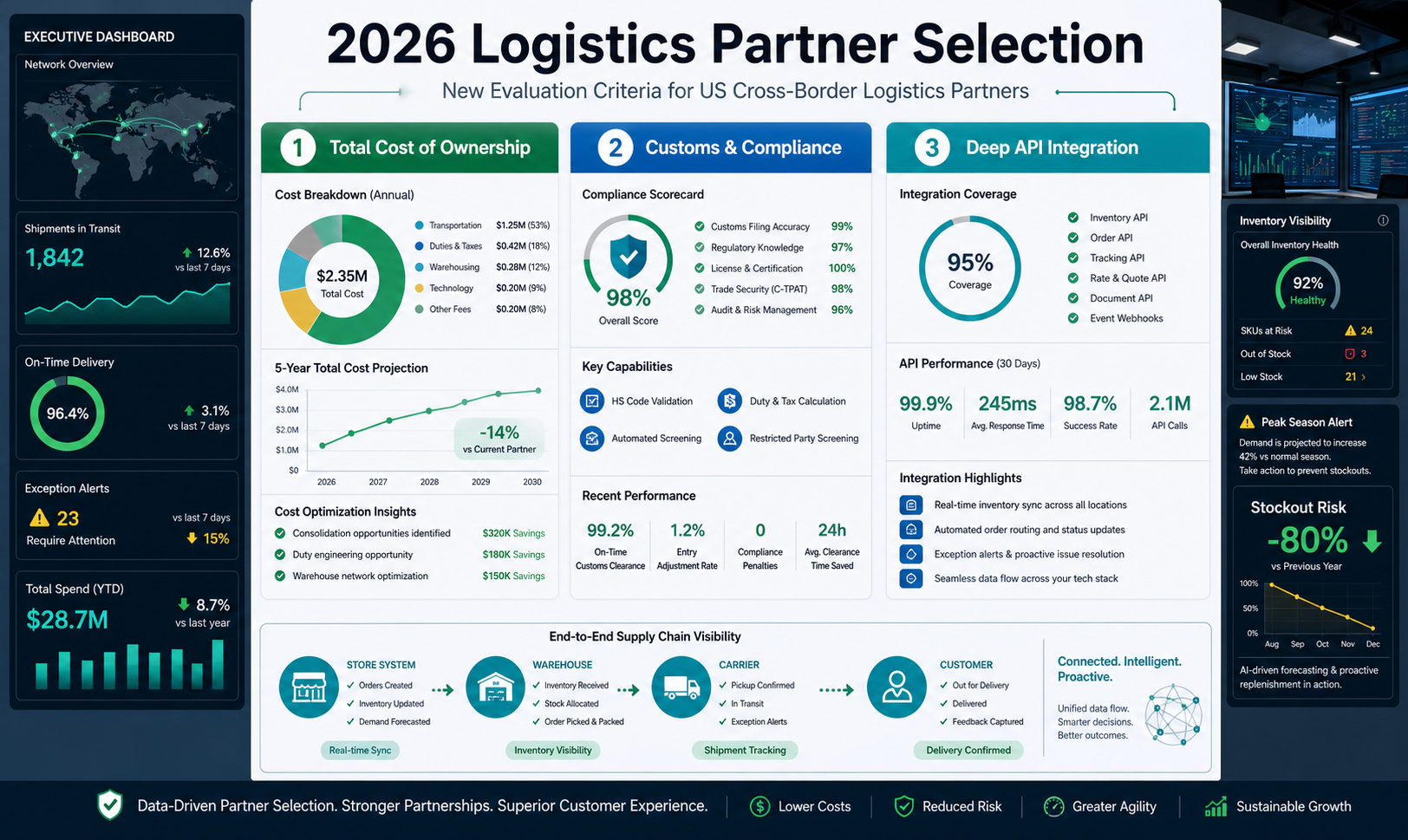
Driven by policy changes and practical operation demands, cross-border sellers have completely updated their standards for selecting logistics partners in June 2026. The single price-oriented selection mode has been abandoned, and three core dimensions have become the major evaluation factors: Total Cost of Ownership (TCO), customs clearance and compliance capability, as well as in-depth API system integration.
Total Cost of Ownership takes all expenditure into account, including warehousing fees, delivery fees, compliance handling costs, loss from cargo detention and reverse logistics costs, rather than just focusing on nominal freight. Strong compliance capability is regarded as the bottom line of cooperation, as qualified dangerous goods storage, standard clearance procedures and policy adaptability can avoid unpredictable operational risks. In addition, the depth of system docking directly affects the transparency of logistics and inventory management.
Taking Yuanyuan International as an example, the company has independently developed an intelligent logistics management system. Through seamless API connection with sellers’ store management systems, it realizes full-process visual tracking of inventory, orders and shipments. The intelligent inventory early warning function helps sellers rationally arrange stock replenishment, reducing the risk of out-of-stock during peak seasons by 80%. This fully proves that digital system capability has become an indispensable part of modern overseas warehouse services.
4. Industry Enlightenment & Future Development Trends
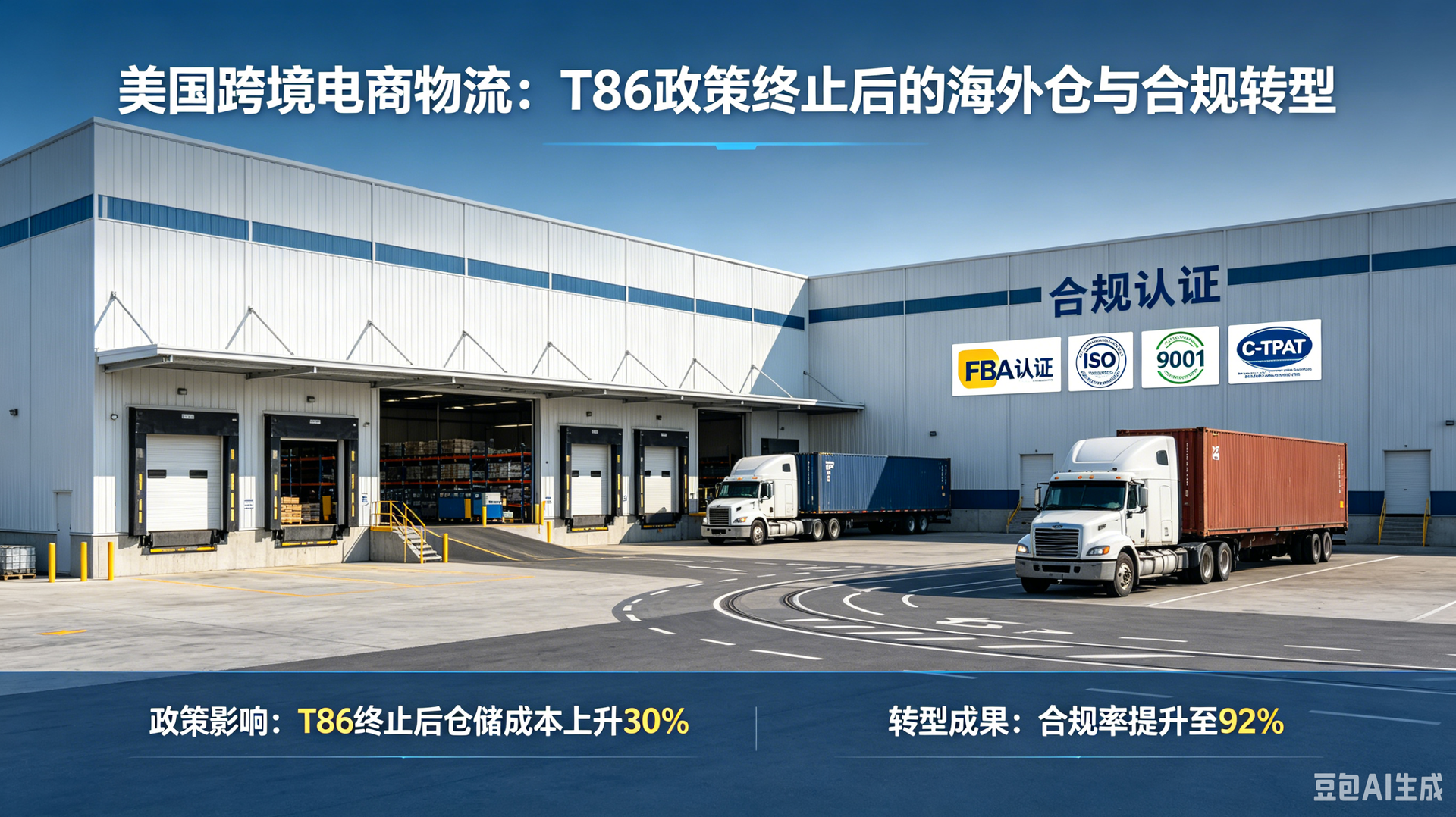
The transformation of overseas warehouse and compliance upgrade in the US market brings clear enlightenment to all participants in cross-border e-commerce logistics. First, policy adaptation must be placed in the first position. Regional trade and customs policies are always changing, and logistics providers need to keep track of policy updates and adjust service modes in a timely manner. Second, compliance is the core foundation for long-term development, especially for sensitive and dangerous categories. Investing in official qualifications and standardized management can effectively avoid operational risks.
Third, comprehensive efficiency optimization covers not only forward delivery, but also reverse logistics, inventory management and digital system construction. Only by optimizing every link of the full supply chain can logistics service providers create real value for sellers. Looking ahead, the US cross-border logistics industry will continue to move toward higher compliance standards, more intelligent digital management, denser warehouse network layout and more diversified value-added services. Overseas warehouse operators who combine compliance strength, operational efficiency and digital capability will gain greater competitive advantages in the market.






 Email: