
WORLDWIDE FREIGHT SERVICES
Email: jack@transworldcn.com
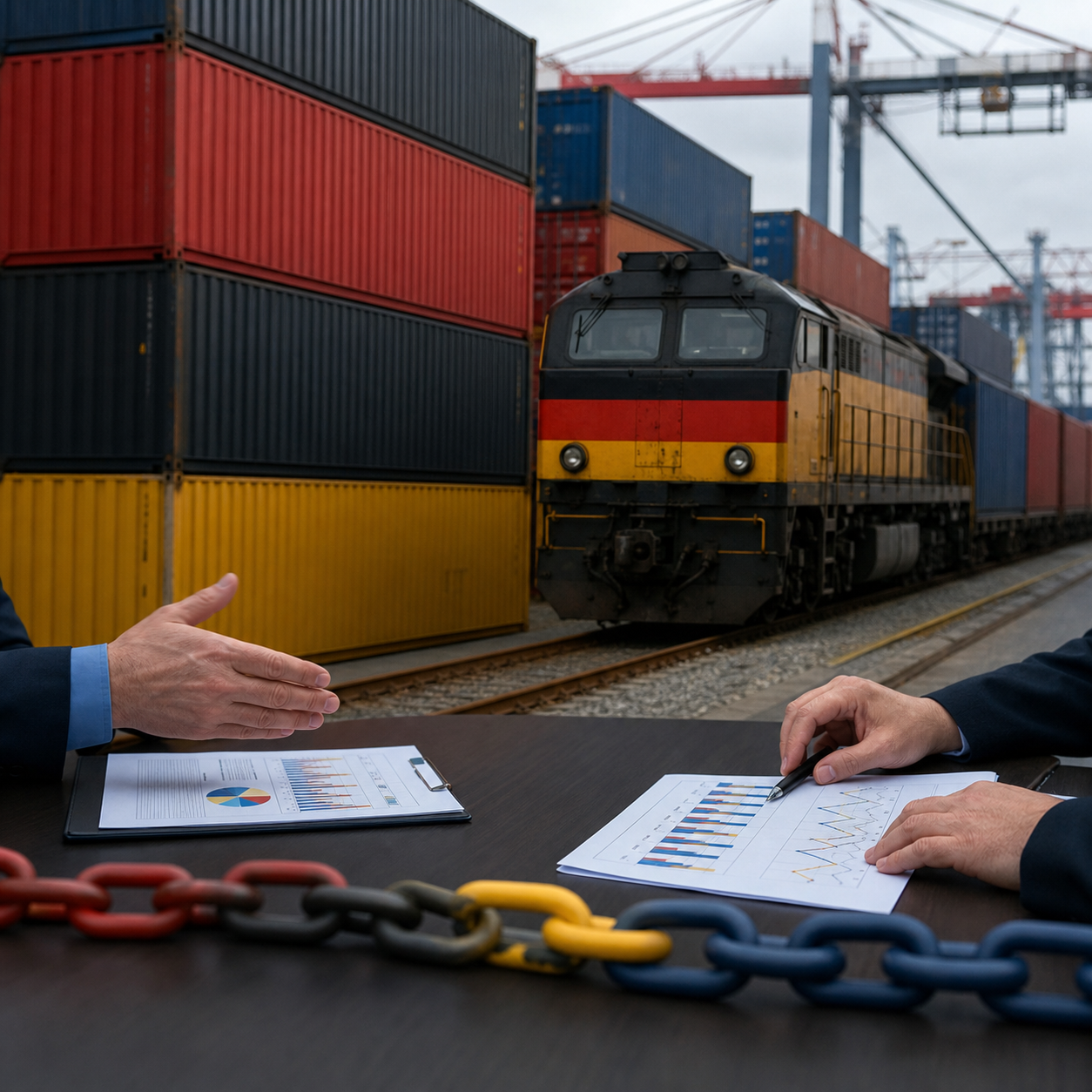
China-Germany trade in 2026 is no longer just a story of strong bilateral commerce. It is becoming a test case for Europe’s wider reassessment of China policy, industrial security, public procurement and supply-chain resilience.
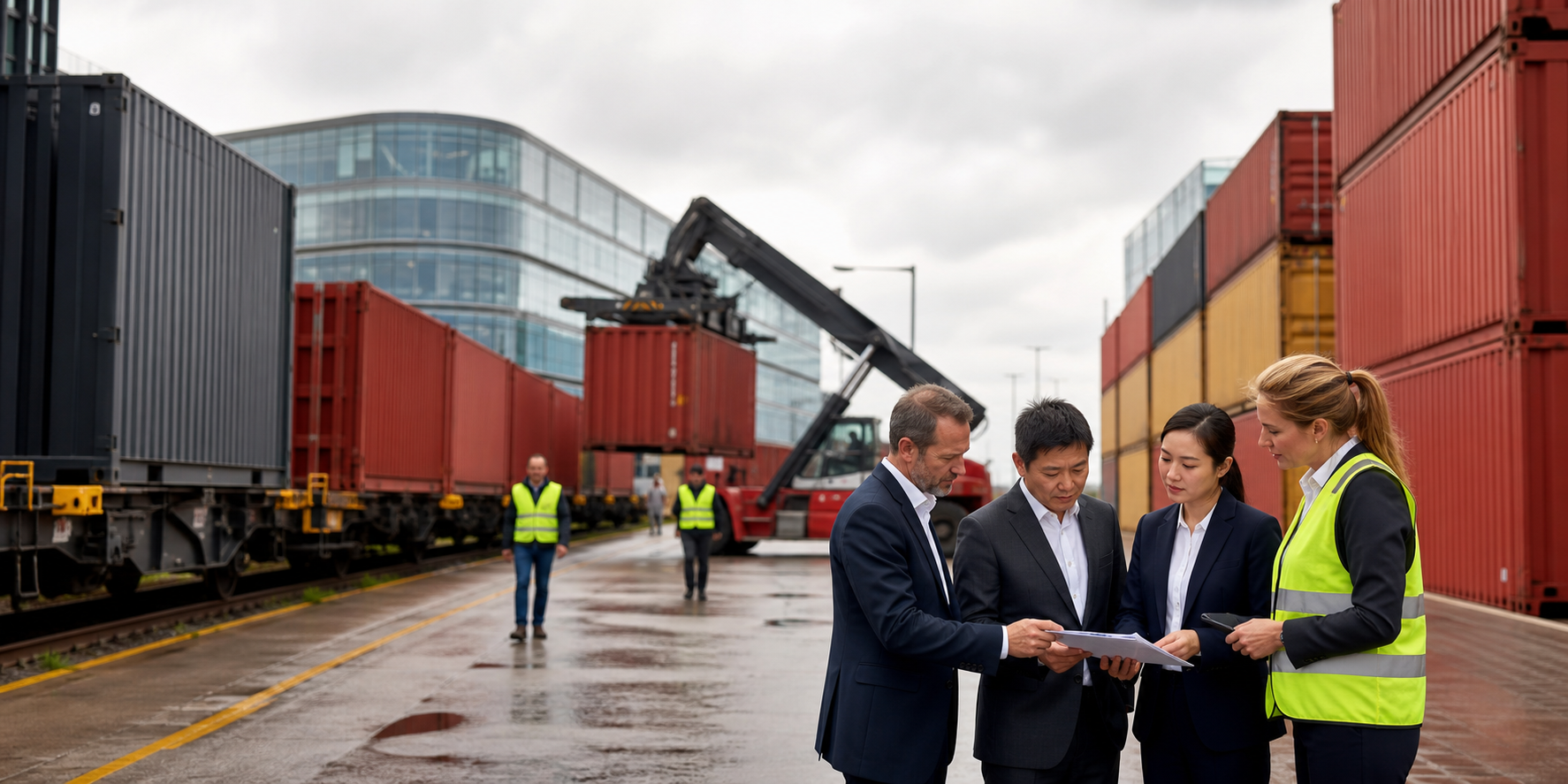
As of June 8, 2026, Germany and China remain deeply connected. According to Germany’s Federal Statistical Office, China returned as Germany’s most important trading partner in 2025, with goods trade reaching about €251.8 billion. That figure underlines the scale of interdependence: German machinery, chemicals, cars and industrial equipment are tied to Chinese demand, while German manufacturers rely on Chinese components, batteries, electronics and intermediate goods.
Yet the political mood around this relationship has changed sharply. The EU is moving from an open-trade-first model toward a more defensive industrial policy. For German companies, this creates a difficult balance: they need China as a market and supplier, but they must now navigate a Europe that is more willing to restrict Chinese access to strategic sectors.
One major flashpoint is public procurement. Recent controversy around EU-funded transport projects has exposed a basic question: should European public money be used in ways that allow Chinese state-backed companies to outbid European rivals? In Portugal, Chinese rail giant CRRC was dropped from a Lisbon Metro project after EU scrutiny under the Foreign Subsidies Regulation. In Africa, reports of Chinese companies competing aggressively for EU-funded transport contracts triggered criticism from European political leaders who argue that EU money should strengthen, not weaken, European industry.
This issue matters for China-Germany trade because German suppliers often sit inside these project ecosystems. If Brussels tightens rules on foreign-subsidized bids, German firms may gain protection in some tenders. But they could also face retaliation, higher costs, or reduced access to Chinese public procurement and infrastructure projects.
A second source of tension is technology ownership. A recent study cited by the Bertelsmann Foundation and the German Economic Institute found that Chinese entities have acquired rights to more than 11,300 patents developed in Germany over the past two decades. The concern is especially strong in mechanical engineering, automation and industrial manufacturing, where Germany’s competitive advantage depends on specialized know-how.

Patent transfers are not automatically a threat. Cross-border ownership can reflect normal mergers, licensing deals, joint research and investment. But in the current geopolitical climate, European policymakers increasingly see patent flows through the lens of technological sovereignty. The fear is that China is not only buying products from Germany, but also absorbing the intellectual property that allows German industry to lead in high-value manufacturing.
The third pressure point is the changing tariff environment. U.S.-China tariff shifts have indirect consequences for Europe. When Chinese exporters face barriers in the American market, more goods can be redirected toward the EU. This raises pressure on European producers in sectors such as electric vehicles, batteries, machinery, chemicals, metals and clean-energy technology. German industry is particularly exposed because it competes directly with China in many of these categories while also relying on Chinese supply chains.
The European Commission has already signaled that the current trade relationship with China is “not sustainable” and is considering tougher tools before key EU meetings in June 2026. These could include stronger trade-defense measures, supply-chain diversification requirements, “Buy European” preferences and restrictions on Chinese access to EU-funded projects.
Germany’s position remains complicated. Berlin has traditionally favored open markets and export access, and German multinationals have invested heavily in China. Automakers, machinery groups and chemical companies still view China as essential. But the country’s rising trade deficit with China and growing pressure on German manufacturing have pushed Berlin closer to a tougher EU line.
For businesses, the main trend is clear: China-Germany trade is shifting from efficiency-driven globalization to managed interdependence. Companies can no longer assume that the lowest-cost supplier, buyer or bidder will be politically acceptable. Compliance, subsidy exposure, patent control and country-of-origin rules are becoming central business risks.
In practical terms, German and Chinese firms should prepare for more screening of acquisitions, more scrutiny of public tenders, and tighter rules around strategic technologies. Supply-chain managers will need alternative sourcing options in Europe, Southeast Asia, India and other regions. Legal teams will need to assess exposure to EU foreign subsidy investigations. Exporters will need to monitor whether U.S. tariffs cause trade diversion into Europe, triggering new EU defenses.
The China-Germany trade relationship is not collapsing. The €250 billion-plus trade volume shows that decoupling is unrealistic. But the relationship is becoming more selective, more political and more contested. The future will likely be defined by “de-risking” rather than full separation: continued trade where interests align, tougher controls where Europe sees strategic vulnerability.
For Germany, the challenge is especially delicate. It must defend its industrial base without cutting itself off from one of the world’s largest markets. For China, the challenge is to maintain access to Europe while addressing growing concerns over subsidies, market access, reciprocity and technology transfer.
In 2026, China-Germany trade is still one of the world’s most important economic relationships. But it is no longer running on autopilot. The next phase will be shaped not only by companies and consumers, but by EU rules, tariff politics and the battle over who controls the technologies behind the next industrial era.






 Email: