
WORLDWIDE FREIGHT SERVICES
Email: jack@transworldcn.com
China to USA ocean freight remains one of the most cost-effective international shipping solutions for businesses importing products from China to the United States.
In 2026, successful importers need more than simply choosing the lowest freight rate. A reliable China USA shipping strategy requires proper transportation planning, customs compliance, inventory forecasting, and supply chain visibility.
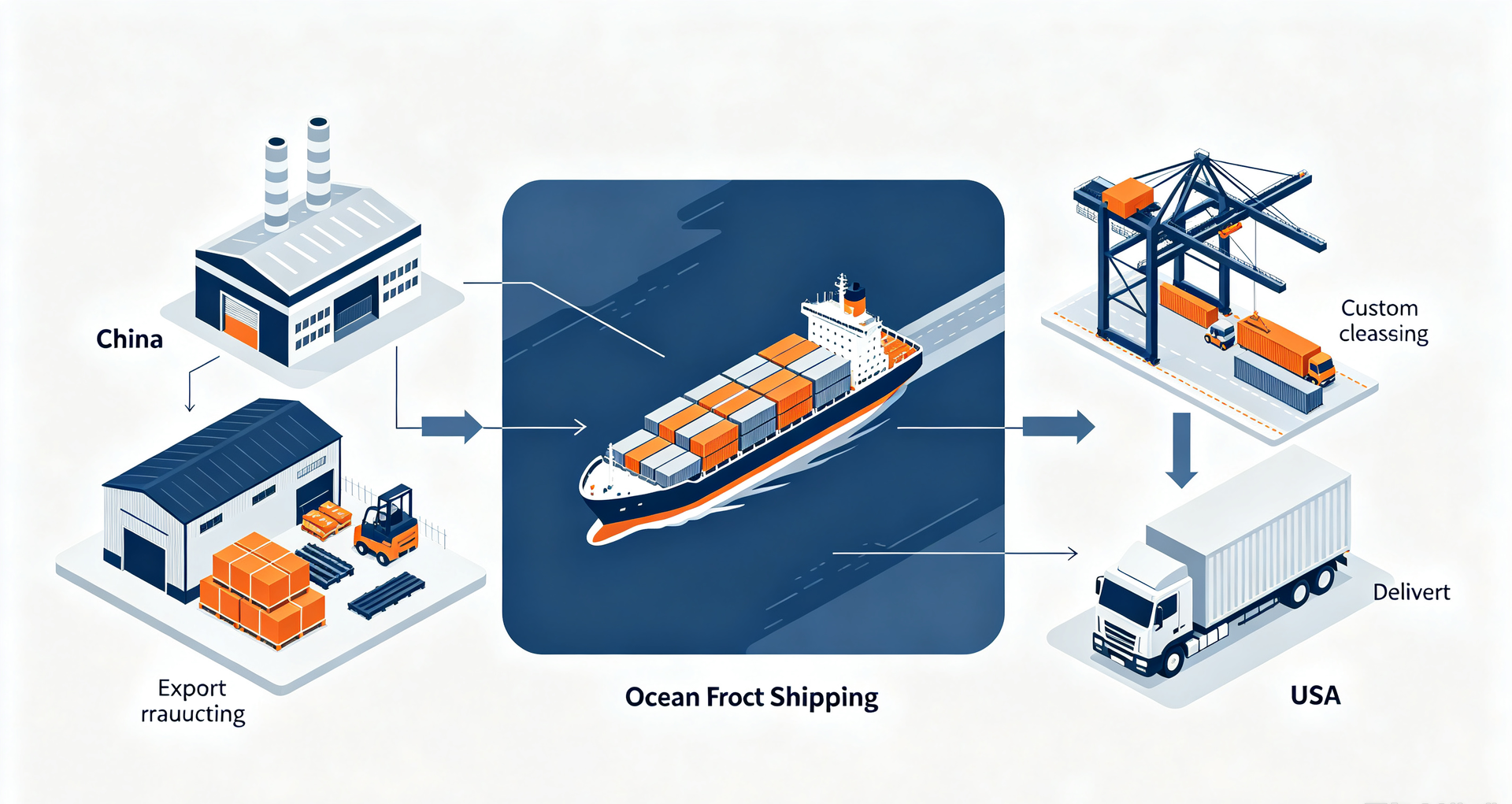
The complete ocean freight process includes:
China Supplier → Export Preparation → Ocean Transportation → US Customs Clearance → Local Delivery → Warehouse / Amazon FBA
Average ocean shipping time:
Ocean freight is widely used by:
This guide explains how China to USA ocean freight works, how costs are calculated, and how businesses can optimize international logistics strategies in 2026.
China to USA ocean freight refers to the transportation of commercial goods from Chinese manufacturing locations to destinations in the United States through container shipping services.
It is one of the most common international freight methods because it provides:
The standard supply chain process is:
Manufacturing Facility in China
↓
Export Documentation
↓
Ocean Freight Transportation
↓
US Customs Clearance
↓
Warehouse / Amazon FBA Delivery
↓
Final Customer
Unlike air freight, ocean shipping focuses on cost efficiency rather than speed, making it suitable for businesses that need to move large quantities of inventory.
Global ecommerce continues expanding, and businesses increasingly rely on international logistics networks.
However, importers are facing new challenges:
A professional ocean freight strategy helps companies maintain:
Before shipment departure, importers should confirm:
Important documents include:
Incorrect preparation may result in:
Choosing the correct container method directly impacts shipping costs and efficiency.
FCL means one importer uses an entire container.
Common container options:
| Container Type | Approximate Capacity |
| Approximate Capacity | Approximate Capacity |
| Approximate Capacity | Around 56 CBM |
| Around 56 CBM | Around 68 CBM |
Advantages:
Best for:
LCL allows multiple companies to share container space.
Advantages:
Disadvantages:
Best for:
Before cargo leaves China, exporters must complete customs procedures.
Typical requirements include:
Professional freight forwarders help verify documentation accuracy and coordinate export procedures.
Major Chinese export ports include:
Common US destination ports include:
Transit time depends on:
| Route | Estimated Transit Time |
| China → US West Coast | 15-25 days |
| China → US East Coast | 30-45 days |
| China → Inland US Locations | Additional 5-10 days |
After arriving in the United States, shipments must complete import procedures.
The process includes:
After customs clearance, cargo can be delivered to:
Ocean freight costs are affected by multiple factors.
Larger shipments usually achieve lower transportation costs per unit.
Different routes have different pricing based on:
Freight rates may increase during:
Cost depends on:
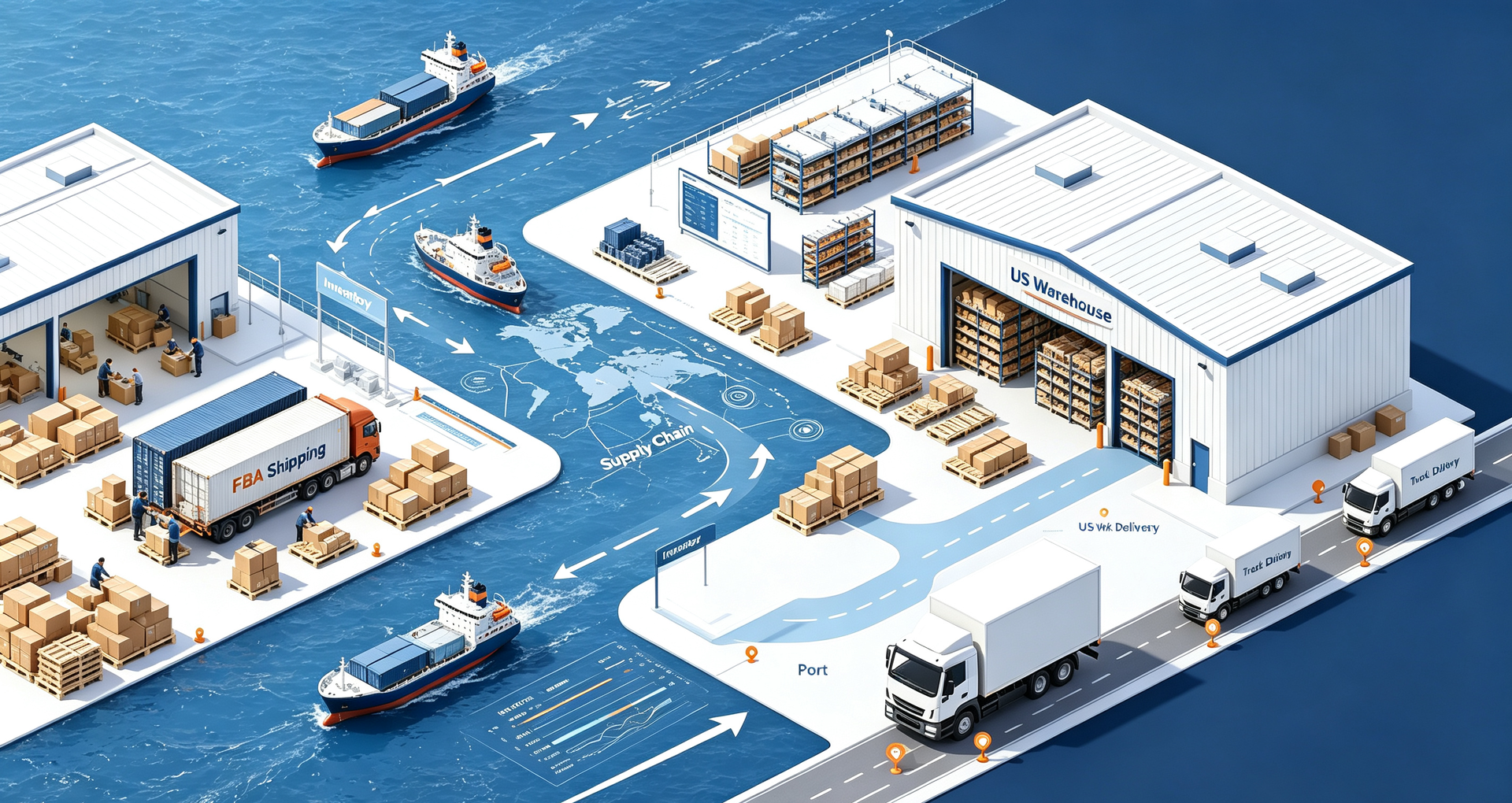
Many Amazon sellers use ocean freight because FBA inventory requires advanced planning.
A typical Amazon FBA ocean freight model:
China Factory
↓
Ocean Freight
↓
US Customs Clearance
↓
Amazon FBA Preparation
↓
Amazon Fulfillment Center
Benefits include:
Successful sellers usually prepare inventory weeks or months before peak demand periods.
Confirm:
✓ Product information
✓ HS code
✓ Packaging requirements
✓ Carton size
✓ Shipping terms
Monitor:
✓ Vessel schedule
✓ Estimated arrival time
✓ Customs documents
Complete:
✓ Customs clearance
✓ Warehouse delivery
✓ Inventory receiving
The cheapest shipping option may create hidden costs:
Businesses should evaluate total logistics costs instead of only freight rates.
A realistic timeline includes:
Insufficient planning can cause:
Professional freight forwarding companies provide:
Including:
Including:
Complete solution:
Factory Pickup
↓
Ocean Freight
↓
Customs Clearance
↓
US Delivery
Technology is improving:
More companies are adopting:
Businesses are using:
Most shipments take approximately 15-45 days depending on destination, shipping route, and customs clearance.
Yes. Ocean freight is usually more economical for large-volume shipments, while air freight is better for urgent deliveries.
For most large inventory shipments, ocean freight combined with customs clearance and final delivery is a cost-effective solution.
Many businesses work with freight forwarders because they manage transportation, documentation, customs coordination, and delivery.
FCL uses a dedicated container, while LCL shares container space with other shipments.
Christina Chen is an international logistics specialist focusing on global freight forwarding and cross-border supply chain solutions.
Her expertise includes:
She supports global businesses in developing reliable and scalable logistics strategies.
China to USA ocean freight remains a critical logistics solution for global businesses in 2026.
A successful shipping strategy requires more than booking transportation. Companies must manage:
With increasing complexity in international trade, businesses that build flexible and professional supply chains will achieve stronger operational stability and long-term growth.
For companies importing from China to the United States, choosing the right ocean freight strategy can significantly improve cost efficiency, delivery reliability, and market competitiveness.






 Email: