

WORLDWIDE FREIGHT SERVICES
Email: jack@transworldcn.com
Amazon FBA logistics covers the full supply chain flow from overseas suppliers, international transport, and customs clearance to Amazon warehouses and end-customer delivery. In 2026, cross-border sellers cannot rely only on low-cost shipping. A competitive logistics system combines freight scheduling, demand forecasting, import compliance and regional fulfillment models such as Amazon AWD Europe. Thoughtful logistics planning prevents stockouts, controls overall operational costs and stabilizes listing performance across US, EU and Canada Amazon marketplaces.
For sellers shipping goods from China to global Amazon sites, logistics decisions directly shape:
This guide breaks down the end-to-end workflow, latest industry trends, and practical strategies to build an efficient cross-border ecommerce supply chain.
Amazon FBA logistics covers all transportation and supply chain activities required to deliver products from manufacturers to Amazon fulfillment centers and final buyers.
The standard workflow: Supplier → Manufacturing → Quality Inspection → International Freight → Customs Clearance → Amazon FBA Warehouse → Customer
Amazon’s FBA service handles:
However, sellers remain fully responsible for:
Therefore, sustainable FBA performance heavily relies on upstream logistics management, as outlined in our multi-region Amazon FBA DDP case study.
Cross-border ecommerce continues to expand, yet sellers face mounting operational obstacles:
According to cross-border supply chain research, precise inventory planning and standardized shipment preparation are core pillars of stable FBA operations (Chen, 2026). Professional logistics management effectively lowers disruption risks and improves business predictability.
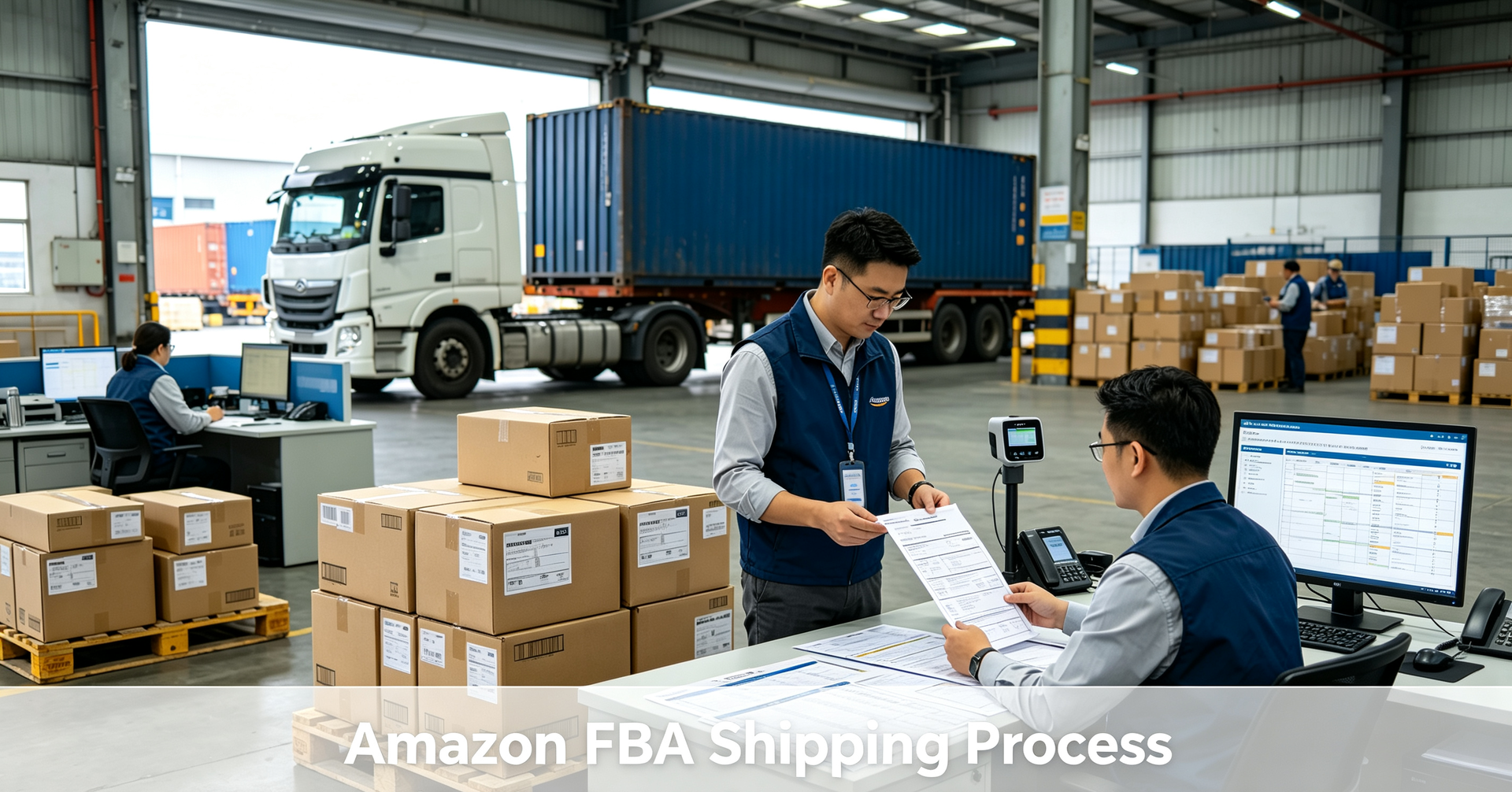
Before cargo leaves the factory, sellers must verify all requirements:
Improper preparation frequently triggers:
Different sales cycles and product types demand tailored transport solutions.
Best suited for:
Advantages: Lower per-unit shipping cost, ideal for bulk inventory Limitations: Longer overall transit lead time
Best suited for:
Advantages: Fast door-to-door transit Limitations: Higher transportation expense
Many mature sellers adopt mixed transport schedules:
China Factory → Ocean/Rail Freight → Local Last-Mile Trucking → Amazon FBA
This method balances logistics cost, transit speed and reliability, widely recommended for EU Amazon FBA multi-market sellers.
International shipments require complete, consistent import documentation.
Core documents include:
For European Amazon sellers, extra compliance work covers:
Experienced freight forwarders streamline customs procedures and avoid costly hold-ups, especially critical for shipments under ICS2 and ACI clearance rules covered in our cross-border compliance guide.
The final inbound stage requires strict adherence to Amazon’s receiving rules.
Sellers need double-check:
Failure to comply with inbound standards will slow down inventory check-in.
The classic workflow:
Factory → Amazon FBA → Customer
This simple structure works under normal sales volumes but exposes sellers to risks during:
Growing numbers of sellers shift to:
Factory → Regional Overseas Warehouse → Amazon FBA → Customer
Key benefits:
Amazon Warehousing and Distribution (AWD) provides a new inventory tool for global sellers. AWD allows merchants to store bulk inventory before allocating stock into individual Amazon fulfillment centers.
Potential advantages:
For European operators, Amazon AWD Europe creates innovative options for pan-European inventory allocation.
Specialized cross-border logistics teams deliver end-to-end support for Amazon sellers:
Sea freight, air freight, rail transport and door-to-door DDP delivery
Document preparation, customs broker coordination and real-time regulatory updates
Label auditing, carton inspection and warehouse delivery scheduling
Sales-based inventory forecasting, transport planning and regional fulfillment design
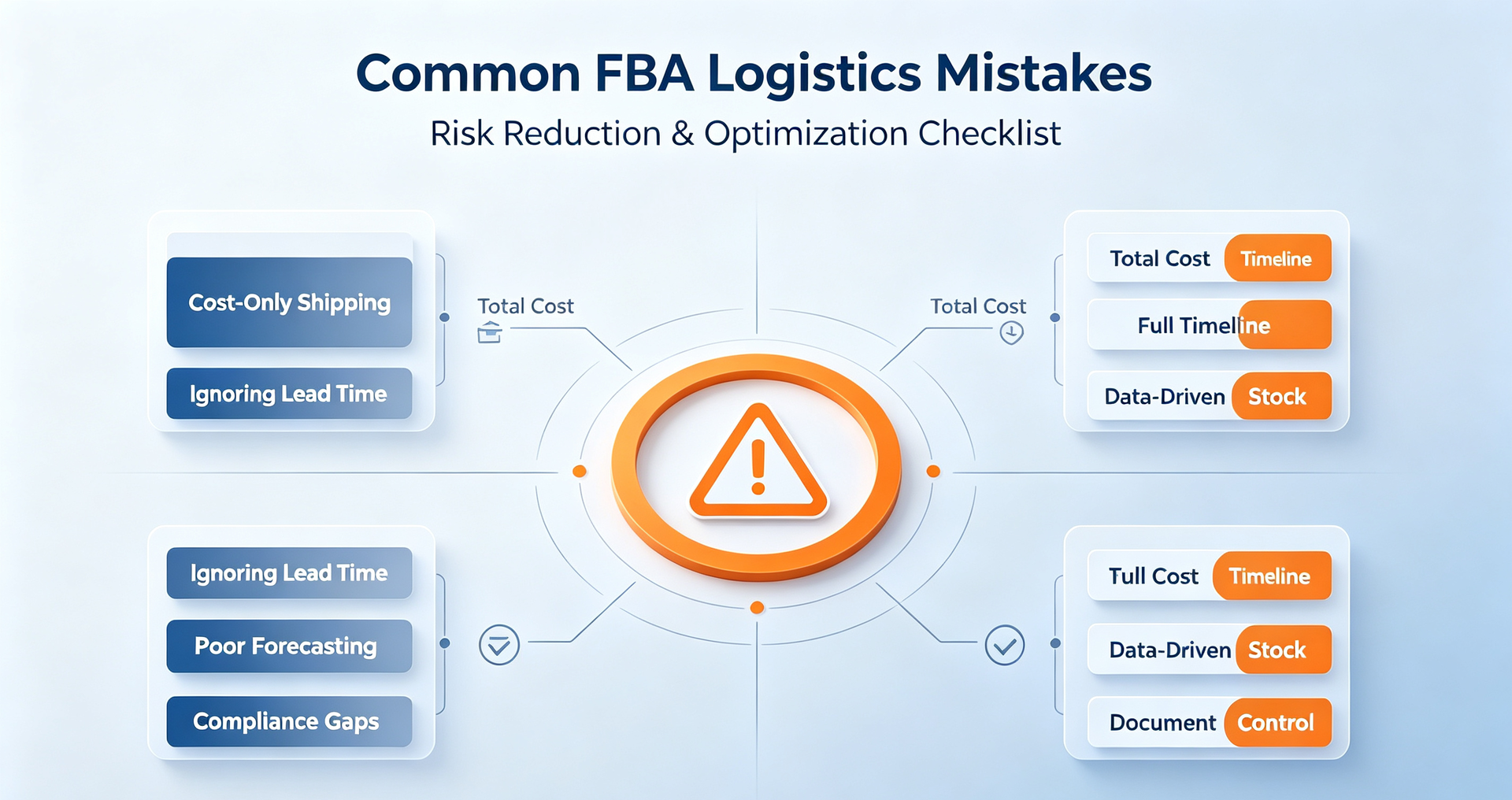
The lowest freight quote often leads to higher overall losses if it causes:
A complete restock timeline includes four critical phases:
Top sellers continuously balance three core variables:
Amazon FBA logistics describes the complete supply chain process moving goods from overseas suppliers to Amazon fulfillment centers and end customers.
There is no universal answer. Selection depends on product volume, value, target marketplace, budget and delivery timeline requirements.
Total lead time varies greatly based on transport mode, customs clearance efficiency and destination country.
Most international sellers partner with professional forwarders to manage transport, customs paperwork and Amazon inbound delivery coordination.
AWD focuses on bulk inventory storage and cross-fulfillment-center distribution. FBA handles direct order fulfillment to individual shopper
Amazon FBA logistics in 2026 demands holistic end-to-end supply chain thinking. Competitive sellers actively manage:
A systematic logistics strategy cuts operational risks, maintains stable stock availability and strengthens competitiveness on global Amazon marketplaces. As Amazon’s global infrastructure evolves, sellers equipped with flexible, data-driven supply chains will secure lasting long-term advantages.






 Email: