

WORLDWIDE FREIGHT SERVICES
Email: jack@transworldcn.com

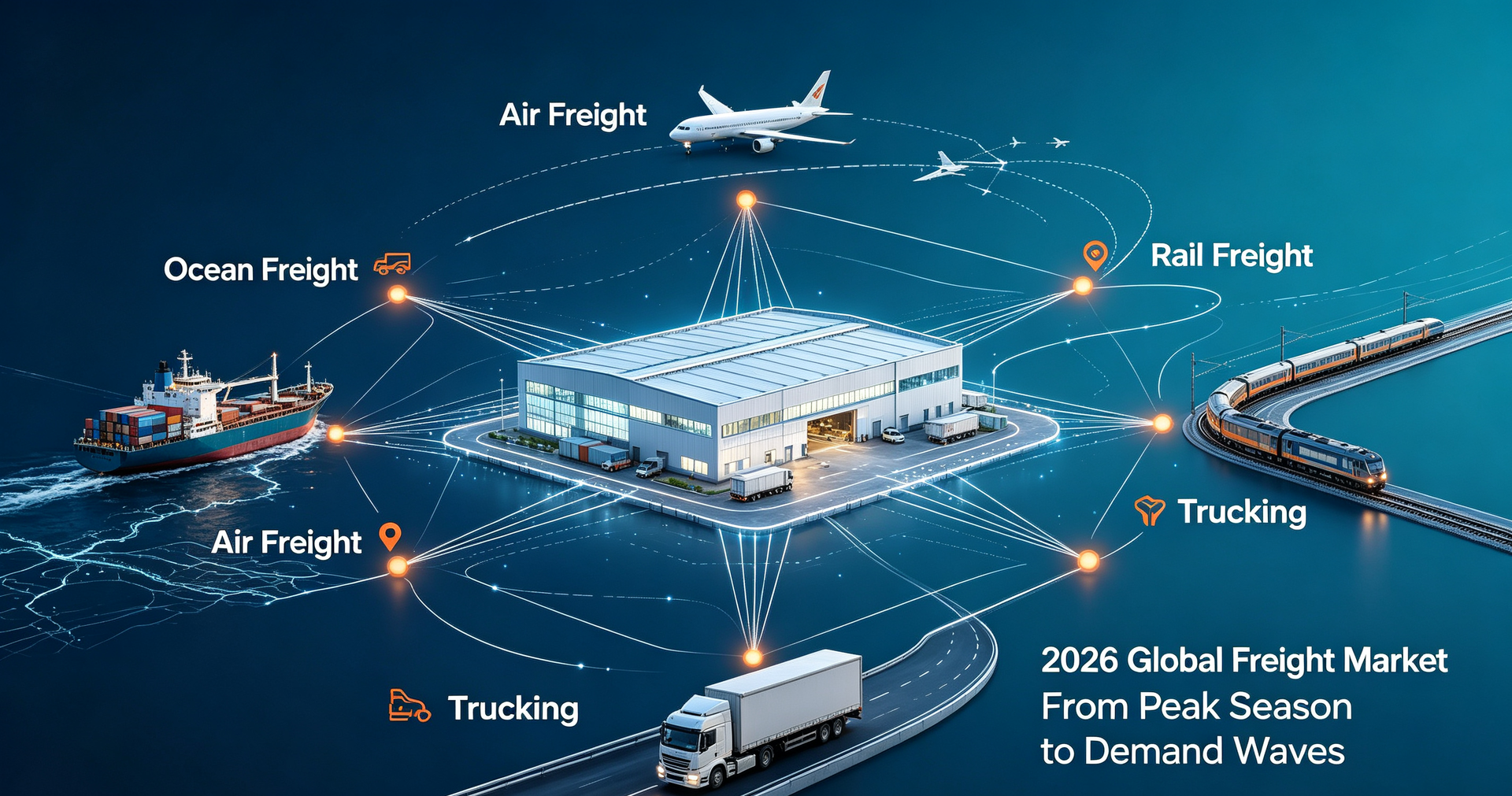
For decades, the global shipping industry operated like clockwork. You knew when the peak season would hit. You planned for it. You baked it into your contracts and your capacity bookings. But if you are a shipper, a freight forwarder, or a logistics manager watching the rates climb this summer, you have probably realized something: the clock is broken.
The traditional model of a single, predictable surge between late summer and the holiday season is rapidly becoming an outdated concept. As Renee Toh, VP of Global Ocean Freight at Rhenus Group, recently put it: "The idea of a 'peak season' is becoming outdated. Instead of one predictable surge, we are seeing demand fluctuate in multiple waves across the year."
This isn't just a change; it's a fundamental reconfiguration of how global freight markets operate—with profound implications for anyone shipping between Asia, Europe, and North America.
Let's look at the numbers. Between the first and 24th weeks of 2026, freight rates from Asia to Northern Europe climbed approximately 81%. The story was even more dramatic on the transpacific, where rates to the U.S. West Coast surged by a staggering 133% over the same period.
This level of increase used to be associated with a specific, identifiable crisis. Now, it's being driven by a confluence of structural factors that show no sign of abating.
The market is currently being pulled forward by geopolitics. Importers are accelerating shipments to get ahead of potential new U.S. tariffs and surcharges on goods from dozens of countries. This front-loading creates artificial demand waves that drain capacity and drive up spot rates, effectively pulling the traditional peak forward and turning it into a year-round scramble.
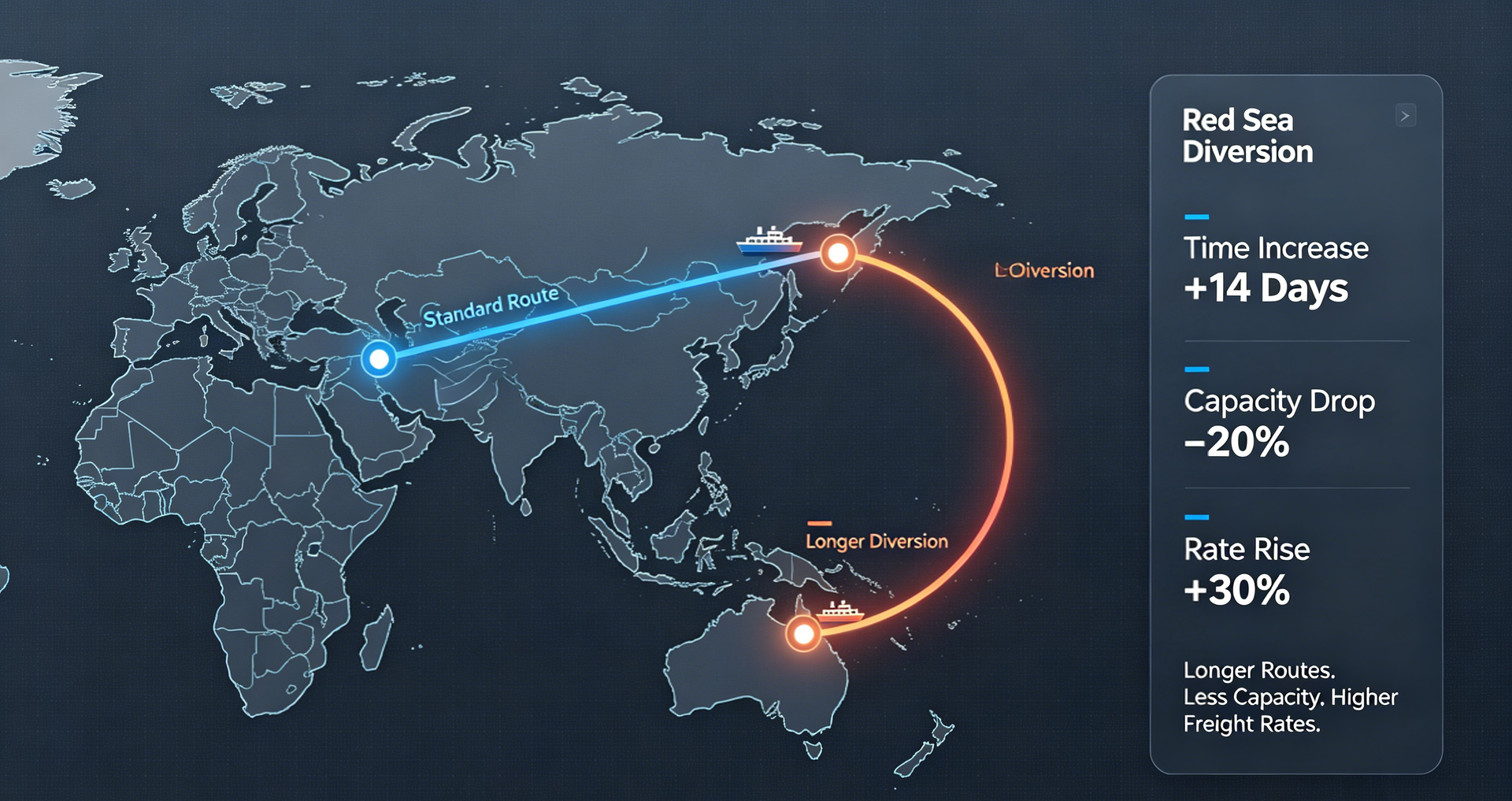
The crisis in the Red Sea continues to force vessels on the longer route around the Cape of Good Hope. This not only adds weeks to transit times but effectively removes a significant portion of the global fleet from circulation as ships are at sea longer. [4] This persistent reduction in effective capacity means that even a minor uptick in demand can trigger a disproportionate spike in freight rates.
The widening gap between volatile spot rates and rigid long-term contracts is creating dysfunction. When spot rates spike, carriers may "roll" contracted containers (bumping them to a later vessel) or demand premiums, making contracts unreliable. When rates fall, BCOs (Beneficial Cargo Owners) try to renegotiate or shift to the spot market. As Judah Levine, head of research at Freightos, noted, this creates "effort, headaches, unpredictability, time and price changes" for everyone involved.
In this environment, a freight forwarder's role has fundamentally changed. You are no longer just booking space and moving boxes. You are a risk mitigator and a capacity strategist.
Here is how the most resilient players are navigating the new "demand waves":
Forget the rigid annual RFP process. In a volatile market, locking in a fixed price for a year is a gamble, not a strategy. Smart forwarders are advising clients to adopt a hybrid, "dynamic RFP" approach that combines longer-term contracts for predictable, core volumes with shorter-term, 30–90-day mini-bids for the rest. This allows businesses to lock in some capacity while remaining agile enough to capitalize on rate dips or pivot when spikes occur.
While often reserved for the largest players, financial instruments like Forward Freight Agreements (FFAs) are starting to gain attention. An FFA is a contract between two parties to settle on a future freight rate for a specific route. On the settlement date, the agreed rate is compared to the actual market rate, and the difference is paid. This allows a shipper or forwarder to offset the financial impact of extreme spot market volatility. While a hurdle for SMEs (often requiring significant equity to open a clearing account), it's a trend worth watching for volume players.
In the past, resilience was often sacrificed for efficiency. That era is over. A resilient supply chain now requires multiple routing options, a diverse portfolio of carriers (both large and small), and the ability to shift between modes (e.g., ocean to air) when necessary. This means prioritizing relationships with forwarders who have a broad global network and the flexibility to source capacity from multiple partners.
The days of tracking a shipment via emails and spreadsheets are over. To manage "demand waves," you need real-time visibility and data analytics. Digital freight platforms are increasingly necessary to quickly compare rates, secure bookings, track cargo, and predict document gaps. As UNCTAD recently noted, the digital transition is no longer optional for survival in modern supply chains.
The concept of a "peak season" gave us the illusion of control. It made us feel that shipping was predictable, manageable, and cyclical. That illusion is gone.
The global supply chain is now defined by geopolitical shocks, shifting trade policies, and structural volatility. The winners in this new landscape will not be those who are simply the cheapest but those who are the most flexible and informed. For shippers, the priority is clear: secure capacity early, diversify your strategy, and partner with a freight forwarder that understands the difference between moving cargo and managing risk.
A: Industry best practice now suggests booking 6–8 weeks in advance for major transpacific and Asia–Europe routes, compared to the traditional 2–4 weeks. This accounts for the longer transit times via the Cape of Good Hope and the increased likelihood of vessel rollovers. For urgent shipments, consider air freight or expedited ocean services, though these come with significant premium costs.
A: Most clearing houses require a minimum of 500–1,000 TEU (Twenty-Foot Equivalent Units) per year to open an FFA account with reasonable terms. For SMEs below this threshold, the better alternative is to work with a forwarder who aggregates volume across multiple clients and can offer FFA-linked pricing indirectly—effectively passing the hedging benefit to smaller shippers without the administrative burden.
A: Ask these three questions when evaluating your forwarder:
Carrier diversity: Do they work with at least 5+ major ocean carriers and 3+ air cargo providers, or are they overly dependent on one or two?
Routing options: Can they offer alternative routings (e.g., via Suez, Cape of Good Hope, or West Coast transload) and shift between modes quickly?
Real-time data: Do they provide API access or a live dashboard for tracking, or do they still rely on manual email updates? If the answer to any of these is "no," consider a strategic review.
A: Most analysts expect continued volatility with a slight upward bias into Q3–Q4 2026. Key drivers include ongoing Red Sea diversions, potential new U.S. tariff implementations, and the traditional year-end holiday demand. However, any breakthrough in geopolitical negotiations or a significant drop in demand could reverse this trend. The consensus is: plan for higher rates and secure capacity early, but build flexibility to pivot if the market softens.
A: Three practical strategies for SMEs:
Consolidation: Partner with a freight forwarder who aggregates volume from multiple SMEs to gain bargaining power.
Flexible scheduling: Offer carriers flexibility on loading dates in exchange for better rates and confirmed space.
Multi-modal planning: Be ready to shift a portion of your volume to air or rail if ocean capacity becomes too tight—this optionality makes you a more attractive customer to carriers.






 Email: