

WORLDWIDE FREIGHT SERVICES
Email: jack@transworldcn.com


A global ecommerce seller selling consumer products across European Amazon marketplaces faced several supply chain challenges before the peak sales season.
The company was shipping products from China directly to Amazon fulfillment centers in Europe. However, increasing sales volume created new operational problems, including longer replenishment cycles, inventory pressure, and difficulties maintaining stock availability across multiple European markets.
By redesigning its Amazon FBA logistics strategy, the seller improved inventory visibility, optimized shipment planning, and created a more flexible European fulfillment model.
The solution included:
This case demonstrates how international sellers can improve Amazon FBA performance through professional logistics management.
The client was an e-commerce company selling consumer products through Amazon European marketplaces.
The business operated across several key markets, including:
Products were manufactured in Asia and shipped internationally to Amazon fulfillment centers.
As sales increased, the company needed a stronger logistics system to support:
Before optimization, the seller mainly followed a traditional model:
China Factory → International Shipping → Amazon FBA Warehouse → Customer
Although this approach worked during normal sales periods, problems appeared during high-demand seasons.
The company experienced:
For example:
This created inefficient inventory utilization.
The seller relied heavily on ocean freight.
Ocean freight provided cost advantages but required careful planning.
The complete process included:
Any delay in one stage could affect product availability.
During peak seasons, the seller needed more accurate shipment scheduling.
The company previously managed logistics through multiple independent steps.
Information was distributed between:
This created challenges in monitoring:
The seller needed a more integrated logistics management approach.
The first step was reviewing historical sales performance.
The logistics team analyzed:
Based on this analysis, inventory was divided according to regional demand.
Example:
European Inventory Planning
| Market | Inventory Focus |
| Germany | Higher demand allocation |
| France | Regular replenishment |
| Italy | Seasonal adjustment |
| Spain | Flexible stock planning |
| UK | Separate inventory management |
This reduced the risk of sending excessive inventory to slower markets.
The company adjusted transportation planning.
Instead of shipping based only on urgent demand, shipments were scheduled according to:
The optimized model became:
Supplier → Quality Inspection → Ocean Freight → Customs Clearance → Regional Distribution → Amazon FBA
This improved supply chain predictability.
One important improvement was strengthening pre-shipment compliance checks.
Before shipping, the team reviewed:
This helped reduce customs-related delays.
With Amazon expanding AWD capabilities in Europe, the seller evaluated a more flexible inventory structure.
The potential future model:
Supplier → Amazon AWD Europe → Amazon FBA → Customer
Compared with direct FBA delivery, this approach provides additional inventory flexibility.
Potential benefits include:
After implementing the improved logistics strategy, the seller achieved several operational improvements.
The company gained better visibility into:
This allowed more accurate stock allocation.
By improving shipment planning and documentation preparation, the company reduced risks related to:
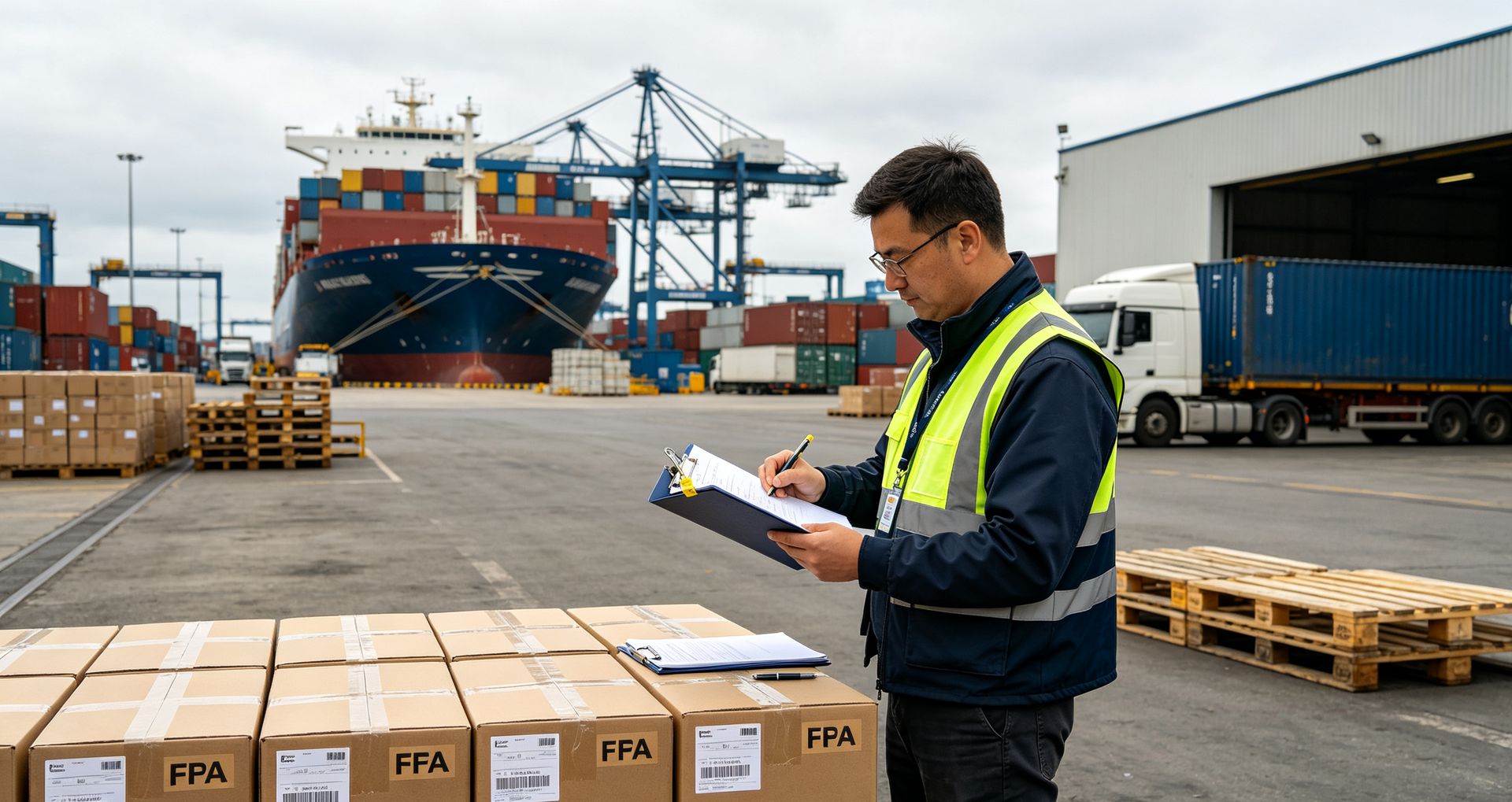
The optimized logistics model allowed the seller to prepare inventory earlier before major sales events.
This was especially valuable during:
Many sellers only improve logistics after problems appear.
However, supply chain planning should happen before:
Reducing shipping costs is important, but inventory availability directly affects revenue.
A successful FBA strategy balances:
Europe is not a single logistics market.
Different countries have different:
Successful sellers need localized planning.
An Amazon FBA logistics case study explains how a seller improves transportation, inventory management, and fulfillment performance through supply chain optimization.
Inventory planning helps sellers avoid stock shortages, reduce unnecessary storage costs, and maintain product availability.
For some businesses, regional warehouses or AWD solutions can provide additional flexibility by storing bulk inventory before FBA replenishment.
Ocean freight is commonly used for Amazon FBA because it provides lower transportation costs for larger shipments. However, sellers need accurate forecasting because transit times are longer.
Professional logistics providers can support freight planning, customs clearance, shipment preparation, warehouse coordination, and inventory strategy.
This case shows that Amazon FBA success depends on more than selecting a shipping method.
A scalable ecommerce supply chain requires:
For sellers expanding into European marketplaces, logistics optimization can create long-term operational advantages.






 Email: