

WORLDWIDE FREIGHT SERVICES
Email: jack@transworldcn.com
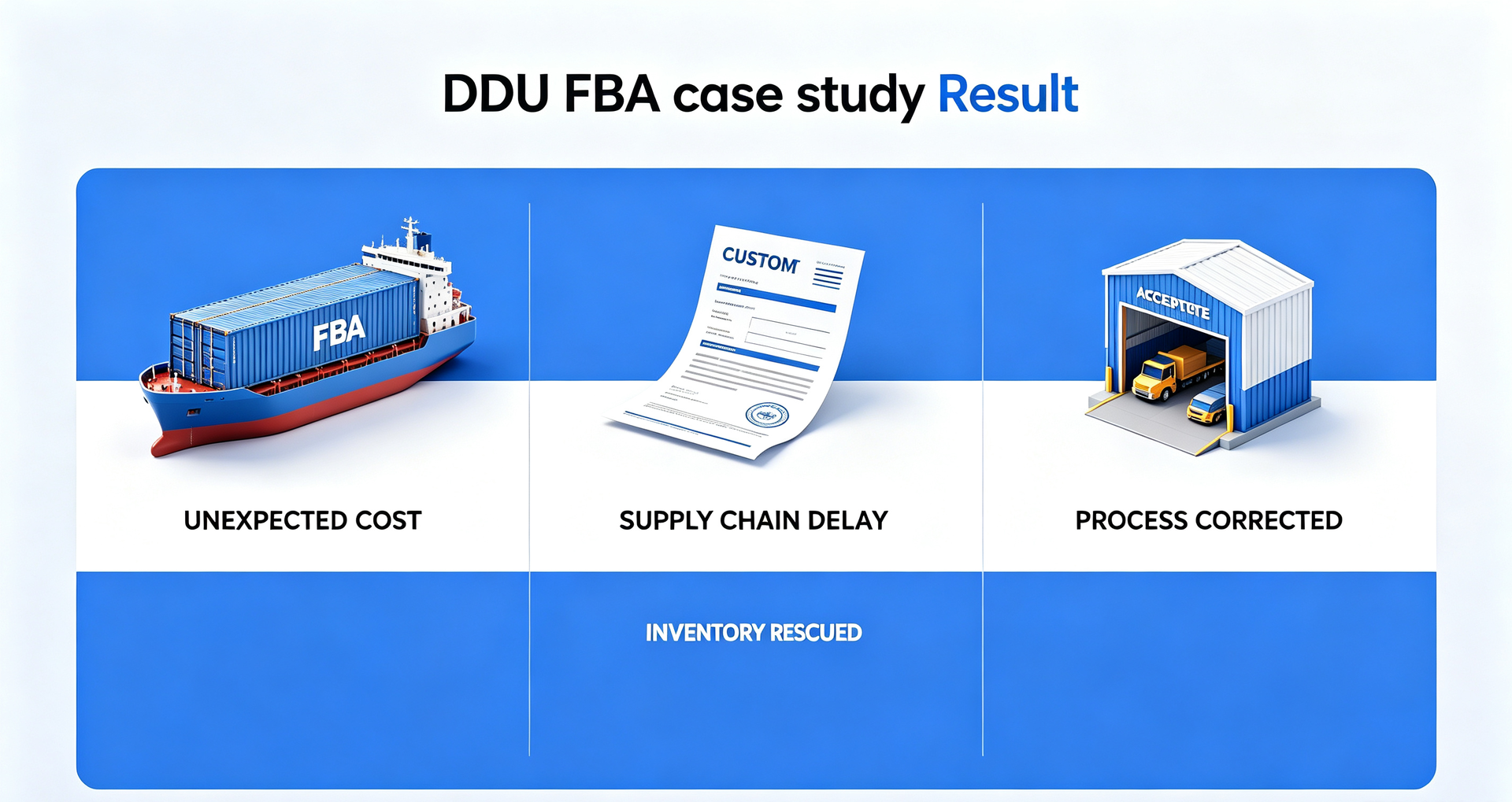
A mid‑size US Amazon consumer‑goods seller booked a LCL ocean shipment on DDU terms directly to a US FBA warehouse, attracted by a low freight quote. Upon arrival, Amazon refused delivery because it would not act as Importer of Record for unpaid duties and taxes.
The shipment was stuck at port, accumulating detention, chassis, and storage fees. The seller avoided total inventory loss by rerouting the cargo to a US third‑party warehouse, completing emergency import clearance, and re‑shipping to FBA under DDP terms.
This case illustrates one of the most common and costly mistakes in Amazon FBA inbound logistics: choosing DDU for direct‑to‑FBA shipments.
Amazon FBA sellers often focus on freight price and transit time when comparing shipping quotes. However, Incoterm selection can be far more important than the initial ocean rate.
A low‑cost DDU quote may seem attractive at first, but it can lead to FBA rejection, port storage fees, lost sales, and unexpected remediation costs. This case study is based on a real scenario frequently discussed in Amazon seller communities. It shows what can happen when DDU cargo arrives at an FBA warehouse and how sellers can recover from the mistake.
The client was a mid‑tier US‑based Amazon seller sourcing home organization products from factories in Shenzhen, China. They sold on Amazon US and typically shipped 2 to 3 LCL shipments per month to US fulfillment centers.
At the time of the incident, the team did not fully understand the difference between DDU and DDP under Amazon’s receiving rules. They selected a freight quote based mainly on price and transit time, without verifying who would act as Importer of Record or whether Amazon would accept the shipment terms.
The shipment in question was intended to restock a seasonal home organization ASIN before a projected demand increase.
The seller arranged a 3.2 CBM LCL ocean shipment from Shenzhen to Los Angeles. The cargo consisted of home storage organizers, with a commercial value of $7,240.
Key shipment details:
| Detail | Information |
| Product | Home storage organizers |
| Cargo Volume | 3.2 CBM LCL |
| Shipment Value | $7,240 |
| Origin | Shenzhen, China |
| Destination | Amazon FBA ONT8, California |
| Agreed Incoterm | DDU / DAP |
| Forwarder Quote Highlight | Low ocean freight rate |
The seller chose DDU because the initial freight cost appeared lower than DDP alternatives. However, the quote did not clearly emphasize that import duties, taxes, and customs clearance would remain the responsibility of the receiver.
When the container arrived at the Port of Los Angeles, the ocean carrier completed the international leg of the shipment. However, the import duties and sales tax had not been paid, and no valid Importer of Record was formally assigned for the FBA delivery.
The trucking carrier then attempted to deliver the cargo directly to Amazon ONT8. Amazon receiving staff rejected the shipment because Amazon does not act as Importer of Record and does not accept collect‑on‑delivery duties, taxes, or fees for FBA inventory.
This created a serious logistics problem for the seller.
The truck could not unload at the fulfillment center. Amazon’s receiving policy requires FBA inbound shipments to arrive with all duties and taxes already prepaid. Any shipment with outstanding import liabilities will be refused.
After the rejection, the cargo was returned to the carrier’s port depot. Demurrage, chassis detention, and warehouse storage charges started accruing daily. Within 14 days, the seller faced approximately $1,420 in extra fees, separate from the original ocean freight cost.
The shipment was meant to support a seasonal replenishment cycle. While the cargo was stuck at port, the top‑selling ASIN ran out of stock. The listing lost visibility, and the seller lost sales momentum during a high‑demand period.
The seller could not resolve the issue simply by paying duties at the Amazon warehouse. Once a shipment is refused, the problem must be solved outside Amazon’s facility.
Only two practical options remained:
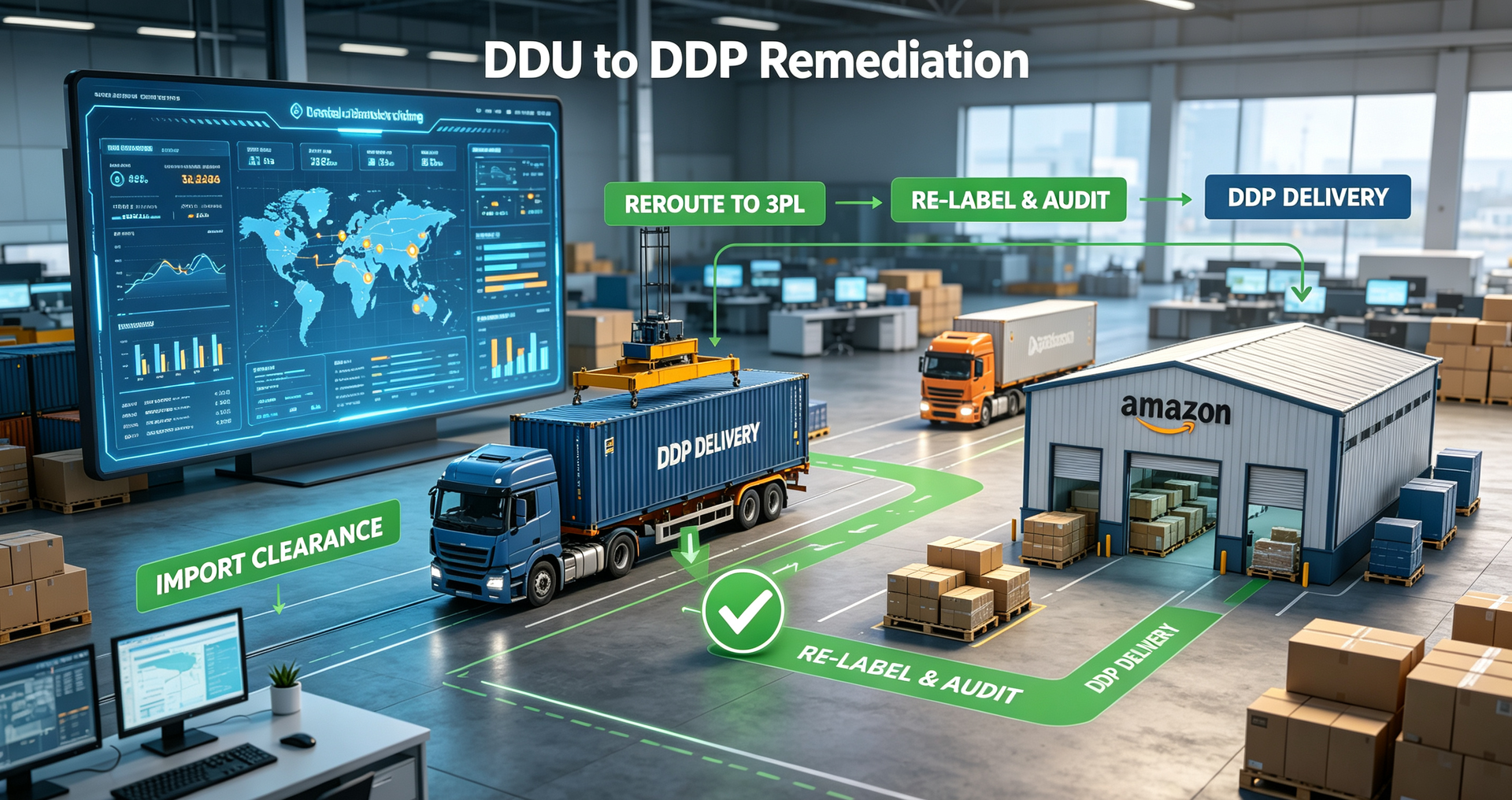
The seller decided to rescue the inventory instead of destroying it. They worked with a US customs broker and a new logistics partner to restructure the shipment.
A licensed US customs broker was engaged to file a formal entry for the cargo. The broker arranged the payment of import duties, MPF and HMF fees, and established a valid Importer of Record for the stranded shipment.
The cargo was moved from the carrier’s port depot to a Los Angeles third‑party logistics warehouse. This allowed the seller to regain physical control of the inventory without attempting re‑delivery to Amazon under unresolved customs terms.
At the 3PL warehouse, teams re‑audited carton labels, FBA shipment ID markings and delivery requirements. The seller then created a new FBA inbound plan and shipped the inventory to ONT8 under proper DDP terms.
All duties, customs clearance, and final delivery charges were prepaid before the cargo arrived at the Amazon warehouse.
After the incident, the seller added a mandatory rule to their operational workflow:
Any shipment going directly to an Amazon FBA warehouse must use DDP terms. DDU / DAP is not allowed for direct FBA deliveries unless the destination is the seller’s own controlled overseas warehouse with established IOR capability.
| Metric | Outcome |
| Total unexpected extra cost | Approximately $1,420 in detention, storage, and broker fees |
| Total supply chain delay | 21 days from original planned FBA arrival |
| Inventory status | Inventory rescued and eventually checked in to ONT8 |
| Listing impact | Temporary stock‑out; ranking partially recovered after restock |
| Process change | No further DDU direct‑to‑FBA shipments in subsequent operations |
Key Lessons Learned
This case is not an argument that DDU is always bad. It is an argument that DDU is almost always wrong for direct‑to‑FBA shipments.
Amazon will not act as Importer of Record for FBA inbound shipments. Sellers cannot force Amazon to pay duties, taxes, or customs fees on their behalf.
A lower DDU ocean rate does not guarantee lower total landed cost. Port penalties, storage fees, customs broker costs, and lost sales can quickly erase any initial savings.
DDU can still be viable for shipments sent to the seller’s own US 3PL warehouse, where the seller or a local entity can act as Importer of Record. It is not suitable for direct FBA deliveries.
Before confirming any shipment, sellers should ask: “Who will act as Importer of Record for US customs clearance under this Incoterm?” The answer should be clear and documented in writing.
A: Yes. If the seller had selected DDP from origin with a verified Importer of Record arrangement, the cargo would have been cleared before final delivery to FBA, and Amazon would most likely have accepted the shipment.
A: No. DDU can make sense for shipments sent to the seller’s own controlled US warehouse, where a local entity can act as Importer of Record. It is not recommended for direct‑to‑FBA deliveries.
A: You should not attempt to pay duties at the Amazon warehouse. Contact a US customs broker immediately, arrange import clearance, and reroute the cargo to a private 3PL warehouse before rebooking FBA delivery.
A: Review the freight agreement carefully. If the receiver is responsible for import duties, taxes, and customs clearance, it is DDU / DAP. If the seller or forwarder covers these costs before delivery, it is DDP.






 Email: