

WORLDWIDE FREIGHT SERVICES
Email: jack@transworldcn.com
TL;DR – Case Study at a Glance
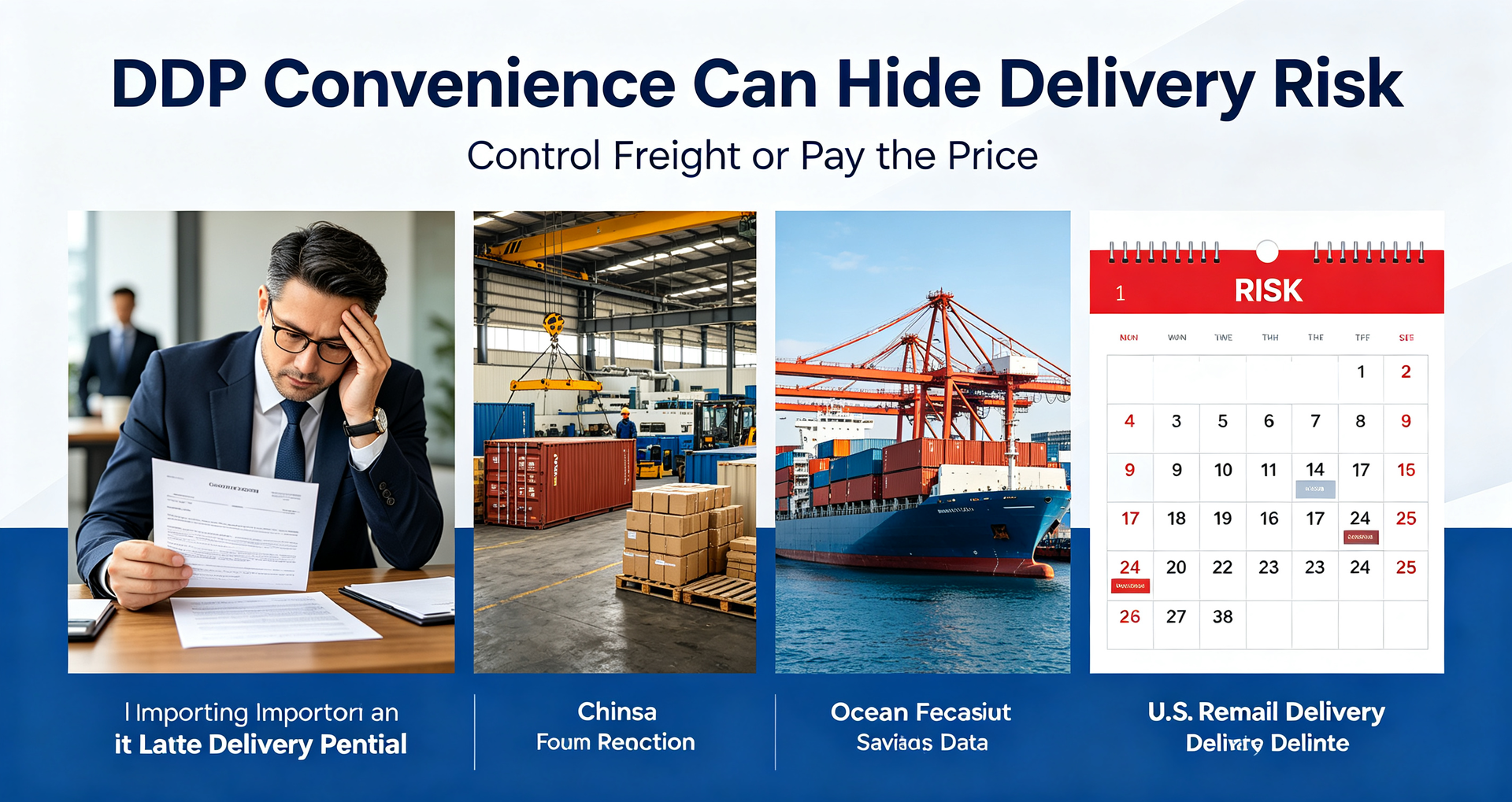
The Shipment: 7 containers of consumer goods from a Chinese manufacturer to Norfolk, Virginia – a $2.8 million retail order with a tight delivery deadline.
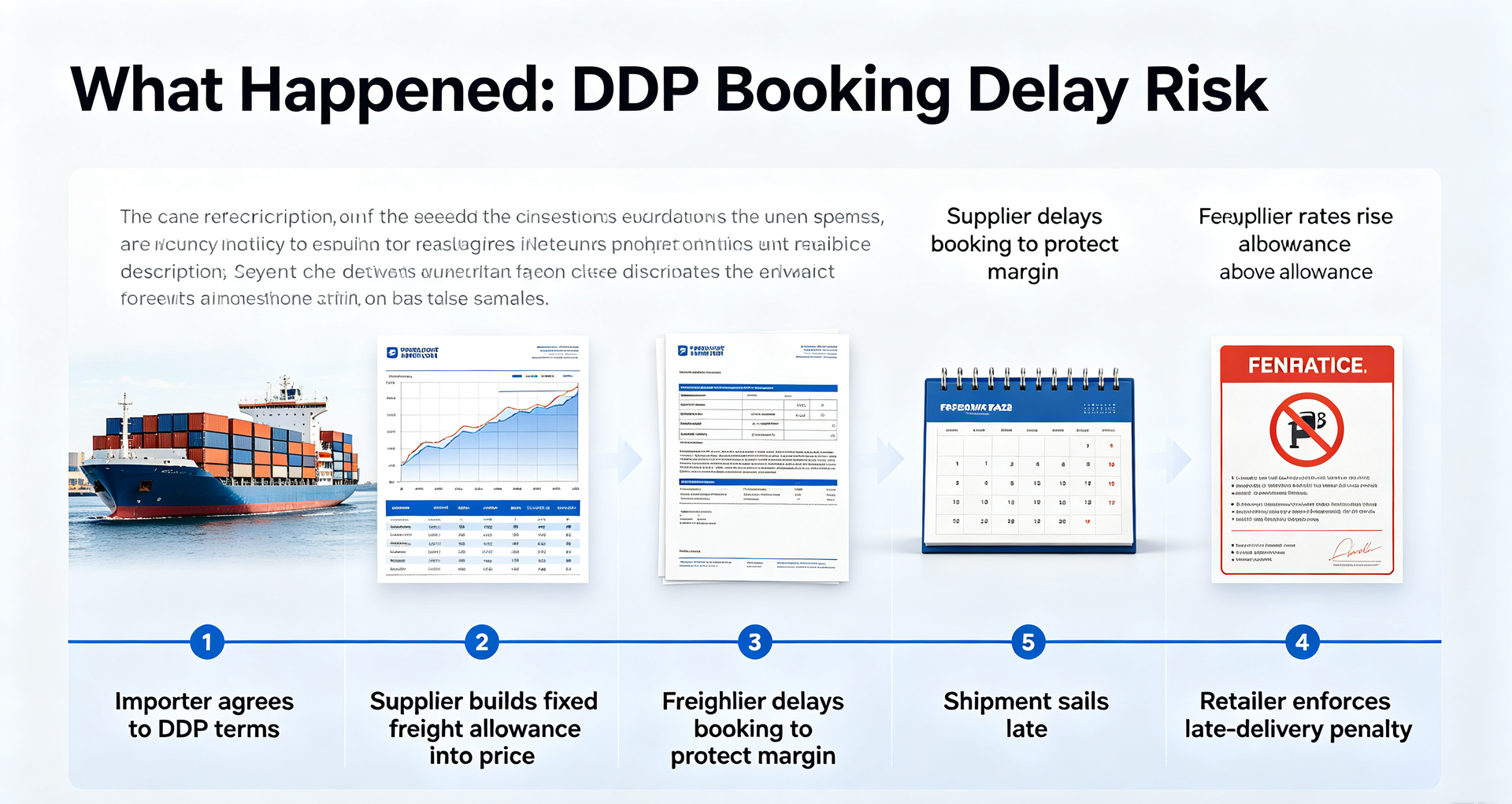
The Deal: The supplier offered DDP (Delivered Duty Paid) terms – one all-in price covering freight and customs. The importer agreed, believing it simplified the process.
The Problem: Freight rates rose $500 per container mid-shipment. The supplier, whose margin was squeezed, delayed booking, hoping rates would drop. The importer had no direct control over the carrier or forwarder.
The Result: Shipment sailed late. Delivery window closed. The retailer enforced a $200,000 late-delivery penalty.
The Lesson: DDP terms may seem simpler, but they leave importers vulnerable to supplier-controlled freight decisions that prioritize the supplier's margin over your delivery timeline.
The story of "Wally's Widgets" is a cautionary tale documented by Harris Sliwoski LLP, a law firm specializing in China trade law. Wally had a breakthrough product, a solid Chinese manufacturer, and a $2.8 million retail order. He also had a $200,000 late-delivery penalty clause and no experience importing from China.
When the factory offered to handle shipping and customs under DDP terms – delivered duty paid, one all-in price – Wally agreed. From his perspective, this felt easier. No forwarder to hire. No customs paperwork to manage. Just place the order and wait
It turned out to be the most expensive decision he made.
| Parameter | Detail |
| Client | "Wally's Widgets" – first-time importer |
| Product | Breakthrough consumer widgets |
| Order Value | $2.8 million retail |
| Destination | Norfolk, Virginia |
| Terms | DDP (Delivered Duty Paid) – supplier-controlled freight |
| Containers | 7 |
| The Risk | $200,000 late-delivery penalty clause |
| The Outcome | Shipment delayed; penalty enforced |
Source: Harris Sliwoski LLP case study.
Most experienced importers buy on FOB or FCA terms and control freight themselves. They choose the freight forwarder. They decide which carrier to use. They decide whether a shipment needs the fastest sailing or the lowest rate.
DDP shifts that control to the supplier. And that creates a built-in conflict: the supplier's margin versus your delivery date.
When freight rates rise, the supplier must decide whether to absorb the increase or wait for the market to soften. Because freight costs are baked into a fixed DDP price, waiting is often the cheaper choice for them.
From the importer's side, the updates sound familiar: "No space this week." "Carrier rolled the container." "Port congestion." During peak season, those explanations can be partly true. The problem is you can't step in and fix it because you don't control the booking.
The factory built a freight allowance into its DDP pricing – $5,000 per container – to Norfolk. If it booked freight for less, it kept the difference.
Then the market shifted.
In mid-July, rates jumped. The best available rate was $5,500 per container – $500 above the allowance. On seven containers, that meant $3,500 coming straight out of the factory's margin.
For Wally, $3,500 was small compared to a $200,000 penalty clause and the risk of damaging a key retail account. He would've paid more without hesitation to protect the sailing date.
But he wasn't in control of the booking.
The factory waited. It hoped rates would ease. Updates were vague. Wally had no direct contact with the carrier or forwarder, so he couldn't tell whether space was unavailable or simply too expensive.
By the time the shipment sailed, the delivery window had closed. The goods arrived late. The retailer enforced the penalty.
Based on this case and industry best practices, follow this structured approach to avoid the same fate:
Step 1: Choose FOB or FCA Terms, Not DDP for First Shipments
FOB means you control freight from the Chinese port forwarder. You select the forwarder, you decide on carriers, and you have direct visibility into booking status.
DDP may seem simpler, but it gives your supplier control over critical decisions that affect your delivery timeline.
Step 2: Select Your Own Freight Forwarder Before Ordering
Your forwarder works for you, not for your supplier
They can lay out options when rates change: pay more and sail on schedule, or wait and accept the risk.
Step 3: Build a Clear Agreement with Your Supplier
If you must use DDP, include penalty provisions for late delivery.
Require weekly status updates with carrier and booking details.
Step 4: Maintain Direct Communication with Your Forwarder
Even if your supplier books freight, insist on having the forwarder's contact information.
Verify that ISF filings are completed and carrier bookings are confirmed.
Step 5: Understand Total Landed Cost, Not Just Factory Price
Factor freight volatility into your budget – rates can shift significantly during peak seasons.
The Wally case illustrates a structural issue with DDP terms: the supplier's margin is directly affected by freight costs. When rates rise, the supplier faces a choice – absorb the cost or delay.
This isn't about distrust. It's about control. DDP shifts control to the supplier, and suppliers' priorities are not your priorities.
You lose visibility into your costs: When you control freight, you see options. Different ocean carriers. Different transit times. Different service levels. When the supplier controls freight, you usually see one result and one price.
Tariff shortcuts can get expensive: We've seen product lines that stopped working because tariffs pushed costs too high. Then the supplier comes back with a revised DDP quote that somehow lowers the landed cost dramatically. When that happens, something in the customs declaration likely changed.
CBP enforcement is data-driven: The importer of record is generally responsible for the accuracy of the entry data, not the overseas factory. If a shipment gets flagged, it's your inventory that sits. It's your customer that waits.
Most experienced importers buy on FOB terms and control freight themselves. They understand that DDP's convenience comes with hidden risk.s
Best Practice: Choose FOB or FCA terms for your first shipments. You'll have more control over costs, timelines, and contingency planning.
Wally would have paid the $500 per container increase without hesitation to protect his $2.8 million order and avoid a $200,000 penalty. The supplier made a different decision.
Best Practice: If you have penalty clauses or tight deadlines, ensure you have the authority to approve freight decisions – or build clear escalation protocols into your supplier agreement.
If a supplier offers a DDP quote that's significantly lower than alternatives, ask: How is this possible? Freight rates fluctuate. Duty rates don't unless classification, valuation, or origin changes.
Best Practice: Ask your supplier to break down the DDP price into components. If they can't or won't, consider it a red flag.
The importer of record – not the factory – is ultimately responsible for the accuracy of customs entry data.
Best Practice: Work with your own customs broker, even if your supplier handles freight. Review all entries before submission.
A: FOB (Free on Board) means the supplier delivers goods to the Chinese port – you control shipping and customs from there. DDP (Delivered Duty Paid) means the supplier handles everything to your door. FOB gives you more control and cost visibility; DDP is simpler but can leave you vulnerable to supplier-controlled decisions.
A: When freight costs are built into a fixed DDP price, the supplier absorbs any increase above their allowance. They may delay booking, hoping rates will drop, to protect their margin. Your delivery timeline is not their primary concern.
A: Yes. You can negotiate FOB terms instead. If the supplier insists on DDP, ask for a breakdown of freight costs, require direct forwarder access, and include penalty provisions for late delivery.
A: Yes – DDP is the safest option for FBA because Amazon does not accept shipments that require duties to be paid on arrival. However, ensure your forwarder declares accurate values – "cheap DDP" offers often undervalue goods, exposing you to customs penalties.
A: Commercial Invoice, Packing List, Bill of Lading, Certificate of Origin (if applicable), and ISF filing (for U.S. ocean shipments). Work with a customs broker to ensure compliance.
Conclusion: The Price of Convenience
Wally's Widgets learned a $200,000 lesson: DDP's convenience comes with hidden risks. When a supplier controls freight, their decisions are based on their margin, not your delivery deadline.
For any first-time importer, the lesson is clear: control your freight from day one. Choose FOB terms. Select your own forwarder. Maintain visibility into costs and timeline. The extra effort is far less than the cost of a delayed shipment.






 Email: