

WORLDWIDE FREIGHT SERVICES
Email: jack@transworldcn.com

TL;DR – Case Study at a Glance
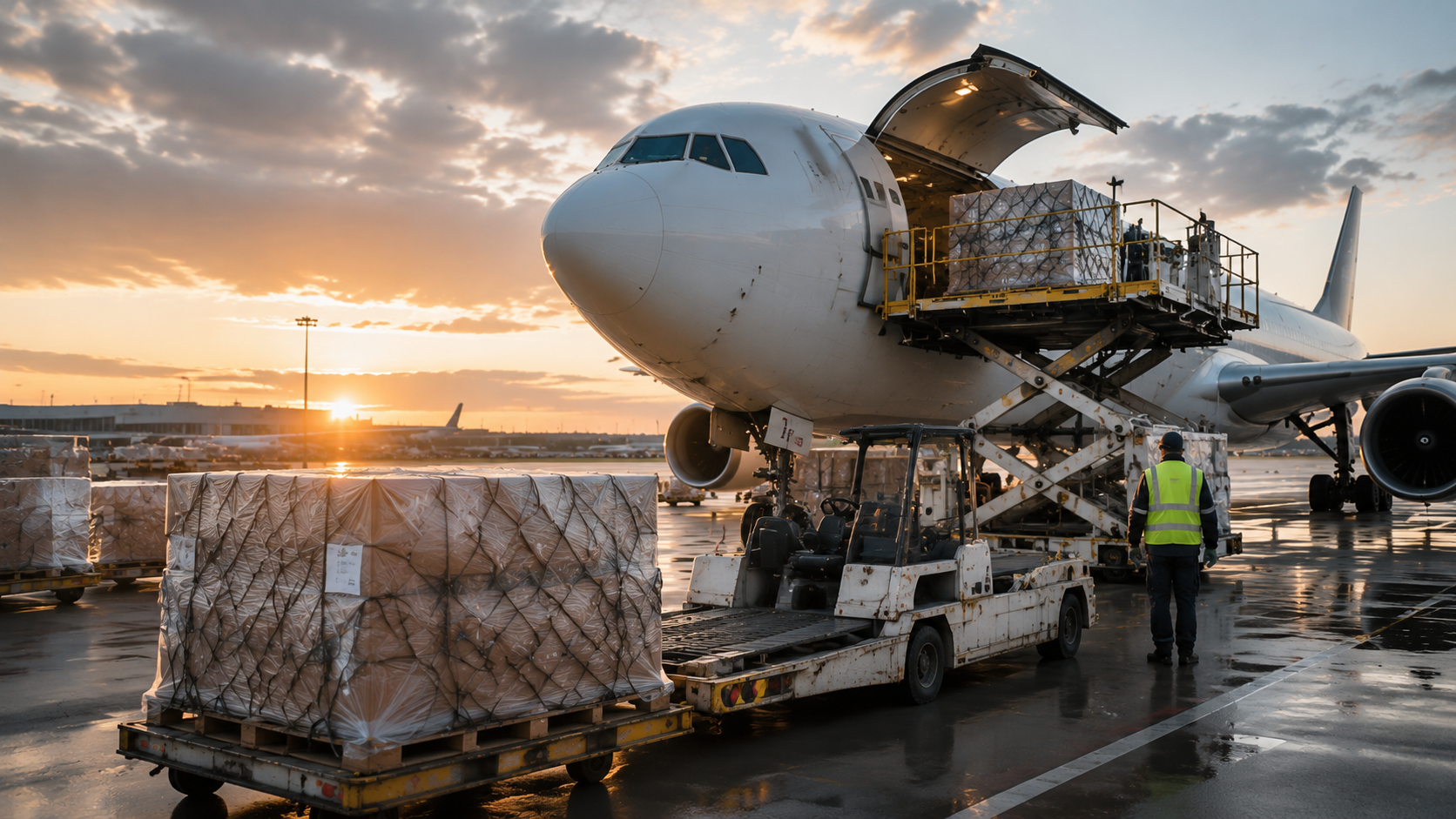
The Problem: A mid-sized furniture importer was shipping the same SKU mix from Ningbo to the U.S. West Coast three times a week by air freight – paying premium rates for cargo that did not justify the urgency.
The Hidden Cost: Air freight pricing penalizes bulky home goods through dimensional weight charges, and three separate shipments meant three sets of export declarations, trucking legs, and customs clearances.
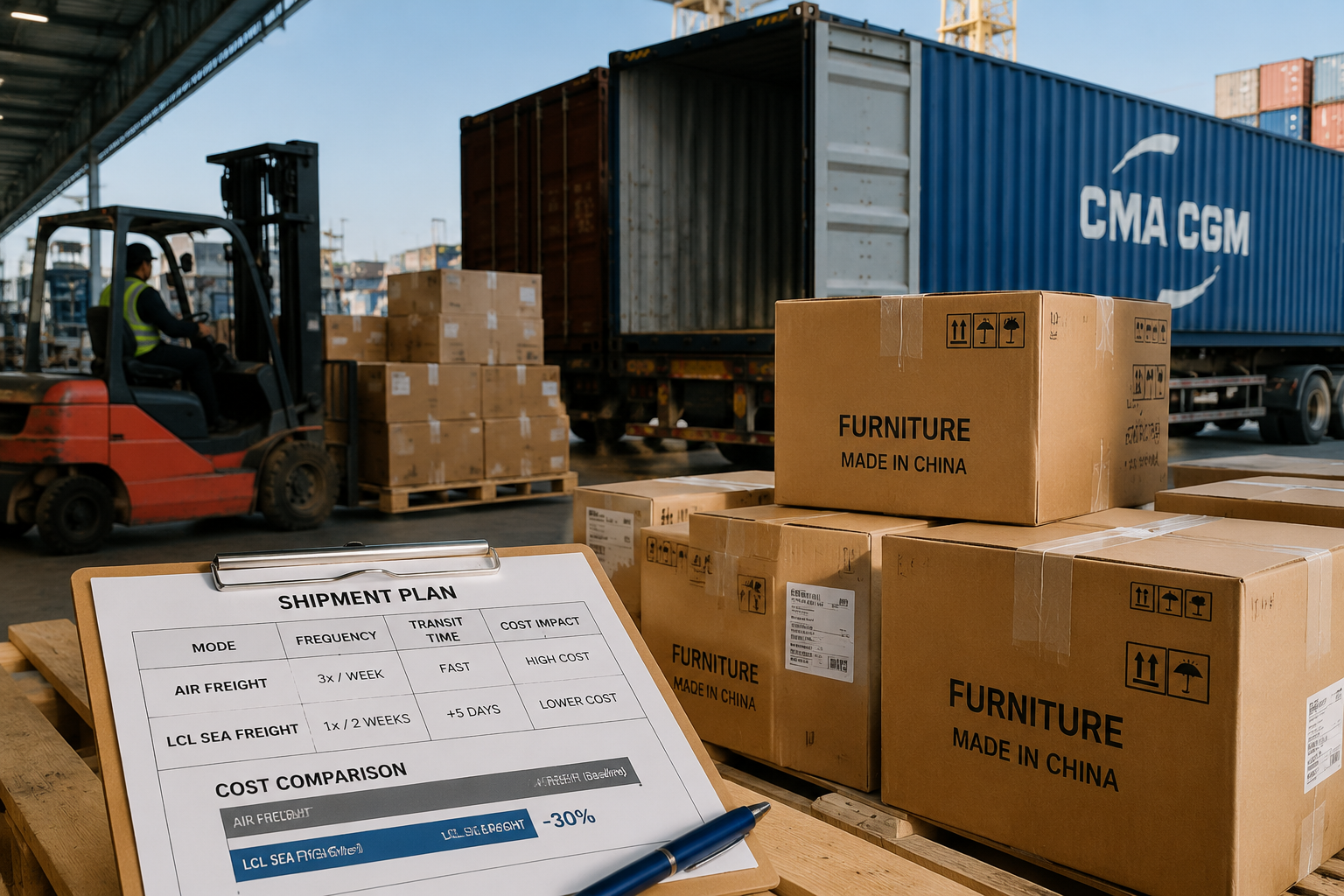
The Solution: Consolidated three weekly air shipments into one bi-weekly LCL container routed through Qingdao, shifting from air to sea freight.
The Result: 30% reduction in monthly logistics costs – saving $4,500 per month – with transit time extending by only 5 days, which proved acceptable for the retailer's inventory planning.
Key Lesson: Not every restock is an emergency. Breaking the habit of treating all replenishment as urgent can unlock substantial savings when cargo volumes and lead times are predictable.
For many retailers, air freight becomes the default shipping method not because of a conscious decision, but because it was the first option that worked. Over time, the habit sticks – and logistics costs quietly outpace product margins.
A mid-size furniture importer with a growing U.S. retail footprint had fallen into exactly this pattern. The company was shipping home goods from Ningbo to the U.S. West Coast three times a week by air. The cargo moved fast. The invoices moved faster. Nothing in that cargo was urgent enough to justify the premium, but the habit was deeply ingrained.
When WanSea mapped the existing air pattern against a bi-weekly LCL route, the projected savings were $4,500 per month – a figure that changed the conversation from "how fast can we fly it" to "how much slower can we afford to go."
| Parameter | Before (Air Freight) | After (LCL Sea Freight) |
| Frequency | 3 weekly air shipments | 1 bi-weekly LCL container |
| Origin | Ningbo, China | Ningbo → Qingdao consolidation |
| Destination | U.S. West Coast | U.S. West Coast |
| Product | Furniture and home goods (bulky, dimensional weight penalty) | Same SKU mix |
| Transit Time | Fast (air) | Sea +5 days |
| Monthly Cost | Baseline (highest) | 30% lower – saving $4,500/month |
Air freight pricing is not simply about weight – it is about chargeable weight, calculated as the greater of actual weight or volumetric weight (Length × Width × Height ÷ 6,000).
For bulky goods like furniture, the volumetric weight often far exceeds the actual weight. A large sofa with low density pays for space it does not fill – making air freight especially punishing for home goods.
The retailer was running three air shipments every week. Each shipment incurred:
Separate export declaration fees
Separate trucking legs to the airport
Separate customs clearances
Three sets of fuel surcharges and minimum charges
The weekly cost stack became the single largest line item in landed cost – but because the process worked, no one questioned it.
The logistics manager originally protected air freight because it shrank inventory days and avoided stockouts. However, over time, the same SKU mix was shipped week after week, air waybill after air waybill, at full express rates. The cargo was predictable, consistent, and not urgent enough to justify the premium.
Step 1: Analyze the Current Pattern
Identify the frequency and volume of air shipments over 3–6 months.
Document the total weekly cost stack – base freight + surcharges + fragmentation costs.
Calculate volumetric weight for each shipment to understand the dimensional weight penalty.
Step 2: Identify Alternatives and Test the Cost Gap
Compare air freight cost per cubic meter against LCL/FCL sea freight alternatives.
Project the monthly savings – in this case, $4,500 per month.
Build the business case around the total annual impact.
Step 3: Evaluate the Tradeoffs
Cost: Monthly logistics bill projected to drop by $4,500.
Transit time: Extending by only 5 days – a predictable, acceptable tradeoff for a furniture import lane.
Customs: Pre-departure clearance would remove the delays the client had seen with split air shipments.
Step 4: Execute the Consolidation
Cargo moved by truck from Ningbo to Qingdao.
Consolidated at the forwarder's warehouse with other shipments.
Cleared customs before departure – eliminating delays at the U.S. port.
Tracked the first 3–5 shipments to validate the cost and timing assumptions.
Based on this case study, follow this structured approach to evaluate a mode shift:
Step 1: Audit Your Shipping Patterns
Track air shipments by destination, weight, and volume over 3–6 months.
Identify SKUs that are shipped by air week after week – these are candidates for mode shift.
Calculate the total cost of air freight, including base freight, surcharges, and fragmentation costs.
Step 2: Calculate Dimensional Weight Penalty
For each air shipment, calculate volumetric weight (Length × Width × Height ÷ 6,000).
Compare actual weight vs. volumetric weight. If volumetric weight is 2–3x higher, air freight is especially punishing.
Step 3: Compare Air vs. Sea Freight Costs
Get LCL/FCL quotes for the same cargo volume.
Include origin charges, destination fees, and inland trucking.
If the cost gap exceeds 20–30%, a mode shift is worth exploring.
Step 4: Evaluate Transit Time Impact
Map the projected sea transit time against your inventory planning window.
If the extension is 5–15 days and your inventory buffer can absorb it, the mode shift is feasible.
Step 5: Test the Consolidation Model
Run one consolidated sea shipment while maintaining air for other orders.
Compare total landed cost (including administrative time).
Scale the consolidation program based on the results.
Air freight is designed for emergencies, high-value goods, and time-sensitive launches. For routine replenishment of bulky, predictable SKUs, it is rarely the right choice.
Best Practice: Audit your shipping patterns regularly. If you are shipping the same SKUs by air week after week, ask: "Is this actually urgent?" If not, a mode shift could save thousands.
For furniture, home goods, and other bulky items, air freight's volumetric weight calculation can make the cost 3–5x higher than ocean freight on a per-unit basis.
Best Practice: Compare air freight cost per cubic meter against LCL/FCL alternatives. The gap is wider for bulky cargo.
Three weekly air shipments meant three sets of trucking, documentation, and customs clearances. One bi-weekly LCL shipment meant one set of each.
Best Practice: Consolidate shipments where possible – even a 5-day transit extension can be acceptable if the schedule is predictable.
The finance team saw the impact before the container docked – a 30% cost reduction that directly improved margins.
Best Practice: Run the numbers on mode alternatives, even if it means challenging a long-standing shipping habit.
A: Dimensional (volumetric) weight is the space your cargo occupies, calculated as Length × Width × Height ÷ 6,000. Airlines charge based on the greater of actual weight or volumetric weight. For bulky goods like furniture, the volumetric weight often far exceeds the actual weight – making air freight expensive for space you don't actually fill.
A: In this case, the client saved $4,500 per month – a 30% reduction – by switching three weekly air shipments to one bi-weekly LCL container. The gap is wider for bulky goods because air freight's dimensional weight penalty is more severe.
A: In this case, transit time is extended by only 5 days. The key is predictability – a reliable 5-day extension is manageable for routine replenishment if the schedule is consistent.
A: Air freight is recommended for: time-sensitive shipments (emergency restocks), high-value goods, new product launches, commercial samples, and seasonal inventory with fixed deadlines. For routine replenishment of predictable SKUs, sea freight is almost always more cost-effective.
A: For most China–U.S. routes, the breakeven point is approximately 12–18 CBM. Below this, LCL is usually cheaper; above it, FCL delivers lower per-unit cost. In this case, LCL was the right choice because the volume fit within the consolidation model.
A: Track air shipment data over 3–6 months. Calculate the total monthly cost including surcharges and fragmentation. Get LCL/FCL quotes for the same volume. Project the annual savings and present to finance as a margin improvement opportunity.
The furniture importer's transition from three weekly air shipments to one bi-weekly LCL container demonstrates a principle that applies across industries:
Air freight is not always the right answer – and habits can be expensive.
By questioning the default shipping mode and evaluating alternatives, this importer achieved:
30% lower logistics costs – saving $4,500 per month
Simplified documentation and customs filing
Predictable 5-day transit extension that was acceptable to the business
For any importer shipping bulky, predictable SKUs from China, the lesson is clear: not every restock is an emergency. Run the numbers on mode alternatives, consolidate where possible, and challenge the habit of treating air freight as the default.






 Email: