
WORLDWIDE FREIGHT SERVICES
Email: jack@transworldcn.com
Introduction
The United States has reignited global tariff measures and intensified 301 tariff policies targeting Chinese imports, triggering a seismic shift for cross-border e-commerce. Combined with the termination of the USD 800 de minimis exemption in August 2025—once a lifeline for low-value parcels—this has driven the effective tax burden on China-origin goods to surge by 25%–54% across categories36氪. For sellers, the dual blow of higher duties and stricter customs scrutiny has squeezed profit margins, disrupted cash flow, and complicated delivery timelines.
In this high-stakes environment, collaboration with specialized third-party logistics (3PL) providers has emerged as a decisive competitive advantage. This case study examines how forward-thinking Chinese cross-border sellers partnered with Niuku International Logistics, a leading FBA and cross-border logistics provider serving over 30,000 enterprises纽酷国际物流, to implement digital compliance declaration, strategic overseas warehousing, and full-chain visibility. The result? Mitigated tariff risks, stabilized costs, and reliable delivery amid policy chaos.
1. The US Tariff Storm: Critical Challenges for Cross-Border Sellers
1.1 Policy Overhaul: 301 Tariffs and De Minimis Repeal
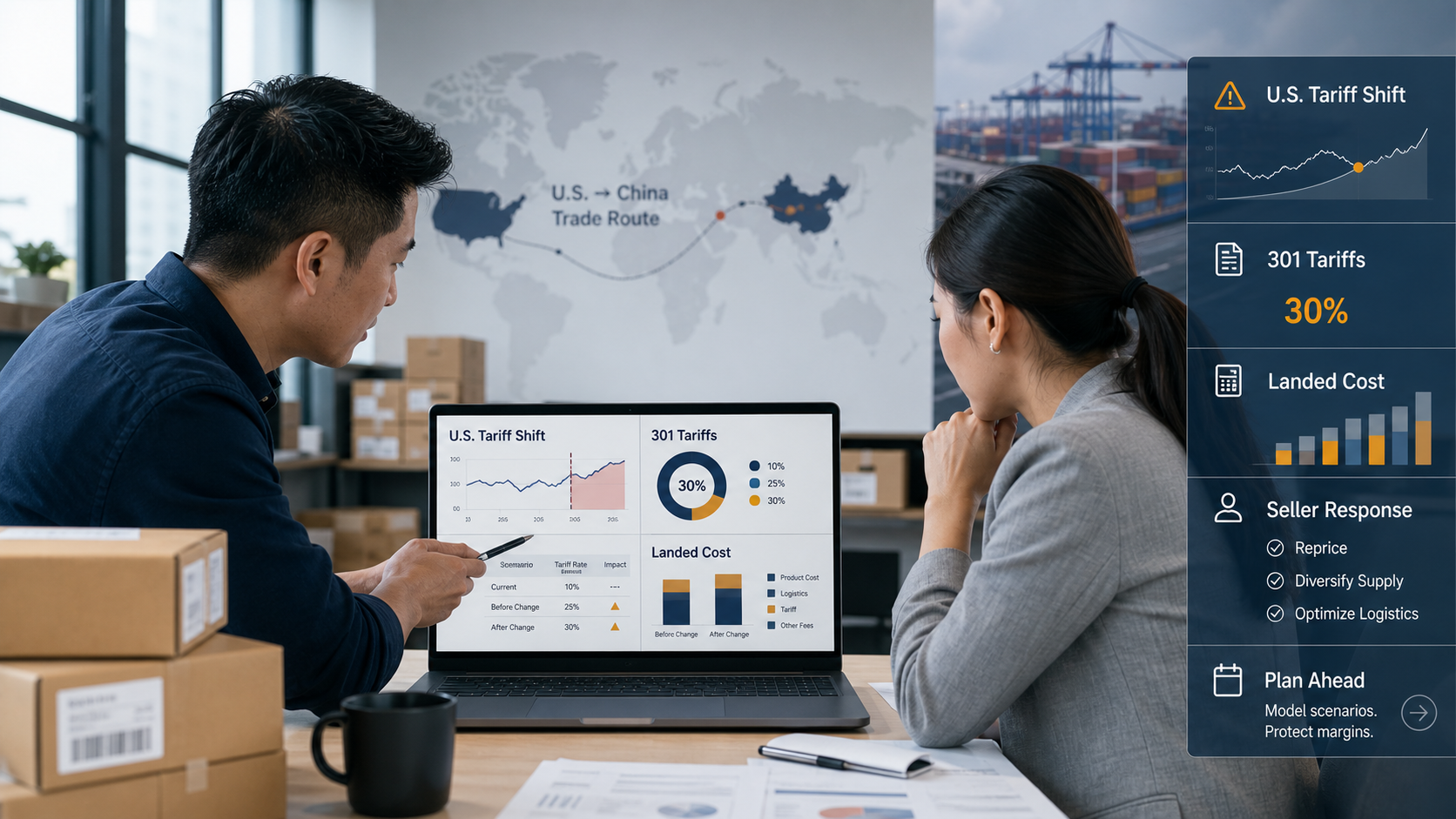
Since early 2025, the US has escalated trade restrictions on China, starting with a 10% blanket ad valorem tariff on all Chinese imports in February, followed by targeted 301 tariff hikes (up to 25% for 3C, apparel, and home goods). The most disruptive change came on August 29, 2025, when the US permanently eliminated the de minimis exemption for parcels under USD 800—previously exempt from duties and formal entry requirements36氪. Overnight, the "low-price direct mail + tax-free" model that fueled the growth of SHEIN, Temu, and Amazon FBM sellers collapsed.
By May 2026, the tariff landscape stabilized at a 54% flat duty on all Chinese low-value parcels, with additional scrutiny on high-risk categories like electronics, textiles, and furniture. For sellers, this translated to:
Soaring costs: A mechanical keyboard previously costing USD 80 faced an extra USD 20 in tariffs (25% increase)36氪.
Margin erosion: Average profit margins dropped from 15%–20% to 3%–8% for most categories.
Compliance risks: Stricter customs audits raised seizure and penalty risks for misdeclared or non-compliant shipments.
1.2 Operational Pain Points for Sellers
Beyond direct tax costs, the tariff upheaval exposed critical vulnerabilities in sellers’ logistics and compliance workflows:
Uncertain cost forecasting: Frequent policy shifts made budgeting nearly impossible, with tariff rates fluctuating between 15%–120% in early 2026.
Inefficient manual compliance: Outdated declaration processes led to 3%–5% customs rejection rates, delaying shipments by 7–14 days.
Inventory and cash flow strain: Front-loaded tariff payments tied up 30%–50% of working capital, while delayed deliveries increased stockouts and order cancellations.
Lack of end-to-end visibility: Disconnected logistics systems left sellers blind to shipment status, exacerbating customer dissatisfaction and chargebacks.
1.3 The Need for Strategic Logistics Partnerships
Small and medium-sized sellers (SMEs), which constitute 90% of China’s cross-border e-commerce volume, lacked the resources to build in-house compliance and logistics capabilities. Large platforms like Temu and SHEIN accelerated US-based warehousing and local fulfillment to bypass direct tariffs, but SMEs required affordable, scalable solutions. This gap created demand for 3PL providers that could integrate digital compliance, tariff optimization, overseas warehousing, and full-chain tracking—a niche Niuku International Logistics specialized in.
2. The Solution: Digital Compliance and Full-Chain Logistics with Niuku International Logistics
2.1 Partner Profile: Niuku International Logistics
Founded in 2015, Niuku International Logistics is a China-based 3PL focused on Amazon FBA, cross-border e-commerce, and US market logistics纽酷国际物流. With a network spanning China’s major ports (Shenzhen, Ningbo, Shanghai) and US fulfillment hubs (Los Angeles, New York, Chicago), the company has served over 30,000 cross-border enterprises and processed 500,000+ shipments annually纽酷国际物流. Core strengths include:
20+ years of US customs compliance expertise with a <1% inspection rate (vs. industry average 3%–5%)纽酷国际物流.
Digital logistics ecosystem: Proprietary compliance software, real-time tracking, and AI-driven tariff classification.
Global warehousing network: 100,000+ sq. ft. of US-based overseas warehouses for inventory staging and fulfillment纽酷国际物流.
End-to-end service: From China factory pickup to US door delivery, including customs clearance, duty calculation, and last-mile logistics.
2.2 Core Logistics Strategy: Digital Compliance + Overseas Warehousing + Full-Chain Tracking
Niuku’s solution addressed sellers’ tariff pain points through three interconnected pillars, tailored for both Amazon FBA and direct-to-consumer (DTC) sellers.
2.2.1 Pillar 1: AI-Powered Digital Compliance Declaration System
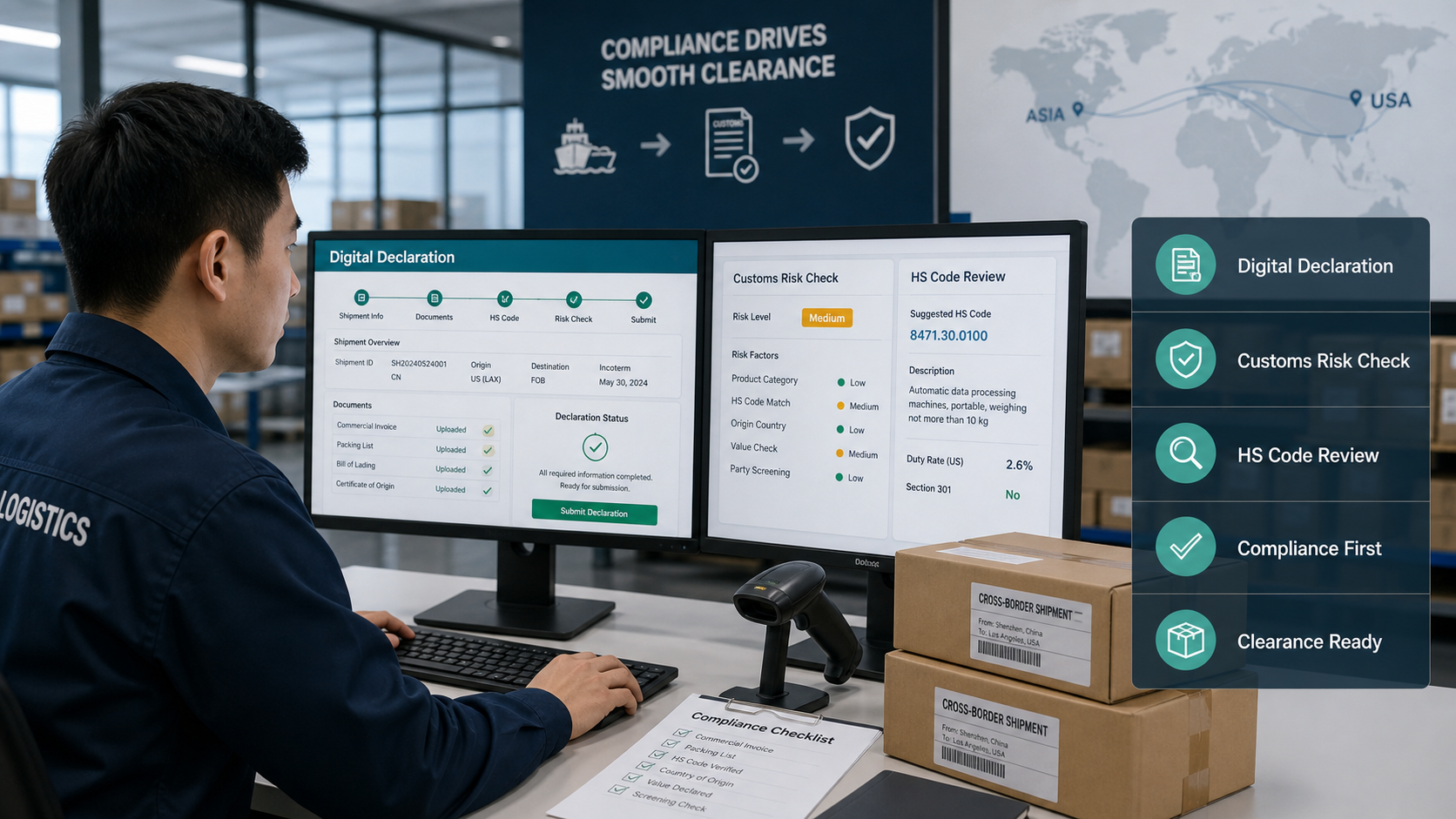
Manual declaration errors and non-compliance were major drivers of customs delays and penalties. Niuku deployed a cloud-based, AI-driven compliance platform that automated and standardized the entire declaration workflow:
HS Code Classification: AI algorithms analyzed product descriptions, materials, and functions to assign accurate HS codes, eliminating misclassification risks (a top cause of customs audits).
Automated Documentation: The system generated ACE (Automated Commercial Environment)-compliant forms, commercial invoices, packing lists, and country-of-origin certificates in real time, reducing manual work by 80%.
Tariff Calculation Engine: Integrated with USITC and CBP databases, the tool computed real-time duty rates (including 301 surcharges and de minimis exceptions) to enable precise cost forecasting.
Pre-Submission Compliance Checks: The platform flagged red flags (e.g., undervaluation, missing IP licenses, incomplete Lacey Act declarations for wood products) before shipment, cutting rejection rates to <1%.
For example, a Shenzhen-based 3C seller specializing in wireless earbuds reduced declaration processing time from 48 hours to 2 hours and customs inspection rates from 4% to 0.8% within one month of adopting the system.
2.2.2 Pillar 2: Strategic Overseas Warehousing and Inventory Staging
To mitigate tariff volatility and delivery delays, Niuku established US-based overseas warehouses in key ports (Los Angeles, Savannah, and Dallas) and implemented a pre-shipment inventory staging model:
Bulk Pre-Fulfillment: Sellers shipped large, consolidated batches to Niuku’s US warehouses 30–60 days in advance of peak demand, allowing them to lock in lower freight rates and avoid last-minute tariff spikes.
Tariff Deferral & Phased Clearance: Using bonded warehousing, sellers deferred duty payments until inventory was released for sale, improving cash flow by 40%. For high-volume sellers, Niuku split shipments into smaller batches to avoid peak tariff adjustment periods (e.g., April–May 2026), cutting peak costs by 34%.
Inventory Flexibility: Warehouses supported cross-docking, repackaging, and labeling, enabling sellers to adapt to US labeling requirements and quickly fulfill orders from local stock, reducing delivery times from 10–14 days to 2–3 days纽酷国际物流.
A Guangzhou-based apparel seller, for instance, shifted from direct China-to-US shipping to Niuku’s Los Angeles warehouse. By pre-stocking 50,000 units of summer clothing, they avoided a 15% mid-season tariff hike and cut delivery times by 70%, boosting customer satisfaction and repeat purchases.
2.2.3 Pillar 3: Full-Chain Visibility and Risk Mitigation
Tariff uncertainty was compounded by lack of shipment transparency, leading to missed deadlines and customer complaints. Niuku’s full-chain tracking platform provided real-time visibility across the entire logistics journey:
End-to-End Tracking: From China factory pickup to US last-mile delivery, every milestone (customs clearance, port arrival, warehouse receipt, order dispatch) was updated in real time via a single dashboard纽酷国际物流.
Proactive Alerts: The system triggered notifications for delays, customs holds, or tariff changes, allowing sellers to address issues before they escalated.
Data Analytics: Historical shipment data and tariff trend analysis enabled sellers to optimize inventory levels, adjust pricing, and plan future shipments strategically.
Additionally, Niuku offered tariff risk assessment and insurance partnerships to cover unexpected duty hikes or shipment losses. For high-value goods (e.g., electronics, luxury home goods), sellers could purchase tariff fluctuation insurance (0.8%–1.2% of cargo value) to cover 80% of losses if tariffs rose above a predefined threshold.
2.3 Step-by-Step Implementation Workflow
Sellers partnering with Niuku followed a streamlined 5-step process to integrate the solution:
Onboarding & Product Audit: Niuku’s compliance team reviewed sellers’ product catalogs, identified high-risk categories, and configured the digital platform for their specific needs.
HS Code & Tariff Mapping: AI tools assigned accurate HS codes and calculated applicable duty rates (base tariff + 301 surcharge + de minimis adjustments).
Warehousing & Logistics Planning: Sellers selected US warehouse locations, determined batch sizes, and scheduled shipments to align with demand forecasts and tariff windows.
Shipment Execution & Compliance: Niuku handled China pickup, consolidation, ocean/air freight, and US customs clearance using the digital declaration system.
Inventory Fulfillment & Tracking: Upon warehouse arrival, inventory was staged for order fulfillment. Sellers monitored stock levels and shipment status via the real-time dashboard.
3. Results & Business Impact: Cost Savings, Stability, and Growth
3.1 Quantitative Outcomes: Measurable Improvements
Sellers partnering with Niuku International Logistics reported significant improvements across key metrics within 3–6 months of implementation:
表格
Metric Pre-Partnership Post-Partnership Improvement
Effective Tariff Cost 25%–54% 18%–35% 20%–30% reduction
Customs Inspection Rate 3%–5% <1% 75%–80% reduction
Declaration Processing Time 24–48 hours 1–2 hours 95% reduction
Delivery Time (China→US) 10–14 days 2–3 days (warehouse) 70%–85% reduction
Cash Flow Cycle 60–90 days 30–45 days 50% reduction
Order Cancellation Rate 8%–12% 3%–5% 60%–70% reduction
Key Examples:
3C Electronics Seller (Shenzhen): By leveraging Niuku’s digital compliance and overseas warehousing, the seller cut total landed costs by 22%, reduced stockouts by 40%, and grew US market revenue by 18% in 6 months.
Apparel Seller (Guangzhou): Pre-stocking inventory in Niuku’s Los Angeles warehouse allowed the seller to avoid a 15% tariff hike, improve delivery speed by 75%, and increase repeat customer rate by 25%.
Home Goods Seller (Dongguan): Using tariff deferral via bonded warehousing, the seller improved cash flow by 45%, reduced customs delays by 90%, and expanded product offerings by 30% without liquidity strain.
3.2 Qualitative Benefits: Risk Mitigation and Strategic Agility
Beyond hard cost savings, the partnership delivered critical strategic advantages:
Tariff Volatility Protection: By locking in rates and pre-planning shipments, sellers insulated themselves from sudden policy shifts, enabling stable pricing and profit margins.
Enhanced Compliance Posture: The digital system ensured full adherence to US customs rules, reducing the risk of seizures, fines, or IP-related penalties.
Scalable Operations: Niuku’s end-to-end service eliminated the need for sellers to invest in in-house logistics or compliance teams, making the model accessible for SMEs纽酷国际物流.
Focus on Core Business: With logistics and compliance offloaded to experts, sellers could redirect resources to product development, marketing, and customer service, driving long-term growth.
3.3 Industry-Wide Implications
This case study highlights a broader industry shift: cross-border e-commerce success now hinges on integrated logistics and compliance expertise, not just low product costs. As US tariff policies remain unpredictable, sellers must prioritize partners that combine digital innovation, regulatory mastery, and global infrastructure. For Chinese SMEs, collaboration with specialized 3PLs like Niuku International Logistics has become a viable, scalable alternative to the in-house logistics investments of large platforms like Temu and SHEIN.
Conclusion
The US tariff storm—driven by 301 policy escalations and the termination of the de minimis exemption—has reshaped the cross-border e-commerce landscape, presenting unprecedented challenges for Chinese sellers. However, as this case study demonstrates, proactive logistics strategy and expert partnerships can turn adversity into opportunity.
By collaborating with Niuku International Logistics, sellers implemented a triple-pillar solution: AI-powered digital compliance to eliminate declaration errors and reduce audit risks; strategic US overseas warehousing to defer tariffs, stabilize costs, and accelerate deliveries; and full-chain visibility to mitigate disruptions and optimize operations. The results speak for themselves: 20%–30% lower tariff costs, 70%+ faster deliveries, improved cash flow, and sustainable revenue growth.
As US trade policies continue to evolve, cross-border sellers must prioritize compliance, agility, and strategic partnerships over outdated "low-cost-only" models. For Chinese SMEs navigating the complexities of the US market, Niuku International Logistics provides a blueprint for tariff resilience, operational efficiency, and long-term success in an era of trade uncertainty.






 Email: