
WORLDWIDE FREIGHT SERVICES
Email: jack@transworldcn.com
Accra NCD Convention and China’s Inland Logistics Push: A New Model for Digital Trade and Multimodal Transport
The United Nations Convention on Negotiable Cargo Documents, also known as the Accra Convention on Negotiable Cargo Documents, is emerging as a milestone framework for the future of international logistics, digital trade and multimodal transport finance. For China, especially inland logistics hubs such as Chongqing, the convention offers a practical opportunity to transform rail, road and multimodal cargo documents into more powerful instruments for trade, financing and settlement.
For decades, the bill of lading has played a central role in maritime trade. It is not only a transport document, but also a document of title that can represent control over goods in transit. This legal function has helped ocean shipping connect naturally with letters of credit, cargo financing and cross-border settlement. However, international rail, road and multimodal transport have often lacked an equivalent negotiable document with the same level of legal certainty.
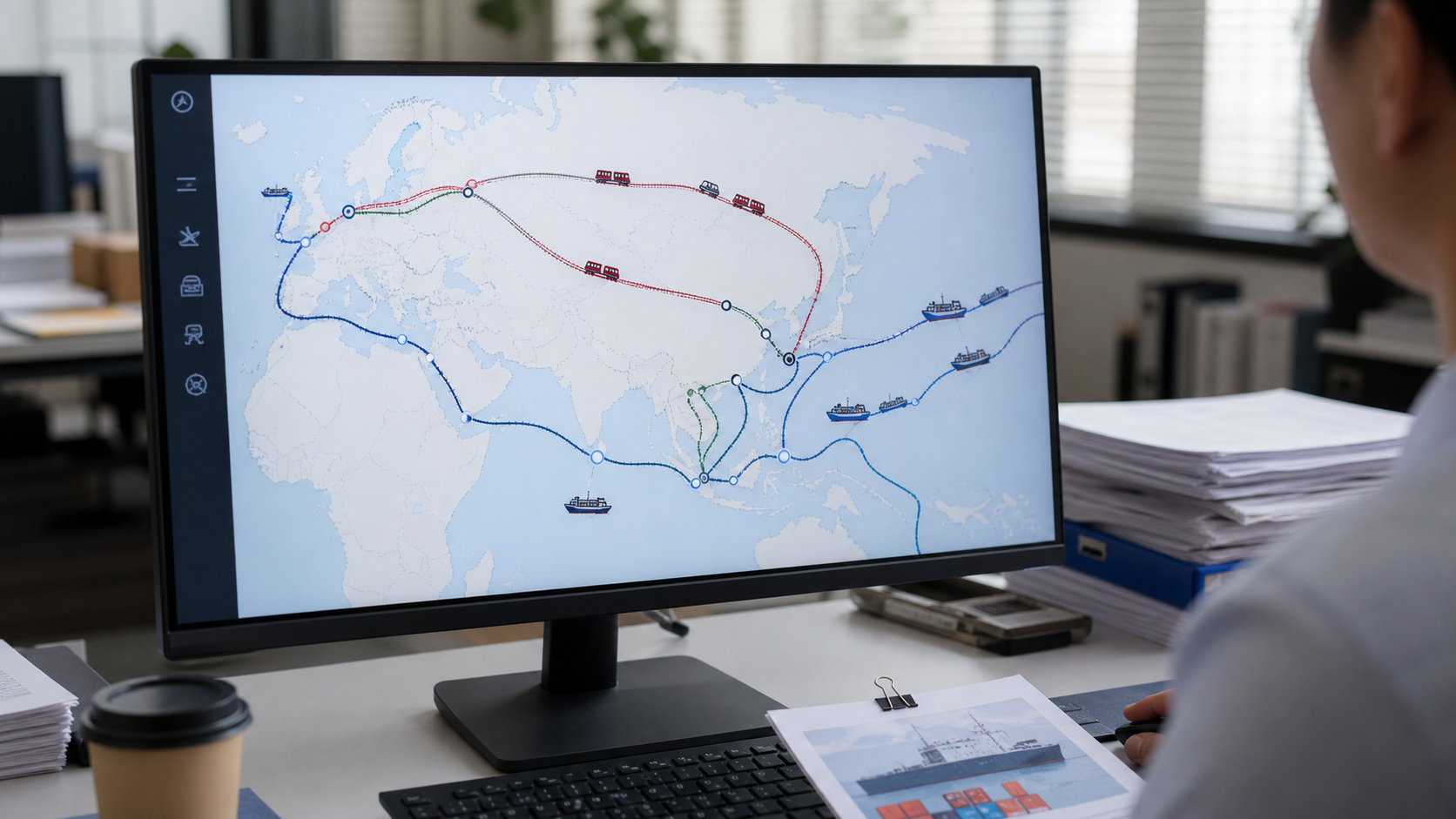
The NCD Convention aims to close that gap. It establishes a harmonized legal framework for negotiable cargo documents that can be used across transport modes, including sea, rail, road, air and multimodal logistics. In practice, this means cargo moving by China-Europe freight trains, cross-border trucking routes or combined rail-sea corridors could be supported by documents that function more like traditional maritime bills of lading.

Chongqing as a Strategic Test Case
Chongqing provides a strong international case for the convention’s application. As a major inland opening-up hub in western China, the city has developed deep connections with China-Europe freight train services, the New International Land-Sea Trade Corridor and cross-border supply chain networks linking China with Europe, ASEAN and other regions.
Unlike coastal ports, inland hubs depend heavily on rail, road and multimodal transport. These routes are increasingly important for high-value goods, electronics, automobiles, machinery, agricultural products and cross-border e-commerce shipments. Yet the financing and settlement tools available for these routes have often lagged behind those used in maritime trade.
By promoting the application of negotiable cargo documents, Chongqing can help demonstrate how inland cities participate more fully in global trade rules. The goal is not only to move goods faster, but also to make goods in transit more bankable, controllable and legally recognizable.
Why the Convention Matters for Trade Finance
Trade finance depends on trust, documents and enforceable rights. Banks and financial institutions need confidence that a document represents the goods, that the holder has recognized rights, and that the goods cannot easily be pledged or transferred multiple times in conflicting ways.
The NCD Convention strengthens this foundation by giving negotiable cargo documents a clearer legal status. For exporters, this can improve control over goods after shipment. For importers, it can support more predictable delivery and settlement. For banks, it can reduce uncertainty when financing cargo that is moving outside traditional maritime channels.
This is especially important for small and medium-sized enterprises. Many SMEs face difficulty obtaining financing because they lack strong collateral or operate through complex inland logistics chains. If rail and road cargo documents gain wider legal recognition, more shipments could become eligible for financing, helping companies improve cash flow and expand into new markets.
Digital Trade and Electronic Documents
The convention is also closely connected to the digitalization of trade documents. It allows negotiable cargo documents to exist in paper or electronic form, creating a bridge between traditional trade law and modern electronic transferable records.
This matters because global trade still relies heavily on paper documents. Paper-based processes can slow down customs clearance, financing, cargo release and dispute resolution. Electronic negotiable cargo documents could reduce document delays, lower administrative costs and improve transparency across supply chains.
For China’s inland logistics corridors, digital documentation is particularly valuable. Multimodal transport often involves several carriers, warehouses, border crossings and customs authorities. A reliable electronic document framework can make “one document for end-to-end transit” more realistic, reducing fragmentation across rail, road, sea and air transport.
Impact on Global South and Inland Economies
One of the convention’s most important implications is trade inclusion. Coastal economies have historically benefited from the mature legal infrastructure of maritime bills of lading. Inland economies, landlocked countries and developing markets have often faced higher logistics costs and weaker access to trade finance.
By extending title-document functionality beyond sea transport, the NCD Convention can help inland and Global South economies participate more effectively in international trade. Countries connected by rail corridors, dry ports and regional road networks could use negotiable cargo documents to improve financing access and supply chain reliability.
This makes the convention more than a technical legal instrument. It is also a potential development tool. If implemented effectively, it can support regional connectivity, lower trade barriers and help emerging economies integrate into higher-value supply chains.
Business Implications for Logistics Companies
For freight forwarders, carriers and logistics platforms, the convention creates both opportunities and responsibilities. Companies that can issue, manage or verify negotiable cargo documents may gain a stronger role in trade finance ecosystems. Digital logistics platforms may also develop new services around document authentication, cargo control, financing support and electronic transfer.
However, implementation will require coordination among governments, banks, insurers, carriers, customs authorities and technology providers. Legal recognition alone is not enough. Market participants need interoperable systems, risk controls, document standards and practical rules for cross-border recognition.
Conclusion
The Accra NCD Convention represents a major step toward modernizing international logistics law. By extending the legal benefits of negotiable transport documents beyond maritime shipping, it can reshape how goods are financed, controlled and transferred across multimodal supply chains.
China’s promotion of the convention through inland hubs such as Chongqing offers a meaningful international case. It shows how legal innovation, digital trade infrastructure and inland opening-up strategies can work together. If successfully implemented, the convention could make rail, road and multimodal transport not only faster, but also more financeable, inclusive and globally competitive.







 Email: