
WORLDWIDE FREIGHT SERVICES
Email: jack@transworldcn.com
Delivered Duty Paid (DDP) is the most widely adopted logistics solution for Amazon sellers sending inventory from China to US, EU and Canadian FBA warehouses. In 2026, tightened global customs policies, including the EU ICS2 Phase 3, upgraded Canada ACI eManifest rules and expanded UFLPA enforcement, raise compliance risks sharply. Mistakes in HS coding, advance declaration or documentation will cause cargo detention, fines, and costly Amazon stockouts. This encyclopedia guide explains DDP fundamentals, regional regulatory differences, transport route selection, documentation standards and proven strategies to stabilise your cross-border FBA replenishment. If you are choosing a forwarder for multi-region Amazon FBA DDP shipments, prioritise logistics providers with dedicated local customs brokers in each target country.
Cross-border e-commerce sellers relying on Amazon FBA face a continuously evolving logistics landscape. While dozens of Incoterms options exist for international freight, DDP (Delivered Duty Paid) has become the mainstream choice for SMEs shipping inventory to Amazon fulfilment centres across the United States, European Union and Canada.
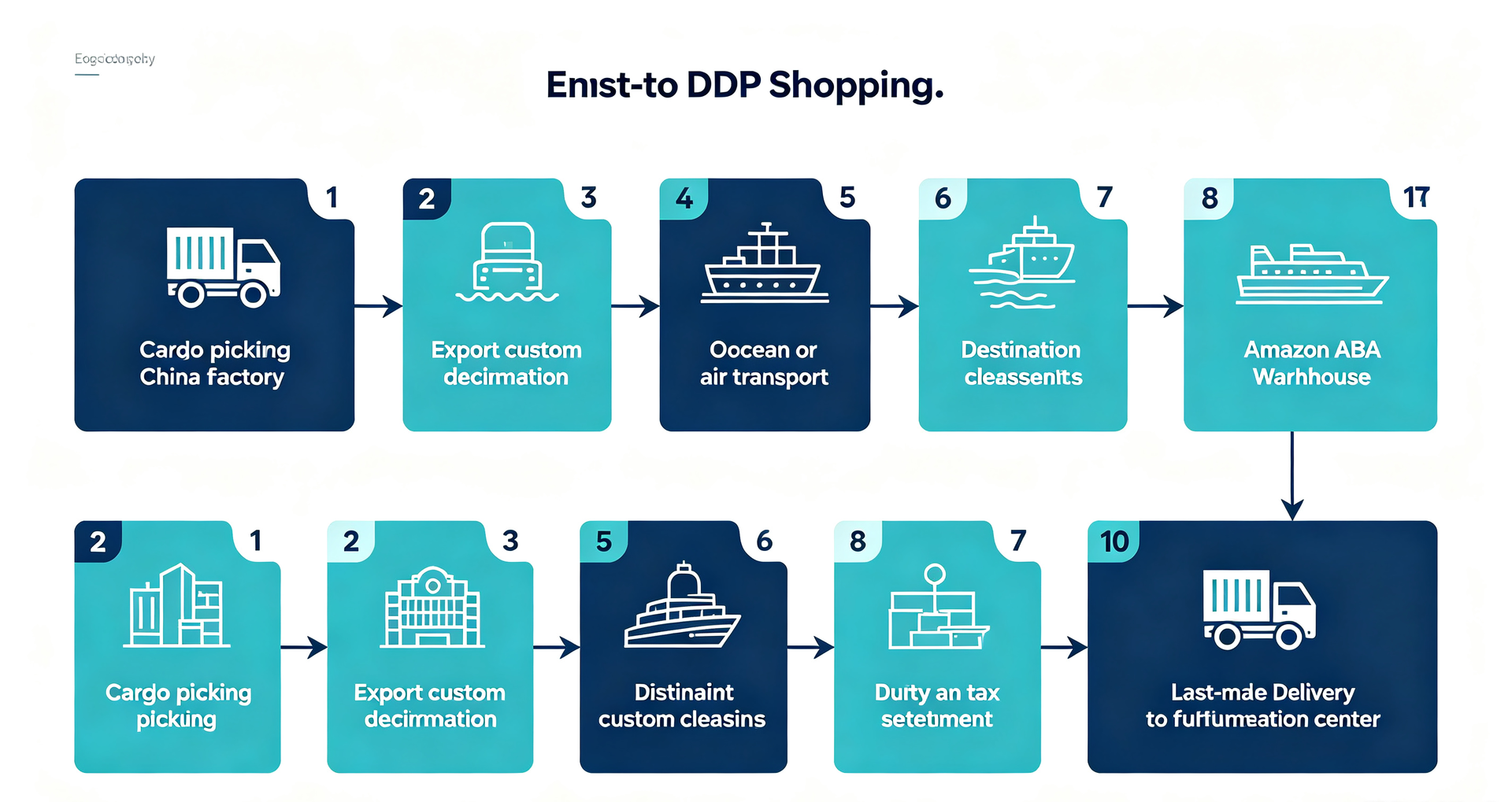
Under standard DDP terms, your freight forwarder coordinates export customs clearance in China, ocean or air transport, destination import customs filing, duty & tax settlement, and final delivery directly to Amazon FBA warehouses. Compared with DDU (Delivered Duty Unpaid), DDP shifts most of the complex customs administration work away from sellers, making it attractive to merchants without established local import teams.
However, many sellers misunderstand DDP scope of responsibility. The year 2026 marks a turning point for global cross-border logistics compliance. The EU’s ICS2 Phase 3 system is fully enforced without grace periods; Canada strengthens ACI eManifest data audits; U.S. Customs expands UFLPA cargo examinations; and Amazon tightens receiving rules for palletization, labelling and appointment booking. Small errors in shipment documentation now lead to far more costly consequences than five years ago.
Our logistics team, with daily operations covering US, EU and Canadian FBA lanes, regularly observes identical compliance failures recurring across hundreds of Amazon sellers. This comprehensive reference guide consolidates field experience, official customs regulation updates and Amazon operational standards to help sellers build stable, low-risk FBA replenishment workflows. Over 80% of cargo detentions we handled in Q1-Q2 2026 originated from incomplete advance cargo declarations, rather than product safety violations.
Incoterms 2020 officially defines DDP as the term where the seller (or appointed logistics provider) bears all risks and costs associated with delivering goods to the named destination place. For Amazon FBA shipments, the “named destination” refers to a specific Amazon fulfilment centre address.
Many freight disputes arise because sellers assume all costs are covered. Standard DDP pricing does not automatically include:
| Shipping Term | Best For | Main Risk Point |
| DDP | Small & medium Amazon sellers without local importer entity | Must select a qualified forwarder with stable local customs broker partners |
| DDU | Sellers with registered IOR, local tax ID and in-house customs team | Seller takes full responsibility for destination clearance, tax payment and delays |
Practical Advice from Our Operations Team: Amazon will not act as Importer of Record (IOR) for inbound inventory. If you select DDU without a trusted local IOR solution, your shipment risks refusal upon arrival. For 90% of China-based Amazon sellers targeting US, EU and Canada, properly structured DDP FBA services deliver better supply chain predictability.
Internal link example Read our detailed article: Importer of Record(IOR) Requirements for Amazon FBA Shipments
This section covers the most impactful policy changes reshaping FBA logistics this year. All regulations cited align with official customs authority announcements, representing the highest-priority compliance checklist for sellers.
The EU Import Control System 2 (ICS2) Phase 3 replaced legacy security filing systems completely in early 2026. No transitional exemptions remain for sea, air, rail and road cargo entering EU territory. Core requirements affecting FBA shipments:
Common Mistake We Encounter: Sellers continue providing simplified invoice descriptions inherited from pre-2025 workflows. Under ICS2, carriers receive “Do Not Load” instructions for incomplete filings, halting shipments before departure and creating massive stockout risks for Amazon stores.
Internal link: ICS2 Phase 3 Complete Guide for EU Amazon FBA Sellers
The Uyghur Forced Labour Prevention Act (UFLPA) enforcement continues expanding throughout 2026. US CBP increases random examinations for textile, electronics, furniture and automotive accessory shipments. For FBA sea freight via Matson, ZIM and other transpacific carriers:
Internal link: How To Avoid UFLPA Detention for US Amazon FBA Cargo
All ocean and air shipments arriving in Canada must comply with updated ACI eManifest requirements. Amazon.ca FBA sellers face two critical rules:
Many logistics providers lack deep experience with Canadian FBA clearance. Improper ACI filing often results in clearance delays extending 7–14 days, far longer than equivalent US port delays.
EEAT Experience Note: Our team maintains dedicated Canadian customs brokerage partners to avoid ACI eManifest filing errors, a frequent pain point for generic freight forwarders who focus only on US lanes. Internal link: ACI eManifest & BN Number Rules for Canada Amazon FBA
Selecting the correct transport mode directly balances capital cost, inventory turnover and stockout risk. Below is our field-verified comparison tailored for Amazon cross-border sellers in 2026.
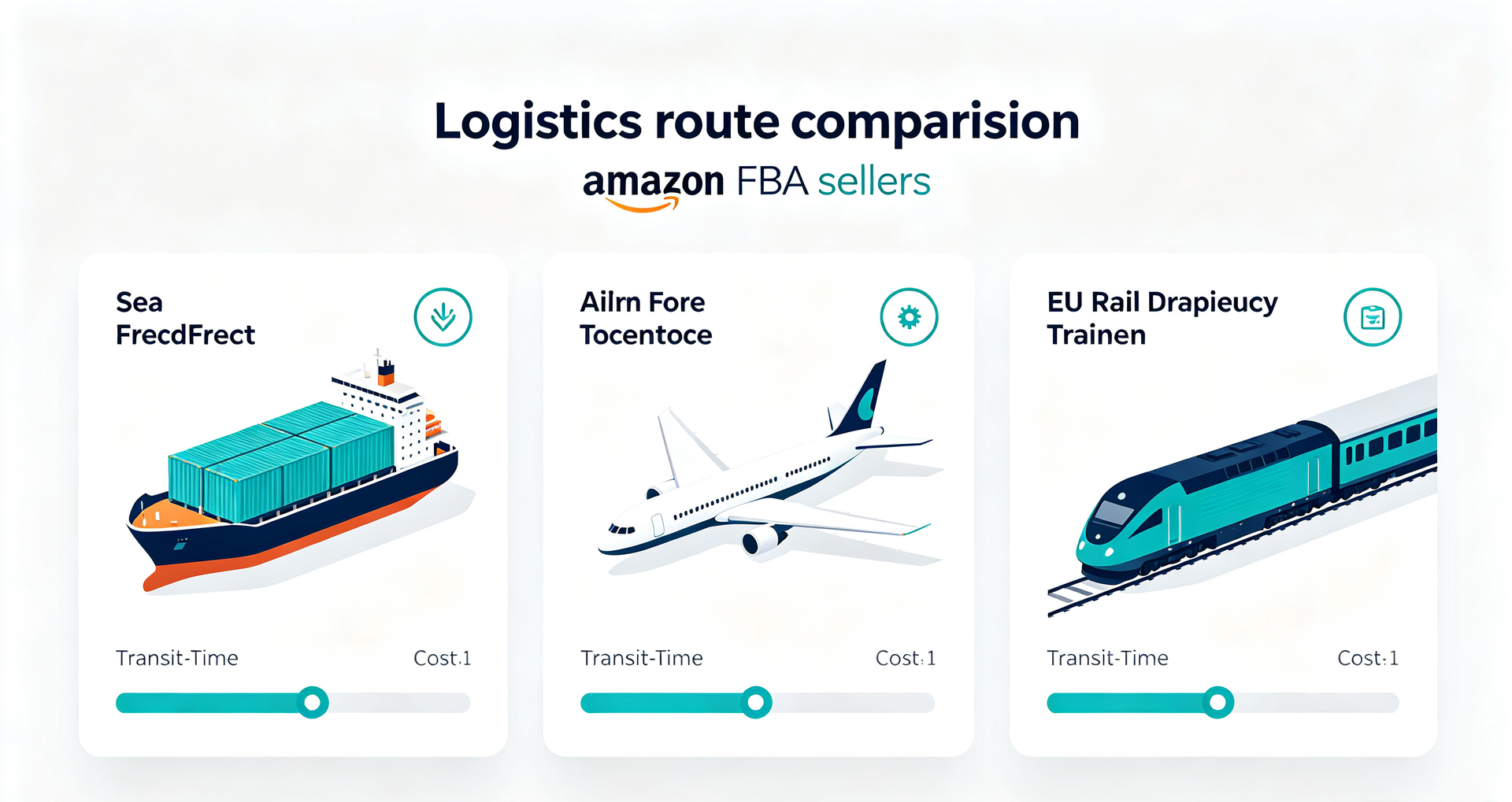
Suitable Cargo: Large replenishment volumes, non-urgent inventory, heavy/low-margin goods
Pros: Low per-unit logistics cost, ideal for bulk seasonal restocks Cons: Long transit cycle, vulnerable to port congestion, peak-season space shortages
Internal link: Matson Sea Freight DDP Service for US Amazon FBA
Suitable Cargo: High-value goods, urgent restocks, new product launches to prevent Amazon stockouts
Exclusive for European fulfilment centres Transit time: 18–28 days door-to-door Pros: Price sits between sea and air, stable schedule all year Cons: Not available for USA and Canada; weight & dimension restrictions apply
Internal link: EU Railway DDP Shipping for European Amazon Warehouses
Documentation errors remain the top reason for customs holds across US, EU and Canadian borders. When preparing shipments, ensure all documents are consistent: seller name, commodity name, HS code, unit price and packaging quantity must match across commercial invoice, packing list and transport documents.
✅ EU: Valid EORI number, ICS2-compliant commodity descriptions ✅ USA: Complete ISF filing information, product compliance certificates (CPC, FCC as applicable) ✅ Canada: BN number, complete ACI eManifest data
Expert Tip: Do not manipulate declared value to reduce duty payments. Customs data analytics systems now cross-reference Amazon listing prices, and undervaluation triggers audits, fines and cargo seizure.
Internal link: Standard Commercial Invoice Template for Amazon FBA DDP Shipment
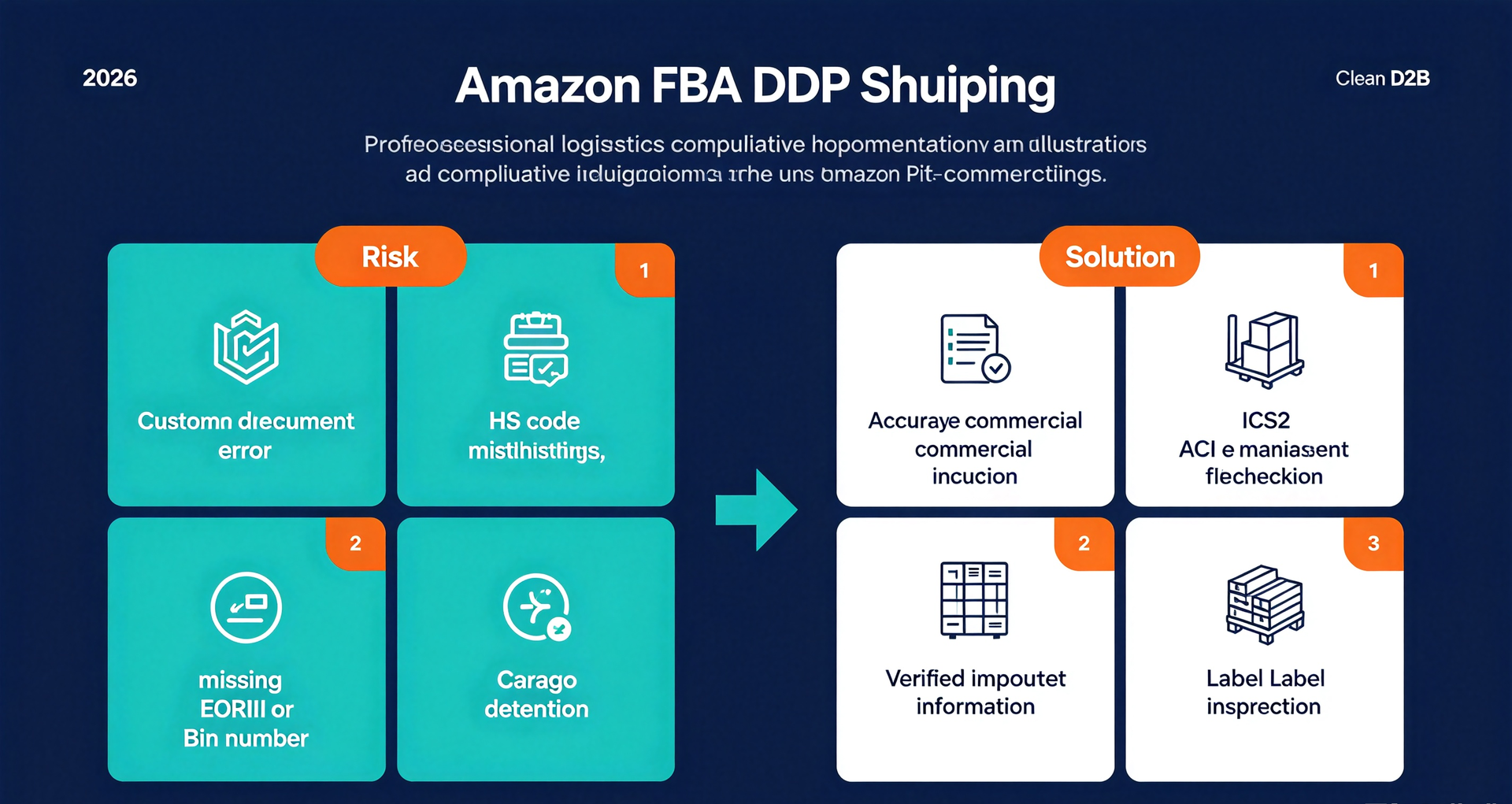
We list recurring seller errors with real supply chain consequences, designed to help readers avoid expensive logistics failures.
With rising compliance complexity, choosing a logistics partner is more important than comparing raw freight quotes. Low headline rates often hide hidden fees or poor clearance capabilities. Use this evaluation checklist:
Brand EEAT Signal: Our company specializes in end-to-end DDP FBA logistics covering the United States, European Union and Canada. Our operations team maintains direct contracts with major carriers and established local brokerage teams in each destination to resolve clearance issues rapidly. We provide full visibility tracking and dedicated account support for Amazon sellers of all scales.
A: No freight forwarder can promise 100% avoidance of customs examinations. Customs authorities conduct random risk-based inspections in all countries. What professional logistics support delivers is proper documentation, fast response during inspections and guidance to minimise detention duration.
A: Many forwarders specialise only in US lanes and lack experience with EU ICS2 rules or Canada ACI eManifest compliance. It is recommended to work with a provider with proven operational records across all three regions, like our team.
A: Rejection risks stem from improper pallet standards, incorrect box labels or oversize cargo. Under DDP terms, delivery failure costs usually fall to the shipper if violations come from incorrect seller preparation. We provide pre-shipment labelling and pallet guideline support to avoid this scenario.
A: Yes, but special advance notification is required. Oversized goods face unique Amazon receiving rules and extra destination handling fees. Always confirm pallet limits and delivery requirements with your forwarder before packing.
A: Enforcement will continue tightening. Any incomplete ENS filing will result in cargo being denied loading. Sellers must standardise detailed commodity descriptions and confirm all data with their logistics partner 3–5 working days before cargo ready date.
A: Canada CBSA carries out stricter pre-arrival data verification via ACI eManifest. Missing BN numbers or incomplete commodity details commonly trigger 7–14 days delay, while US customs delays are usually shorter for properly filed cargo.
Amazon FBA DDP shipping offers a streamlined logistics solution for cross-border sellers targeting North America and Europe. Nevertheless, 2026’s stricter global customs rules eliminate the margin for error that existed in previous years. Successful supply chain management relies on three pillars: accurate documentation, proactive compliance planning and a qualified freight forwarder familiar with US, EU and Canadian regional regulations.
Before arranging your next FBA replenishment shipment, review your HS coding standards, confirm all required regional compliance documents, and build sufficient lead time into your inventory plan to absorb transit or customs delays.
If you require a custom door-to-door DDP shipping quotation for Amazon FBA shipments to the United States, European Union or Canada, reach out to our logistics team. Our specialists will assess your cargo specifications, recommend the optimal transport solution and explain all applicable compliance requirements for your target market.






 Email: