
WORLDWIDE FREIGHT SERVICES
Email: jack@transworldcn.com
TL;DR – Strategic Takeaways for Supply Chain Leaders
Three critical chokepoints are under pressure simultaneously: The Red Sea, the Strait of Hormuz, and the Panama Canal are all facing significant disruptions, creating a new era of supply chain volatility that demands proactive strategies rather than reactive responses.
The old "efficiency-first" model is obsolete: A paradigm shift is underway, prioritizing security and resilience over pure cost optimization. This requires a fundamental change in how supply chains are designed and managed.
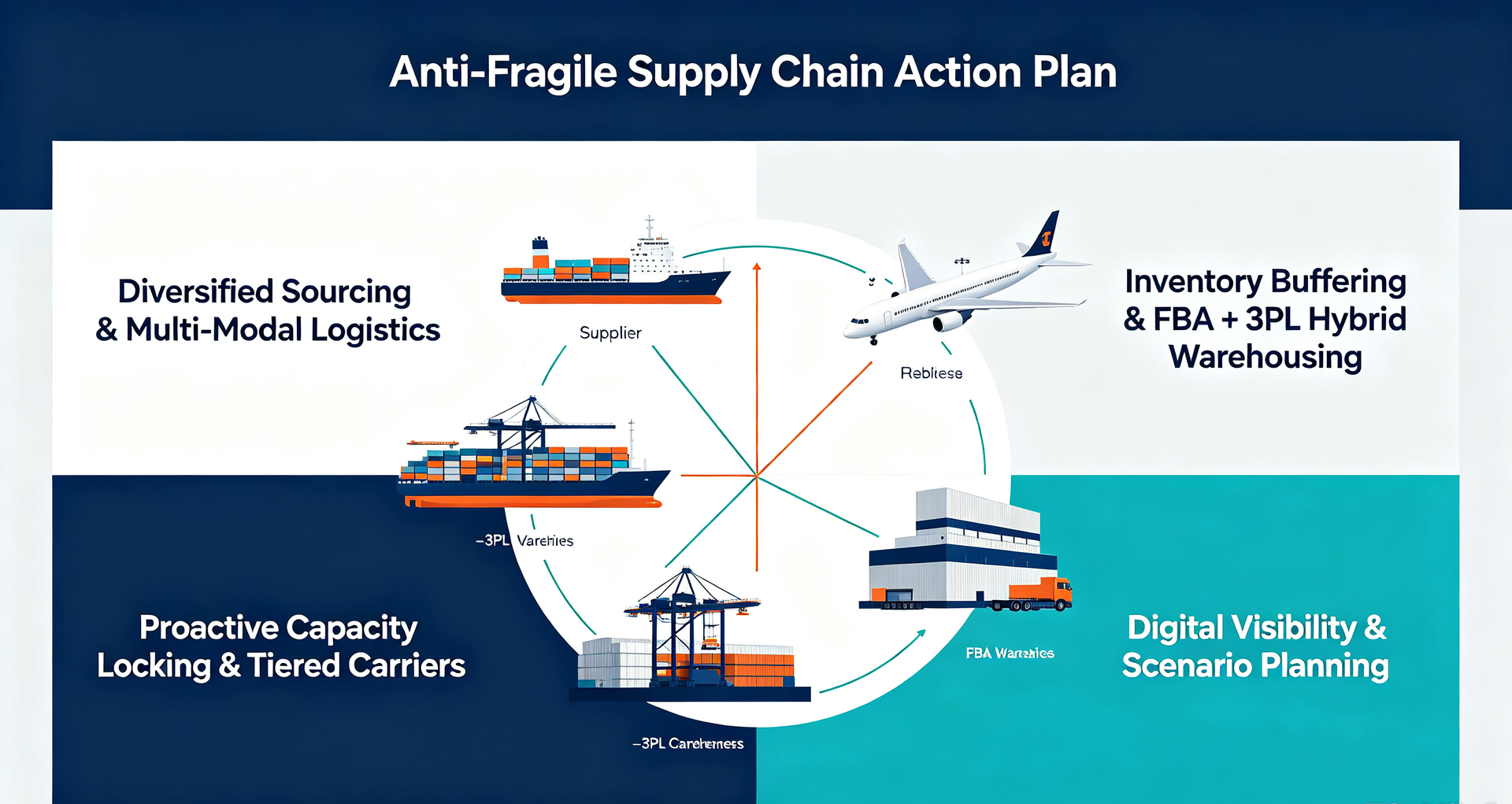
A multi-layered approach is essential: Supply chain resilience cannot be achieved by a single tactic but requires a combination of diversified sourcing, inventory buffering, flexible logistics, and strategic partnerships.
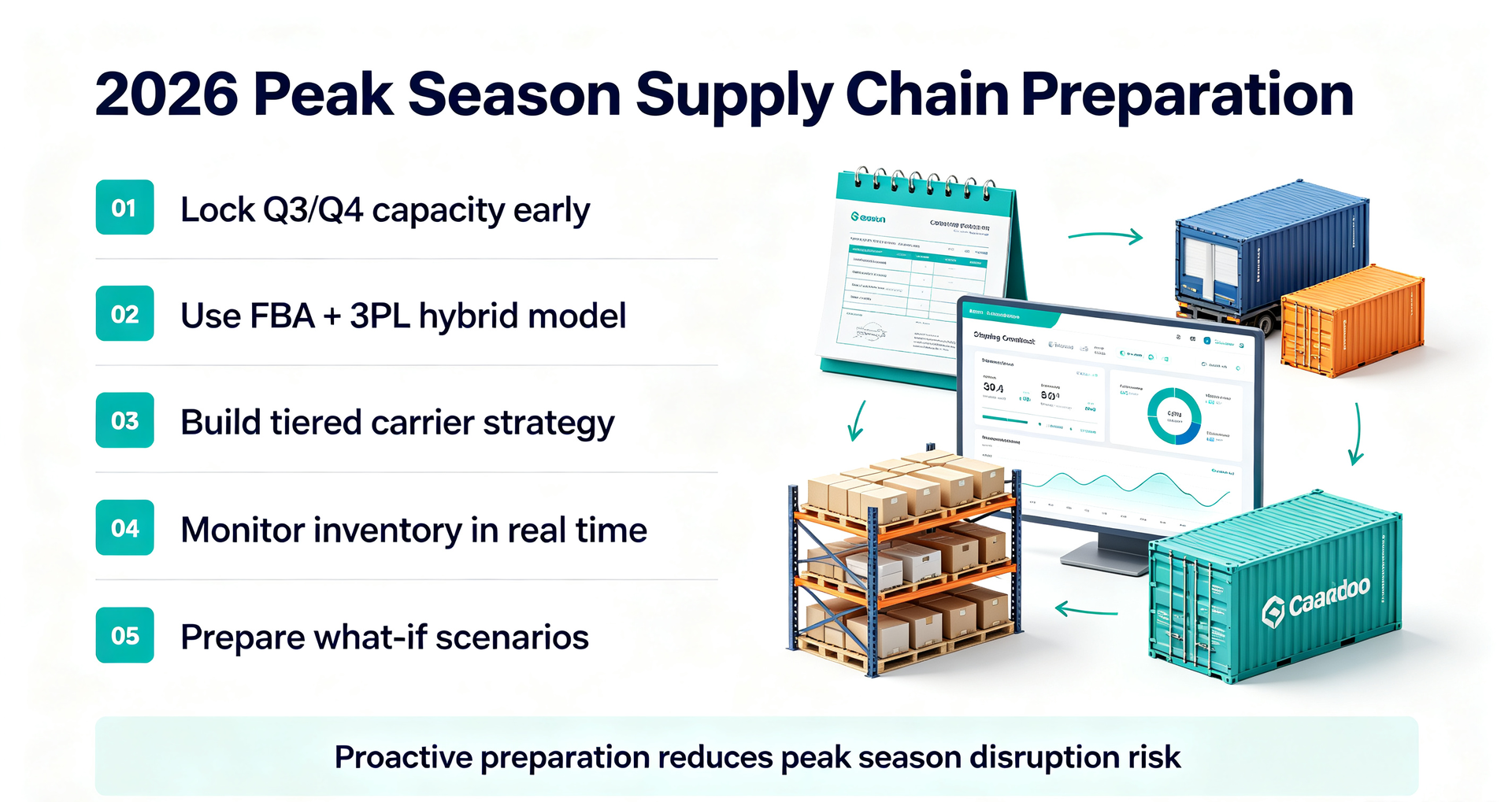
Actionable strategies exist for peak season 2026: Proactive capacity locking, a "FBA + 3PL" hybrid warehouse model, and a tiered shipping strategy can mitigate the impact of the upcoming Q3/Q4 peak, which is expected to be more severe due to ongoing global disruptions.
The new competitive advantage is resilience: Companies that build anti-fragile supply chains are not just weathering the storm but positioning themselves to capitalize on the instability of their less-prepared competitors.
For over two decades, global supply chains were engineered for one thing: efficiency. The goal was to minimize costs and optimize for just-in-time delivery. This was made possible by a reliance on a few critical arteries of global trade, notably the Suez and Panama Canals, and a network of suppliers concentrated in low-cost regions.
The system worked spectacularly well until it didn't. Since 2020, a series of shocks—from COVID-19 to the Suez Canal blockage, to geopolitical conflicts—have exposed the fragility of this model. In 2026, we are witnessing a confluence of crises that is forcing a permanent rewrite of the rules. The convergence of risks in the Red Sea, the Strait of Hormuz, and the Panama Canal is not a temporary glitch; it signals a structural shift toward a more volatile and unpredictable global trade environment.
For businesses dependent on the China-North America trade lane, the stakes could not be higher. The disruptions are not isolated events but interconnected threats that compound each other, demanding a strategic response. The old playbook of reactive logistics is obsolete. In its place, a new paradigm is emerging: one where security and resilience are prioritized alongside efficiency. This guide outlines the core challenges and provides a concrete action plan for building an anti-fragile China-North America supply chain capable of thriving in this new era.
In mid-2026, three of the world's most important maritime chokepoints are simultaneously under duress, creating a supply chain crisis of unprecedented scale.
1. The Red Sea and Suez Canal Crisis: Escalating geopolitical tensions in the Middle East have had a direct impact on shipping through the Red Sea. The threat of attacks on commercial vessels has forced shipping lines to divert vessels around the Cape of Good Hope, adding significant time and cost. For example, Maersk's decision to reroute all vessels away from the Red Sea added approximately 10 days to voyages, increased fuel consumption, and escalated transport costs. An estimated 12% of global container capacity was tied up in these longer routes, creating a ripple effect of equipment shortages.
2. The Strait of Hormuz Blockage: The Strait of Hormuz, the world's most critical artery for energy exports, saw a dramatic slowdown in shipping activity following an escalation of military conflict. In July 2026, the number of vessels transiting the strait dropped by 66% in a single week. The number of oil and LNG tankers, vital for global energy markets, fell from 90 to just 30 in the same period. This disruption not only threatens energy prices but also reduces the availability of vessels for other types of cargo, creating a compounding effect on global freight capacity.
3. The Panama Canal Drought: The crisis is not solely geopolitical. Climate change has also delivered a severe blow to the Panama Canal. A prolonged drought has forced the Panama Canal Authority to repeatedly reduce the number of daily transits. As of July 2026, daily slots were reduced to 34 from a normal capacity of 36-40. This has led to increased competition for remaining slots, with auction prices for a single transit soaring from an average of $140,000 before the Middle East conflict to around $385,000. While demand for the canal has surged to near-full capacity, the waterway's physical limitations are forcing shippers to seek alternatives, adding further strain to global logistics.
These simultaneous disruptions impact the China-U.S. trade lane in three primary ways:
Increased Transit Times: Vessels diverted away from the Suez Canal are taking longer to reach North America, extending overall lead times by a week or more. This erodes the predictability that retailers and e-commerce sellers rely on for inventory planning.
Soaring Freight Costs: The combination of reduced capacity (due to diversions and chokepoint congestion) and sustained high demand is pushing freight rates to the upside. Market data from early 2024 showed spot freight rates for Asia-North Europe doubling in a matter of weeks due to Red Sea tensions. In 2026, similar dynamics are at play, with far-reaching cost implications for importers.
The End of "Just-in-Time": The model of minimal safety stocks is unworkable. The crisis has forced a shift back toward "just-in-case" inventory strategies, as companies recognize the need for buffers to absorb these systemic shocks.
The traditional supply chain model, optimized for lean efficiency, was built on the assumption of a predictable world. The current crisis has proven this assumption invalid. This has led to a fundamental shift in supply chain management philosophy.
According to academic research examining the impact of systemic shocks, such as the COVID-19 pandemic, a "concentration strategy"—where a company deepens its relationships with a smaller, more trusted group of suppliers—can be more resilient than a fragmented network. The logic is simple: in a systemic crisis, trust and the ability to work closely with a partner to solve problems become more valuable than having numerous low-cost but unreliable options.
This means the new supply chain model must be "anti-fragile"—it must not just withstand shocks but actually improve and gain strength from them. The key is to move from a mindset of risk mitigation to one of strategic preparation.
This section outlines a concrete action plan for building a more resilient China-North America supply chain, based on current best practices.
Beyond China+1: A Multi-Tiered Strategy: While the "China+1" strategy has been a popular topic for years, the current crisis makes it a necessity. Diversification of manufacturing and sourcing is not a replacement for Chinese production but a complement to it. For instance, Chinese companies are increasingly investing in facilities in Southeast Asia, effectively creating a dual-sourcing model where the "+1" country's supply chain is still integrated with and supported by China's. This creates a powerful, integrated network that can switch production between nodes as needed.
Multi-Modal is Key: Reducing reliance on a single mode of transport (ocean) is vital. While ocean freight remains the backbone, exploring air freight for high-value, time-sensitive goods is now a strategic necessity. Diversifying transport modes provides a vital safety valve when ocean freight faces a major disruption.
The 333 Plan: The old "zero-inventory" philosophy is dead for critical goods. For essential inventory, companies should plan to hold more stock closer to end markets. A proven approach is the "333" inventory strategy: 3 months of inventory in transit, 3 months in a central hub, and 3 months of safety stock.
FBA + 3PL Hybrid Model: For e-commerce sellers heavily reliant on Amazon FBA, a hybrid model is a powerful tool. This involves pre-positioning up to 30% of seasonal stock in a network of third-party logistics (3PL) warehouses. When FBA (Fulfillment by Amazon) warehouses inevitably get congested or reach their storage limits during peak season, the seller can quickly direct new inventory to the 3PL, ensuring no sales are lost. This also mitigates the risk of paying exorbitant FBA peak season storage fees.
Take the Passenger Airline Approach: Just as you would book a flight months in advance, the smartest supply chain leaders are locking in their Q3/Q4 peak season freight capacity now. The risk of widespread capacity shortages is high, with a significant portion of retail importers already reporting peak season delays. By securing a contract for a set amount of space at a fixed rate, you protect your supply chain from both capacity shortages and spot rate spikes.
Tiered Carrier Strategy: Create a tiered shipping strategy. Your "Tier 1" carriers are your trusted partners with whom you have long-term contracts. "Tier 2" are reliable alternative carriers you have vetted and can use for overflow. "Tier 3" is a last-resort plan for spot booking. This ensures you have multiple pathways for moving goods, even if one carrier is completely booked.
The "Nerve Center": The new supply chain is digital. To make the right decisions quickly, you need a "Nerve Center"—a digital platform that provides real-time visibility into inventory levels across the entire supply chain, from supplier to end customer. This data is critical for making rapid decisions: "Should we expedite air freight for this shipment? Should we divert these goods to the 3PL instead of the FBA warehouse that is now full?"
Scenario Planning: Gone are the days of annual planning. Supply chain leaders must now engage in continuous scenario planning. What if the Red Sea closes completely? What if the Panama Canal limits transits further? By modeling these "what-if" scenarios, you can pre-identify potential solutions, making you faster and more effective when a real disruption occurs.
A: Both are creating long-term structural changes. The Red Sea crisis is geopolitical, with no immediate resolution in sight. The Panama Canal issue is a chronic challenge worsened by climate change and is likely to be a recurring issue. Expect these to be permanent features of the risk landscape for the foreseeable future.
A: In the short term, yes. But the cost of not being resilient is far higher. A single shipment delay can lead to stockouts, lost sales, and reputational damage, all of which are far costlier than paying a premium for a more flexible logistics solution. It is an investment in business continuity.
A: Act now. Lock in capacity with carriers. Adopt a "FBA + 3PL" hybrid warehousing strategy to avoid FBA bottlenecks. Implement a tiered shipping strategy to have built-in redundancy for how you move goods. Proactive, multi-layered preparation is the only way to navigate peak season successfully.
A: Yes. The "FBA + 3PL" model is highly scalable and designed for e-commerce sellers of any size. Similarly, diversifying carriers and locking in forward capacity are strategies that any business can implement. The key is to start small, test, and scale what works for you.
A: Not completely, but it is no longer the primary driver. The new paradigm is about finding the right balance between efficiency and resilience. The goal is to be as lean as possible without sacrificing the security needed to weather inevitable storms.
In 2026 and beyond, supply chain resilience is not just a defensive play—it is a competitive advantage. Companies that can build anti-fragile systems—that can absorb shocks and even profit from them—will be the ones that grow market share while their competitors flounder. The strategies outlined in this guide represent an investment in that future.
The transition from an efficiency-first to a resilience-first model is a fundamental strategic shift. By implementing these tactics now—diversifying sourcing and logistics, building strategic inventory buffers with a "FBA+3PL" hybrid model, and proactively locking in capacity—you can transform your supply chain into a source of stability and growth. In a world of "double canal crises," the winners will be those who have prepared their supply chains to not just survive, but thrive.






 Email: