

WORLDWIDE FREIGHT SERVICES
Email: jack@transworldcn.com
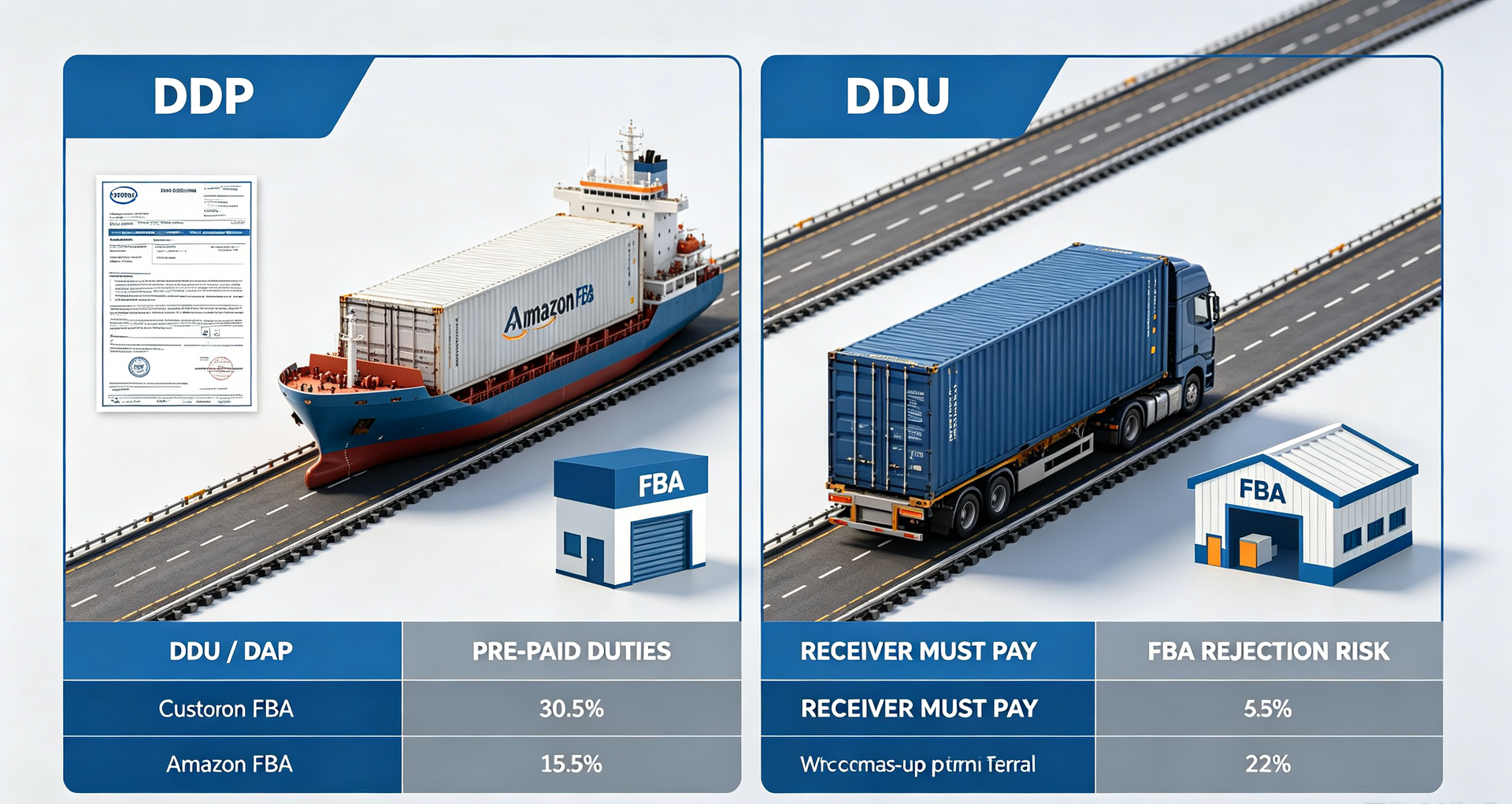
DDP (Delivered Duty Paid): The "all-inclusive" option. Seller pays everything—shipping, duties, taxes, customs clearance. Goods arrive at Amazon with all fees prepaid. Safe for FBA.
DDU (Delivered Duty Unpaid) / DAP: The "shared responsibility" trap. Seller ships to destination, but buyer (receiver) must pay duties and taxes upon arrival. Amazon WILL NOT pay these fees.
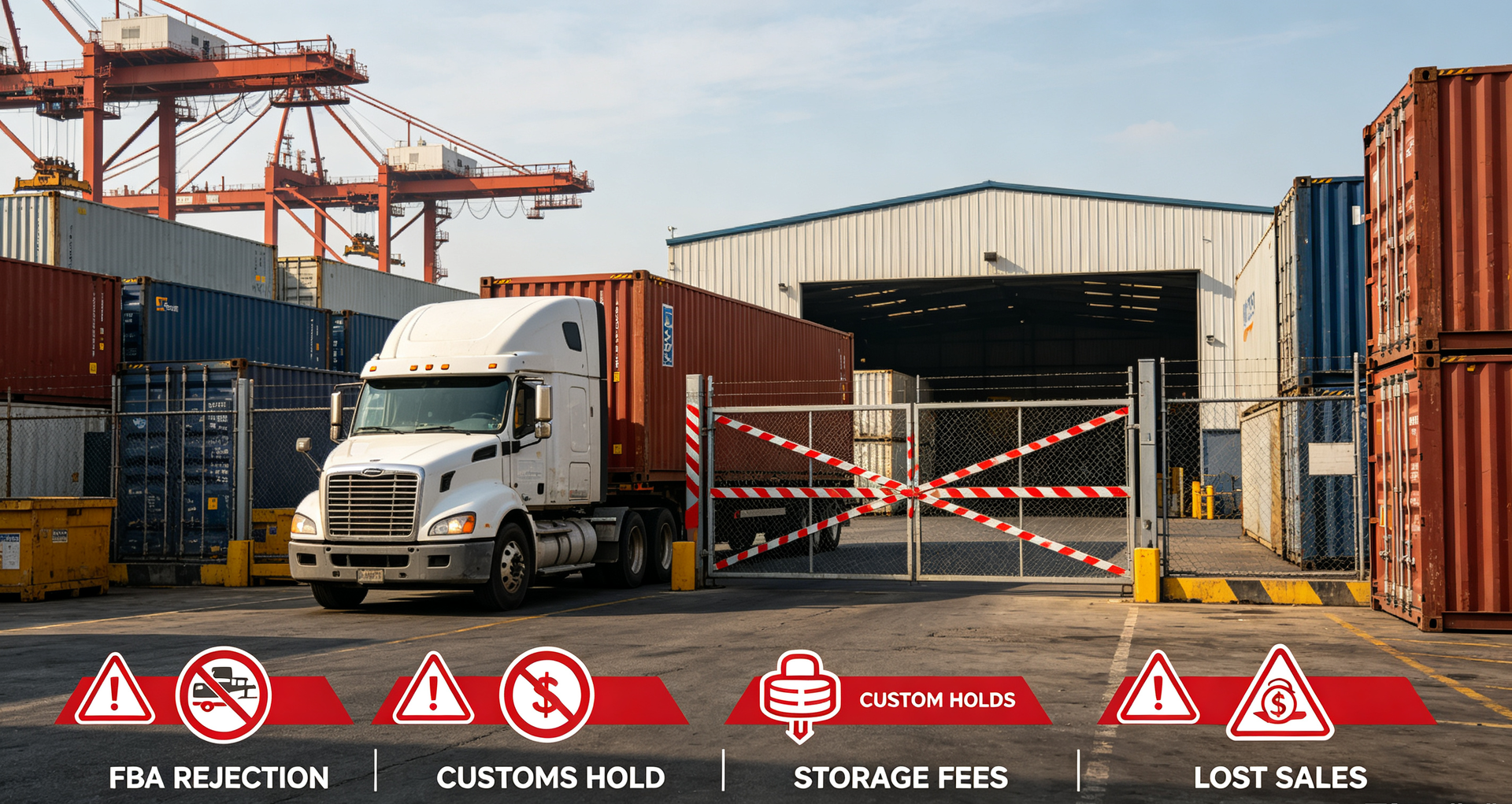
The Risk: If you ship DDU, Amazon refuses the shipment at the warehouse door. Your goods get stuck, you pay return shipping + storage fees, and you lose sales while inventory sits in limbo.
The Exception: DDU works for established importers with their own customs bonds and US warehouses. For FBA sellers shipping directly to Amazon, it's a disaster waiting to happen.
As a seasoned freight forwarder once told me, "DDU is like ordering a pizza and asking the delivery guy to pay for it—he's not going to do it." And honestly, that's exactly what happens when Amazon sellers choose DDU shipping. The truck shows up at the fulfillment center, the driver asks for duty payment, and Amazon warehouse staff says no.
If you're an Amazon FBA seller looking at shipping quotes, you've probably seen two options: DDP and DDU. One looks cheaper on paper. The other could cost you your inventory, your sales ranking, and your account health. Here's what you need to know.
Before we dive into the risks, let's get clear on what these terms mean. Under the official Incoterms 2020 rules, DDU is now technically called DAP (Delivered at Place), but most freight forwarders and sellers still use the older term.
DDP (Delivered Duty Paid) means the seller takes full responsibility. You pay for shipping, export customs, international freight, import customs clearance, AND all duties and taxes. The goods arrive at Amazon's warehouse with everything prepaid. The warehouse staff scans the barcode and accepts the shipment. No calls, no surprise bills.
DDU (Delivered Duty Unpaid) —now officially DAP—means the seller covers shipping to the destination, but the buyer (the receiver) is responsible for import customs clearance, duties, and taxes. In FBA terms, that "receiver" would be Amazon.
And here's the catch: Amazon's Terms of Service explicitly state they will not act as the Importer of Record (IOR) or pay any duties on your behalf. Amazon's official guidance confirms: "Shipments must use Delivered Duty Paid (DDP) terms. Amazon can't accept any collect charges for duties, taxes, or shipping."
You might see a DDU shipping quote that's cheaper than DDP and think, "Great, I'll save money!" Don't fall for this trap. Here's what actually happens.
The rejection scenario plays out like this:
Your container arrives at the Port of Long Beach. Customs clears the goods because the forwarder handles the export side.
The truck arrives at the Amazon Fulfillment Center (ONT8, FTW1, etc.) with your inventory.
The driver asks Amazon warehouse staff to pay the import duties—say, $300.
Amazon staff says no. Refuses—every time.
The shipment is rejected.
What happens next? Your goods don't just sit there. They enter a logistics nightmare:
Return shipping costs: The carrier charges you double or triple to ship the goods back to the depot.
Storage fees: You pay daily storage fees while scrambling to find a customs broker to fix the mess.
Lost sales: Your Amazon listing goes out of stock while your inventory is stuck in limbo. Your sales rank drops. Your competitors take your Buy Box.
One Canadian FBA seller on Amazon forums reported facing this exact dilemma: ship DDP and raise prices, or ship DDU and risk customers rejecting packages when they're asked to pay tariffs. The consensus from experienced sellers was clear: DDU is too risky for FBA.
Critical 2026 Update: The global de minimis exemption officially ended in August 2025, meaning duty-free imports under $800 no longer exist. All e-commerce shipments now face formal entry and tariffs, making DDP shipping absolutely mandatory to protect your margins.
With this change, every imported shipment now effectively faces 20% to 30% in tariffs and duties depending on the product category (apparel, electronics, home goods, etc.). If you ship DDU, these duties become the receiver's problem—and Amazon will not pay them.
To understand exactly how this affects your bottom line, let's look at a real-world scenario:
Scenario: An FBA seller importing 1,000 units of consumer electronics (e.g., Bluetooth speakers) from Shenzhen to a US West Coast Amazon Fulfillment Center.
Commercial Value: $5,000 ($5.00 per unit)
Weight & Volume: 500 kg (approx. 2.5 CBM)
| Cost Category | DDP (All-in) | DDU (Quote Only) |
| Ocean Freight | $375 | $375 |
| Upstream FBA Prep (labeling) | $200 | $200 |
| US Customs & Tariffs (~25%) | $1,250 (included) | $1,250 (due upon arrival) |
| Total Landed Cost | $6,825 (all-in) | $6,825 + customs hold risk |
If this seller had attempted to ship via DDU without an Importer of Record, the $1,250 tariff bill would have triggered a U.S. Customs hold, racking up daily storage penalties. By utilizing DDP, the seller locks in a predictable per-unit cost and ensures zero friction at the Amazon receiving dock.
For 90% of Amazon FBA sellers, DDP is the only safe option.
When you choose DDP shipping (often called "Double Clearance & Tax Included" by Chinese forwarders), the freight forwarder:
Acts as the consignee using their own customs bond and tax ID
Pre-calculates and pays US Customs duties before the goods are even delivered
Arranges for the truck to arrive at Amazon with all fees paid
Result: Amazon scans your barcode and accepts your stock. No calls at 3 AM. No surprise bills. No rejected shipments. Just a predictable, all-inclusive price per kilogram.
| Feature | DDP (Delivered Duty Paid) | DDU/DAP (Delivered at Place) |
| Import Customs Clearance | Handled by Forwarder | Buyer must arrange it |
| Import Duties & Taxes | Pre-paid by Seller | Paid upon arrival |
| U.S. Company/Tax ID Required | Not needed | Usually required |
| Risk of Amazon Rejection | Near Zero | High |
| Cost Structure | All-in-one price (higher upfront) | Lower quote + Unknown tax bill |
| Best For | Amazon FBA sellers | Established importers with private warehouses |
That said, DDU isn't always a bad choice—it just doesn't work for Amazon FBA. Here's who DDU does work for:
Established importers with their own US warehouses who have:
A customs bond (continuous bond: $500–800/year)
An in-house customs broker or relationship with one
A US business entity to act as Importer of Record
Multiple monthly shipments to justify the bond cost
The time and expertise to handle customs clearance themselves
For these sellers, DDU offers more control over the clearance process and direct visibility into duty refunds.
But if you're a small to mid-size Amazon seller shipping directly to FBA warehouses, DDP is your best bet. The $500/year customs bond alone often eats up any DDU savings for sellers doing fewer than 3 shipments per year.
The choice between DDP and DDU for Amazon FBA isn't really a choice at all. DDP is the only safe option for sellers shipping directly to Amazon warehouses. Yes, the upfront quote might look higher. But when you factor in the customs bond, broker fees, and the very real risk of rejection, DDP is cheaper in practice.
As Amazon's official guidance puts it: "You'll need an importer of record (Amazon doesn't take on this role). Shipments must use Delivered Duty Paid (DDP) terms. Amazon can't accept any collect charges for duties, taxes, or shipping." That's not a suggestion—it's a requirement.
Ready to simplify your Amazon FBA shipping? Request a Quote today and let our logistics experts help you navigate DDP shipping to all major marketplaces.
Q1: Is DDP always more expensive than DDU?
A: Not necessarily. While the upfront DDP quote is usually higher, when you factor in customs broker fees ($100-300), duties (varies by HS code), and the annual customs bond ($500-800), DDP often comes out cheaper for sellers doing fewer than 3 shipments per year.
Q2: What happens if I ship DDU to Amazon by mistake?
A: Amazon will refuse the shipment at the warehouse door. Your goods will be returned to the depot; you'll pay return shipping costs, storage fees, and potentially lose sales while your inventory is stuck. Some sellers report $500+ in extra fees and 2-week delays.
Q3: Can Amazon collect duties on my behalf?
A: Amazon says no. Their policy states: "Amazon will not be responsible for, or collect any duties, taxes, or shipping costs associated with FBA inventory." It's safest to assume Amazon won't help and plan your shipping accordingly.
Q4: What documents do I need for DDP shipping?
A: Commercial Invoice, Packing List, Bill of Lading, FBA Shipment ID labels, and any required product certifications (FDA, FCC, etc.). Your freight forwarder handles the customs paperwork for DDP shipments.
Q5: Does DDP work for shipping to Europe and Canada too?
A: Yes, but Europe is more complex due to VAT and EORI number requirements. For EU shipments, DDP is also recommended because most FBA sellers aren't set up with local VAT registrations. Canadian sellers also need a Canadian Business Number (BN) for DDU; DDP handles the NRI complexities for you.






 Email: