

WORLDWIDE FREIGHT SERVICES
Email: jack@transworldcn.com
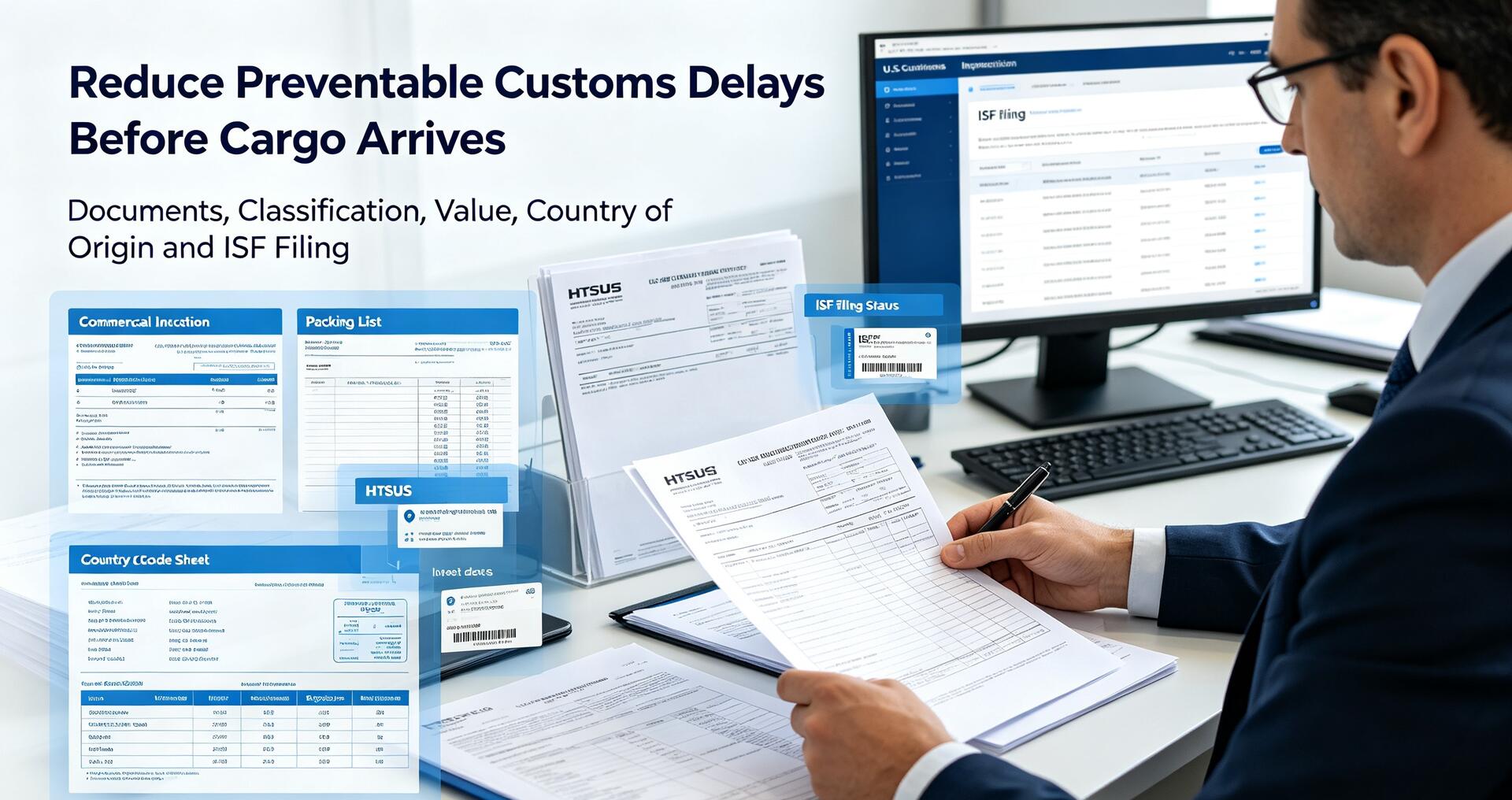
TL;DR: How Can Importers Reduce US Customs Inspection Delays?
There is no legitimate way to guarantee that CBP will not inspect an imported shipment. U.S. Customs and Border Protection (CBP) has the authority to examine imported merchandise, and inspection selection is controlled by CBP rather than by a freight forwarder, customs broker, or importer.
For importers, effective U.S. Customs inspection avoidance should therefore mean reducing preventable customs problems rather than attempting to bypass inspection.
The most practical approach is to:
CBP's informed-compliance framework emphasizes that importers are expected to exercise reasonable care when providing information related to classification, value, and other entry requirements.
A US customs inspection is an examination or review conducted by U.S. Customs and Border Protection to determine whether imported merchandise and its entry information comply with applicable U.S. laws and regulations.
Depending on the shipment and the circumstances, CBP may review documents, request additional information, or physically examine the cargo.
CBP states that it has the right to examine imported shipments. When a shipment is selected for examination, the importer may also be responsible for expenses associated with making the merchandise available for examination.
This distinction is important:
A customs inspection does not automatically mean that an importer has violated U.S. law.
CBP inspection is part of the U.S. government's customs and border enforcement process.
The importer's responsibility is to make sure that the information supplied to CBP is accurate, complete, and adequately supported.
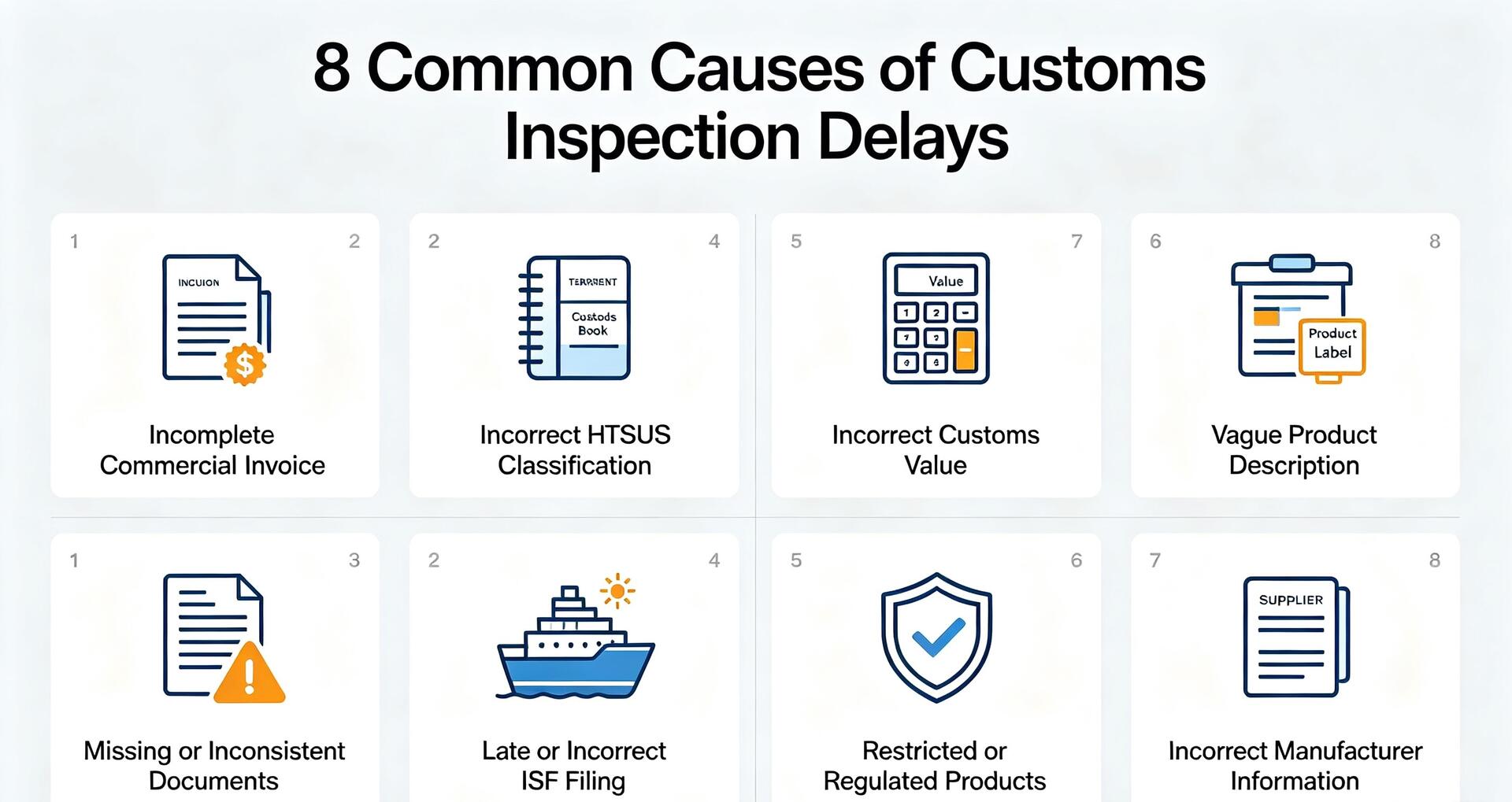
There is no single reason why CBP may select a shipment for examination.
CBP identifies several circumstances that can contribute to imported merchandise being held, including:
Therefore, customs preparation should begin before the cargo reaches a U.S. port.
For businesses importing regularly from China, the best strategy is not to ask:
“How can I guarantee that CBP will not inspect my shipment?”
Instead, ask:
“How can I reduce preventable customs problems and respond quickly if my shipment is inspected?”
That is a much more practical approach to U.S. Customs inspection avoidance.
A commercial invoice is a key document used during customs entry.
CBP's current guidance states that the commercial invoice or acceptable substitute should include an adequate description of the merchandise, quantities, values or approximate values, the appropriate HTSUS subheading, and information identifying the foreign seller or responsible invoicing party.
A description such as:
“Accessories”
may not provide enough information to clearly identify the merchandise.
A more useful description should accurately communicate what the goods actually are.
For example:
| Weak Description | More Specific Description |
| Accessories | Aluminum phone mounting brackets |
| Parts | Replacement plastic appliance components |
| Electronics | Rechargeable LED desk lamps |
| Bags | Polyester travel backpacks |
The description should always reflect the actual merchandise.
Do not make the description artificially vague or inaccurate simply to make customs clearance easier.
The Harmonized Tariff Schedule of the United States (HTSUS) is used to classify imported merchandise.
Classification can affect:
CBP's reasonable-care framework specifically addresses the importer's responsibility to provide appropriate classification and value information.
One common mistake is selecting an HTS code based only on the commercial product name.
The correct classification can depend on factors such as:
For complicated products, importers should consider obtaining professional classification advice or requesting a CBP ruling where appropriate.
Customs value should be supported by appropriate commercial records.
Potentially useful supporting documents include:
Importers should make sure the value declared for customs purposes is consistent with the applicable valuation rules and the underlying transaction.
If the commercial documents contain inconsistent values, the importer should resolve the discrepancy before filing rather than simply choosing the lowest number.
Product descriptions should be specific enough to communicate the nature of the imported merchandise.
Descriptions such as:
may be inadequate depending on the goods.
A better description explains what the product actually is.
For example:
Weak:
“Plastic products”
Better:
“Injection-molded plastic storage containers for household use”
The second description gives customs personnel substantially more information without making an unsupported claim.
Documents should tell the same commercial story.
For example:
Commercial Invoice
Quantity: 500 units
Packing List
Quantity: 500 units
Bill of Lading
Quantity: 500 units
If one document states 500 units while another states 800 units, the discrepancy should be investigated.
CBP's ACE system supports electronic processing of cargo release, entry, supporting documents, and requests for information.
For importers, this makes data consistency increasingly important.
For ocean shipments, Importer Security Filing (ISF), commonly called 10+2, is an important pre-arrival requirement.
CBP states that the ISF generally must be submitted no later than 24 hours before the cargo is laden aboard the vessel destined for the United States.
CBP also states that inaccurate, incomplete, or untimely ISF filings can result in liquidated damages of $5,000 per violation.
The ISF requirements include information relating to parties such as:
For importers shipping from China by ocean, ISF should therefore be incorporated into the shipment planning process rather than treated as a last-minute document.
Some products are subject to additional U.S. government requirements.
Depending on the product, importers may need to consider requirements involving agencies or regulatory programs beyond CBP.
Examples may include:
The exact requirements depend on the product.
Importers should determine applicable requirements before shipment rather than waiting until the cargo reaches the United States.
Manufacturer information can also be important during customs entry preparation.
CBP provides specific requirements for constructing a Manufacturer Identification Code (MID) in applicable entries. Incorrect MID information can result in entry rejection or other action, and CBP notes that repetitive errors can contribute to penalties for failure to exercise reasonable care.
This is particularly relevant when a business purchases products from:
The actual manufacturing party should be identified correctly where required.
The following process is practical for businesses importing from China.
Before the supplier releases the cargo, confirm:
This basic product information becomes the foundation for customs documentation.
Check:
CBP requires an adequate merchandise description and relevant commercial information for entry documentation.
A customs broker can assist with customs entry preparation and communication with CBP.
However, importers should remember that using a broker does not mean the importer can ignore the information being submitted.
CBP's guidance emphasizes the importer's responsibility for reasonable care.
The importer should be able to answer basic questions about:
Use this checklist before your next shipment from China to the United States.
| Item | Check |
| Product description | Accurate and specific |
| Quantity | Matches physical cargo |
| Commercial value | Supported by records |
| Country of origin | Confirmed |
| HTSUS classification | Reviewed |
| Manufacturer | Correctly identified |
| Commercial invoice | Complete |
| Packing list | Consistent |
| Bill of lading / AWB | Information matches |
| Importer of Record | Confirmed |
| Customs broker | Confirmed |
| Customs bond | Reviewed if applicable |
| ISF | Filed on time for applicable ocean shipments |
| Product regulations | Reviewed |
| Supporting documents | Available |
This checklist is especially useful for e-commerce sellers that import inventory repeatedly rather than for a single shipment.
If CBP selects your cargo for inspection, the first step is not to panic.
Instead, establish exactly what is happening.
Contact your customs broker, carrier, or logistics provider.
Confirm:
CBP explains that cargo selected for examination may be moved to a Centralized Examination Station (CES), and the importer may incur related costs.
A shipment may be held for different reasons.
Do not assume that the hold automatically means there is a violation.
Find out whether CBP or the broker needs:
Compare the customs entry with your original commercial documents.
Check:
If an error exists, discuss the proper correction procedure with your customs broker.
Never create false documents or change commercial information simply because a shipment has been selected for examination.
The objective is to provide CBP with accurate information supported by appropriate records.
There is no single inspection fee that applies to every shipment.
CBP states that the importer bears expenses associated with making merchandise available for examination. During normal operations, CBP does not generally charge for the cargo examination itself, but other costs may arise.
Potential costs can include:
For this reason, an inspection can affect the landed cost of imported merchandise even when the actual customs examination itself is not separately charged by CBP.
There is no universal inspection timeline.
The actual processing time can depend on:
Therefore, logistics providers should avoid promising an exact customs inspection duration.
Importers should instead maintain sufficient inventory and delivery planning flexibility.
The Importer of Record (IOR) is an important part of U.S. customs compliance.
The importer should understand that a freight forwarder or customs broker does not simply take over all responsibility for the shipment.
CBP's guidance emphasizes that importers are responsible for providing correct information and exercising reasonable care.
This means the importer should have access to the commercial information needed to support the entry.
For an e-commerce business importing from China, the responsibility chain should be clear:
Supplier → Importer → Customs Broker → Carrier / Logistics Provider → CBP
Each party has a role, but the importer should understand what information is being declared in its name.
A customs bond may be required depending on the type of entry and the importer's circumstances.
CBP explains that customs bonds can generally be obtained through a licensed surety company or a customs broker acting as an agent for one. CBP also distinguishes between single-entry and continuous bonds.
A single-entry bond generally covers one import transaction.
A continuous bond can cover multiple import transactions over a specified period and may be more suitable for frequent importers.
The appropriate bond depends on the importer's circumstances and entry requirements.






 Email: